From ISM 2.0 to a big boost for manufacturing, Budget 2026-27 reshapes the electronics playbook. Yet, what it delivers and what it leaves unsaid may matter even more for the industry.
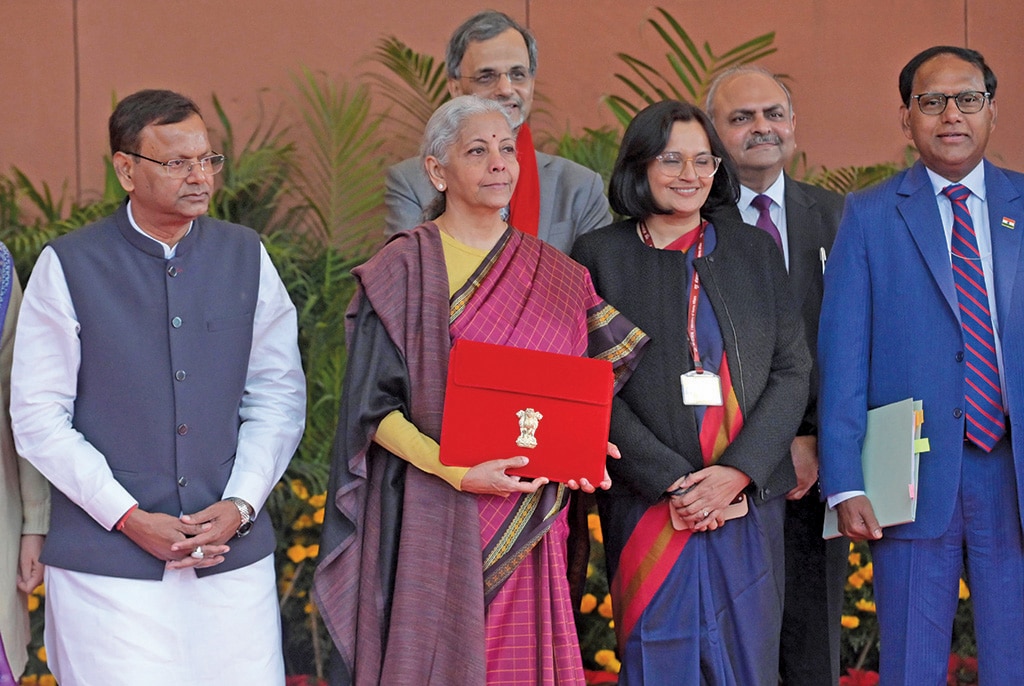
The Budget projects GDP growth of 7.4% for 2025-26 and 6.8-7.2% for 2026-27. For electronics, it combines incentives, supply-chain strengthening, and a clear policy thrust towards semiconductors, data centres, and emerging technologies such as artificial intelligence (AI).
MeitY’s budget
The allocation for the Ministry of Electronics and Information Technology (MeitY) stands at roughly ₹216.33 billion, up from ₹202.3295 billion in the previous estimates.
Central sector schemes and projects account for nearly ₹177.69 billion of the total. Much of the increase supports semiconductor manufacturing, AI, and electronics components. The Modified Semiconductor and Display Manufacturing Programme records the sharpest rise, almost doubling to ₹80 billion from ₹43 billion a year earlier.
ISM 2.0 announced
A key announcement is the expansion of the India Semiconductor Mission (ISM). Building on ISM 1.0, which laid the foundation for fabs and ecosystem development, ISM 2.0 widens the mandate to domestic production of semiconductor equipment and materials, alongside full-stack Indian intellectual property. Industry-led research and training centres will support both technology advancement and skills creation.

The focus shifts from capacity alone to depth across the value chain, aligning with pre-Budget industry expectations. Hareesh Chandrasekar, CEO and Co-founder of AGNIT Semiconductors, described Budget 2026 as an opportunity to move ‘from intent to impact,’ adding that funding beyond the earlier $10-billion outlay could catalyse the next phase of semiconductor growth.
| Table 1: A comparison between the two phases of the India Semiconductor Mission (ISM) | ||
| Aspect | ISM 1.0 | ISM 2.0 |
| Launch | Approved in December 2021 to build foundational capabilities | Announced in the 2026 Budget to deepen and broaden the ecosystem |
| Objective | To create a semiconductor and display ecosystem, and reduce imports | To establish end‑to‑end capabilities: equipment, IP, materials, supply chains |
| Focus Areas | Fabs (semiconductor and display), compound semiconductors, ATMP/OSAT, chip design incentives (DLI) | Domestic equipment and materials, stronger supply chains, full‑stack IP/design, research and training centres |
| Budget | `760 billion ($10 billion) incentives for fabs, ATMP/OSAT, design | Initial ~`10 billion FY26‑27; broader provisions up to ~`1.25 trillion (reports) |
| Incentives | Up to 50% support for fabs/packaging; DLI for design startups | Expanded to equipment makers, materials producers, capital goods, and full‑stack IP |
| Ecosystem Goal | Build domestic fabrication, assembly, packaging, and testing | Consolidate ecosystem, strengthen resilience, and integrate globally |
| Strategic Aim | Reduce imports, support local manufacturing, stimulate design | Advance self‑reliance, target sub‑3nm tech, grow supply chains, and workforce development |
| Skills and R&D | DLI incentives, infrastructure for startups/MSMEs | Industry‑led research centres, training programmes for a skilled workforce |
| Supply Chain | Limited upstream focus | Explicit emphasis on raw materials, chemicals, gases, wafers, and equipment |
| Design and IP | Support for design startups via DLI | Push for full‑stack Indian design IP and a larger ecosystem |
A ₹400 billion boost for ECMS
The Budget also strengthens component-level localisation. The Electronics Components Manufacturing Scheme (ECMS), launched in April 2025 with an outlay of ₹229.19 billion, has already attracted investment commitments worth twice its original target, according to the Finance Minister.
Building on this momentum, the government has proposed increasing the outlay to ₹400 billion.
Industry participants welcomed the move, noting it should improve domestic availability of semiconductor-linked components, reduce import dependence, and accelerate scaling across EMS, PCB assembly, box build, and system integration operations. Aimtron Electronics, which acquired a US-based ESDM firm earlier this year, highlighted these benefits.
To deepen value addition in consumer electronics, basic customs duty has been exempted on specified microwave-oven parts. Some concessions will be withdrawn from April 1, 2026, including duties on undiffused silicon wafers and selected film and television equipment imports, signalling a gradual tightening as domestic capability improves.
Record boost for defence
Beyond electronics, defence spending is targeted to reach a record ₹7.85 trillion, a 15.19% year-on-year increase. This equals 2% of GDP and 14.67% of total central expenditure, the largest share among ministries.
Of this, ₹2.19 trillion is earmarked for capital expenditure, with ₹1.85 trillion for acquisitions including fighter aircraft, submarines, UAVs, drones, and specialist vehicles. Seventy-five per cent of capital acquisition spending is reserved for domestic procurement, reinforcing self-reliance amid geopolitical tensions.
The rise follows emergency procurement during the 2025 India-Pakistan tensions. Contracts worth ₹2.10 trillion were concluded by December 2025, with approvals exceeding ₹3.5 trillion.
For logistics and data centres
To support electronics manufacturing logistics, a safe-harbour profit margin of 2% of invoice value has been extended to non-resident warehousing in bonded facilities. This yields an effective tax rate of around 0.7%, improving competitiveness and enabling just-in-time production models.
Meanwhile, data centres are recognised as critical digital infrastructure. The Budget announces a tax holiday until 2047 for foreign companies providing global cloud services through India-based facilities, provided Indian customers are served via domestic resellers.
A 15% safe-harbour margin has also been introduced for related-party service providers. Together, these measures are expected to accelerate investment in hyperscale data centres, with spill-over benefits for electronics hardware, power systems, and cooling technologies.
| Table 2: Summary of the duty changes for the electronics industry | |||
| Commodity/Goods | Previous Duty | New Duty | Effective Date |
| Monazite (renewable energy use) | 2.5% | Nil | Immediate |
| Sodium antimonate (solar glass manufacture) | 7.5% | Nil | Immediate |
| Capital goods for lithium‑ion cell manufacturing (battery energy storage systems) | Applicable rate | Nil | Immediate |
| Specified goods for microwave ovens (tariff item 8516 50 00) | Applicable rate | Nil | Lapses 01.04.2026 |
| Silicon for undiffused wafers (solar cells/modules) | Concessional | Withdrawn | 01.04.2026 |
| Flat panel detector (X‑ray machines) | Concessional | Withdrawn | 01.04.2026 |
Capital goods, rare earths, and clean energy inputs
To strengthen capital goods capability, Central public sector enterprises will establish hi-tech tool rooms at two locations. These digitally enabled facilities will design, test, and manufacture high-precision components locally at scale and lower costs.
Focusing on critical manufacturing again, the government also plans dedicated Rare Earth Corridors in mineral-rich states, including Odisha, Kerala, Andhra Pradesh, and Tamil Nadu. Following the Rare Earth Permanent Magnet Scheme launched in November 2025, the initiative supports mining, processing, research, and manufacturing critical to electronics, EVs, and renewable energy.
Customs duty exemptions now extend to capital goods for lithium-ion cell manufacturing and to sodium antimonate imports used in solar-glass production.
“The proposal to create Rare Earth Corridors is the missing link for India’s EV sovereignty, directly addressing long-standing dependence on imported NdFeB magnets,” says Jaideep Wadhwa, Director at Sterling Tools Limited, describing the initiative as a milestone.
AI and emerging technologies take centre stage
AI features prominently in the government’s technology strategy. Continued support has been reaffirmed for the AI Mission, the National Quantum Mission, the Anusandhan National Research Fund, and the Research, Development and Innovation Fund.
A ₹100 billion SME Growth Fund aims to nurture future champions, complemented by a ₹20 billion top-up to the Self-Reliant India Fund for micro-enterprises. Although not electronics-specific, these funds may support growth-stage electronics and deep-tech startups facing high capital requirements and long commercialisation timelines.
Industry leaders welcomed the emphasis but highlighted gaps. Suggestions include treating AI as strategic infrastructure, restoring the 200% weighted deduction for R&D, offering customs duty relief on GPUs and TPUs, and accelerating deployment of the Deep Tech Fund of Funds.
Covasant Technologies echoed similar expectations around affordable AI infrastructure, R&D tax credits, regulatory sandboxes, and public procurement for Indian AI firms.
Post-Budget, Atul Rai, CEO and Co-founder of Staqu Technologies, said the Budget clearly recognised AI as a strategic driver of inclusive growth and marked a shift from experimentation to large-scale deployment.
EVs and electronics: Expectations vs delivery
While upstream electronics gains traction, EV-focused stakeholders argue that several persistent issues remain. The inverted GST structure continues, with EVs taxed at 5% but key inputs at 18%. Industry representatives also seek targeted incentives for electric motorcycles, which dominate the two-wheeler market but remain under-electrified.
Similarly, Kunal Arya of Zelio E-Mobility and Sameer Moidin of EVeium Smart Mobility emphasised the need for deeper localisation of battery cells, controllers, and power electronics, rationalised GST, affordable financing, and a clear national charging roadmap.
Despite support for battery manufacturing and rare earth inputs, direct GST reforms and demand-side EV incentives are absent.
Television and consumer electronics
Ahead of the Budget, Arjun Bajaj of Videotex called for a dedicated PLI scheme for television manufacturing, temporary duty relief for critical components, and export-focused incentives. While no TV-specific PLI was announced, broader investments in components, semiconductors, and capital goods may offer indirect support.
Union Budget 2026-27 Overview
At the macro level, capital expenditure would rise from ₹11.2 trillion in FY26 to ₹12.2 trillion in FY27. The fiscal deficit would narrow to 4.3% of GDP, down from 4.4%, meeting the government’s commitment to reduce the deficit below 4.5% by FY26. Nominal GDP growth is projected at 10.5-11%, with non-debt receipts estimated at ₹36.5 trillion.
Shubha Mitra, Assistant Editor at EFY, is keenly interested in policies and developments shaping the electronics business.