Flipping classroom learning, Yudu Robotics, a robotics-ed company, is using exploratory methods and programmable hardware to quietly build career-focused skills in schools.
Yudu Robotics, the educational robotics brand of Evobi Automations, is positioning school-level robotics as a structured pathway to practical engineering skills through hands-on learning and programmable hardware platforms. Sandeep Patil from RedNerds and Yudu Robotics said the company’s approach is designed to make engineering accessible from an early stage without imposing academic barriers.
“Our primary business is B2B,” Patil said, explaining that Yudu works with partners to deliver robotics education programs from grade three to grade twelve, supported by hardware kits, curriculum, and training. Accessibility remains central to the model. “There are no prerequisites,” he stated, clarifying that students do not need prior electronics knowledge before starting.
The pedagogical shift, according to Patil, lies in reversing the conventional theory-first method. “We flipped the whole idea of teaching where you are taught theory first, and then you go back and try to do an experiment,” he said. Instead, students begin with building and experimentation. “We show them an experiment. The goal is to do an experiment and then figure out what is required to achieve it,” he explained, positioning experimentation as the entry point to understanding.
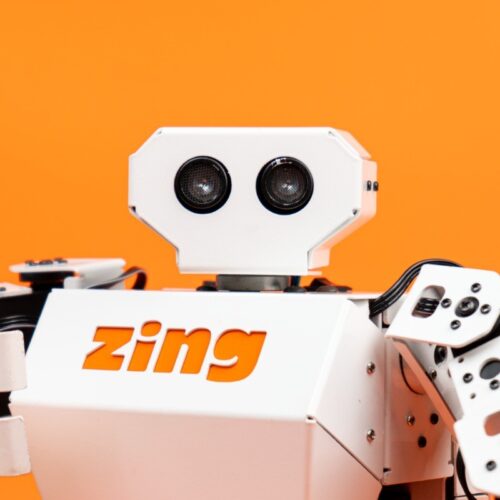
Yudu Robotics has also developed Zing, a programmable humanoid robot designed to introduce students to real-world robotics systems. Built with integrated actuators, sensor feedback, and app-based control, Zing allows learners to experiment with motion logic and system behavior while understanding how hardware and software interact. “It is not just about making a robot move,” Patil explained. “It is about showing students how embedded systems, sensors, and control algorithms work together in an actual robotic platform.”
As learners assemble circuits and robotic systems, theoretical concepts emerge in context. “They can actually see what the resistor is doing in the circuit while building it,” Patil noted, adding that guided content supports this process. “Our content and videos will take them through the basics while they are doing an experiment.”
The hardware ecosystem is complemented by programmable platforms such as PLOAD, enabling students to move from visual coding environments to more advanced programming as they progress. Through this layered exposure to electronics, mechanics, and coding, Yudu aims to mirror how engineering problems are approached in real environments rather than isolating subjects into theory blocks.
While most deployments are delivered through partner organizations working with schools, Patil mentioned that some entry-level kits are available online. “Some of our kits are available on our website and Amazon, so anyone can get started,” he said.
By integrating experimentation, structured curriculum, and programmable robotics platforms, Evobi Automations, through Yudu Robotics, seeks to align school-level robotics more closely with applied engineering thinking and industry expectations.