A single module brings imaging, depth, and motion together, connecting with AI tools to change how robots see, sense, and respond in real time.
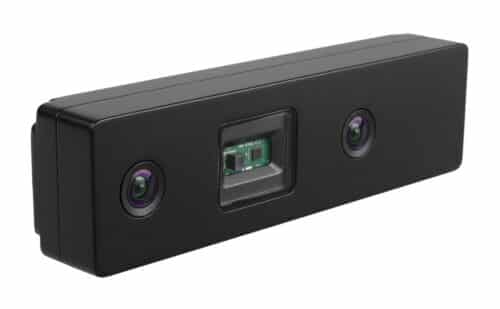
STMicroelectronics and Leopard Imaging have introduced a multimodal vision module for humanoid and advanced robots, combining imaging, depth sensing, and motion tracking in a single unit.
The module is designed to reduce the effort required to build robot vision systems within size, weight, and power limits. It connects to NVIDIA Jetson over Ethernet for real-time data transfer and works with NVIDIA Isaac for AI models, simulation, and development tools.
It supports APIs, build tools, and sample applications, along with simulation features such as sensor models and domain randomization.
The system integrates multiple sensing components. Imaging is handled by the VB1940, a 5.1 MP RGB-IR sensor with rolling and global shutter modes. A related version, V943 from the BrightSense family, is available in monochrome or RGB-IR formats.
Motion sensing is based on the LSM6DSV16X, which supports on-sensor machine learning, sensor fusion, and electrostatic sensing for interface detection.
Depth sensing is provided by the VL53L9CX from the FlightSense family. It delivers 3D depth data up to 9 meters using a 54 × 42 zone grid and operates at up to 100 frames per second for detecting near and distant objects.
“Humanoid robotics is moving beyond research projects and demonstrations to deliver powerful new machines for a wide range of roles in manufacturing and automotive factories, logistics and warehousing, as well as retail and customer service,” said Marco Angelici, Vice-President of Marketing and Application for Analog Power MEMS and Sensors, at STMicroelectronics. “Our collaboration with Leopard Imaging brings market-leading ST sensors and actuators, seamlessly integrated into the NVIDIA robotics ecosystem, to accelerate the deployment of physical AI applications with human-like awareness.”
“Accessing ST sensors and actuators directly within the ecosystem has allowed us to standardize and streamline data acquisition and logging for humanoid robot vision across the HSB interface,” said Bill Pu, CEO of Leopard Imaging. “Robot builders can use our multi-sensing vision module with Isaac tools to accelerate learning and quickly bridge the ‘sim-to-real’ gap.”Click here for the original announcement.