





Featuring high-fidelity audio alerts, robust power backup with supercapacitors, and integrated visual indicators in a compact, ready-to-deploy design.
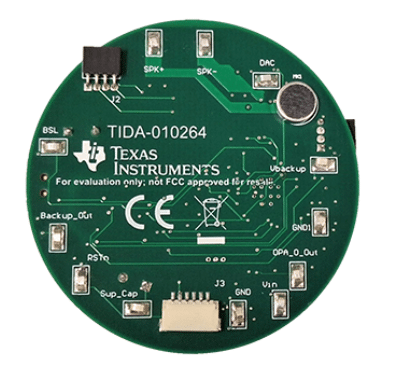
The Texas Instruments TIDA-010264 reference design provides design engineers with a ready-to-use platform for developing medical alarm systems that comply with safety standards such as IEC 60601-1-8. It demonstrates how to implement primary, backup, and visual alarm functions using an MCU-based architecture, making it especially useful for engineers working on patient monitoring, diagnostic equipment, and other healthcare devices. By leveraging this design, engineers can accelerate development, reduce risk, and ensure compliance while focusing on system-level innovation rather than building alarm subsystems from scratch.
At its core, the reference design is built around the MSPM0 series microcontroller, offering a highly integrated and low-power processing platform suitable for medical applications. The design supports both standard and customizable alarm tones, enabled via internal flash memory and optional external storage, providing flexibility to meet diverse application requirements. A key highlight is the integrated DAC that delivers 12-bit high-fidelity audio with adjustable frequencies above 48 kHz, ensuring clear and reliable audible alerts—critical in clinical environments where alarm audibility directly impacts patient safety.
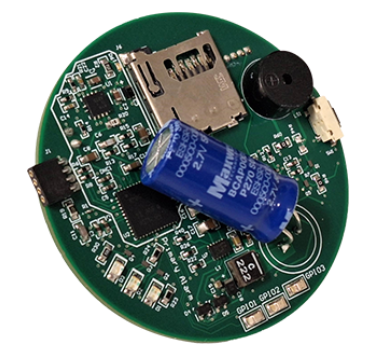
Power reliability is a major focus of this design. The system incorporates a supercapacitor-based backup mechanism that can sustain alarm functionality for more than 3 minutes in the event of a primary power failure. This ensures uninterrupted alerting during critical scenarios, such as power outages or system faults. The inclusion of a boost converter with supercapacitor management further optimises energy usage and extends backup duration, addressing stringent medical safety requirements.
In addition to audible alerts, the design integrates a visual alarm system with three LEDs that represent high, medium, and low-priority states. This multi-modal alert approach enhances usability in noisy environments and aligns with regulatory expectations for medical alarm systems. The compact 49 mm diameter form factor makes the design particularly suitable for space-constrained medical devices, enabling easy integration into portable or embedded healthcare equipment.

The reference design also provides comprehensive development resources, including schematics, PCB layouts, bill of materials, firmware, and validated test data. These assets allow engineers to quickly prototype, evaluate performance, and customise the design according to specific application needs. Importantly, the design is intended as a development aid rather than a finished product, giving engineers the flexibility to adapt it while maintaining compliance and performance benchmarks.
Overall, it serves as a practical and scalable foundation for medical alarm implementation, combining robust power backup, high-quality audio generation, and clear visual indication in a compact, efficient system architecture. For more information, click here.
