





A robot enters nuclear zones, reads data, maps spaces, and moves across obstacles, changing how inspections are done in these environments.
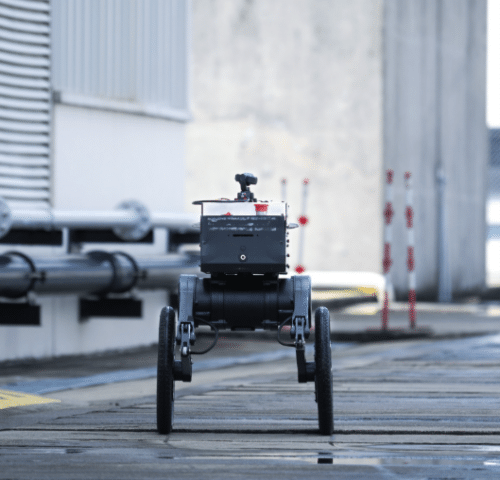
A multi-institution team led by Hong Kong Productivity Council has developed an autonomous inspection robot designed for nuclear facilities, combining AI perception, offline navigation, and a transformable wheel-leg mobility system to operate in constrained, high-risk environments.
The system, called HazardBot, targets inspection tasks inside nuclear plant pump rooms where space is limited, signals are weak or unavailable, and radiation exposure is a concern. Traditional inspection in these areas depends on manual checks, which require significant time and expose personnel to hazardous conditions. The robot replaces these processes with autonomous, continuous inspection.
At the core of the system is a full AI stack covering perception, mapping, localisation, path planning, and motion control. These modules allow the robot to navigate without GPS or network connectivity. It builds and updates its environment map in real time and adjusts its movement based on terrain and obstacles. Edge computing enables all processing to run locally, allowing operation in shielded or interference-heavy zones where connectivity is not reliable.
The robot integrates AI-based visual inspection models that can read and analyse meter data with reported accuracy of 96%. This enables remote monitoring, reducing the need for engineers to enter hazardous zones. The system supports continuous inspection cycles rather than periodic manual checks.

A key hardware feature is its transformable mobility system. In wheeled mode, the robot moves across flat surfaces with full directional control. In legged mode, it navigates tight layouts, steps, and barriers such as railings. This hybrid design allows operation across mixed terrain commonly found in nuclear facilities, where conventional wheeled or tracked robots face limitations.
HazardBot has completed on-site trials at the Taishan Nuclear Power Plant in Guangdong, demonstrating its ability to operate in real conditions. Deployment is planned in phases across additional facilities in the Greater Bay Area.
The same architecture can be applied to other enclosed or hazardous infrastructure, including water treatment plants, pumping stations, and power distribution rooms. The approach focuses on replacing manual inspection with autonomous systems that can operate continuously in environments with limited access and high operational risk.

