






MIT-backed startup launches no-code AI platform enabling biologists to design proteins, accelerating drug discovery, reducing development complexity, and expanding access to advanced computational biology tools across labs worldwide.
A new AI-driven platform is aiming to remove one of biotechnology’s biggest bottlenecks—access to advanced protein design tools—by making them usable without coding expertise.
Startup OpenProtein.AI, founded by Tristan Bepler and Tim Lu, has launched a no-code system that allows scientists to design and analyse proteins using artificial intelligence models through a web interface.
The platform gives researchers access to foundation AI models capable of predicting protein structures, generating new protein sequences, and analysing their functions—tasks that traditionally required specialised machine learning skills.
This addresses a critical gap in the field. While AI has rapidly advanced protein engineering and drug discovery, many biologists lack the expertise or infrastructure to deploy such models effectively.
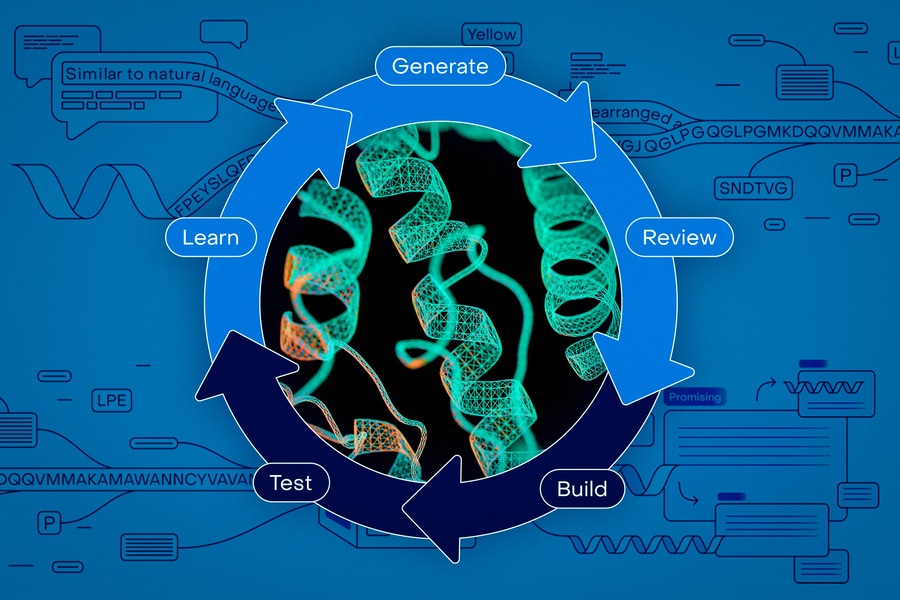
OpenProtein’s system integrates tools like its proprietary protein language model, PoET (Protein Evolutionary Transformer), which can generate related protein sequences and incorporate new experimental data without retraining. This enables faster iteration cycles and more flexible experimentation.
Researchers can upload their own datasets, train models, and simulate protein libraries entirely in silico before selecting promising candidates for lab validation. The approach significantly reduces trial-and-error in early-stage research and shortens development timelines for therapeutics and industrial enzymes.
The platform is already being adopted by pharmaceutical and biotech companies, while academic researchers can access it for free—an approach aimed at democratizing AI in biology.
Beyond efficiency gains, the broader ambition is to create a unified “language” for biological systems, enabling scientists to design proteins with specific traits and potentially extend AI-driven design to other molecular domains.
As AI continues to reshape drug development, platforms that lower technical barriers could play a key role in translating computational breakthroughs into real-world therapies faster and at scale.
