


Can vibrations replace magnets in power chips? A design that uses piezoelectric resonators can improve efficiency in high voltage data centre systems.
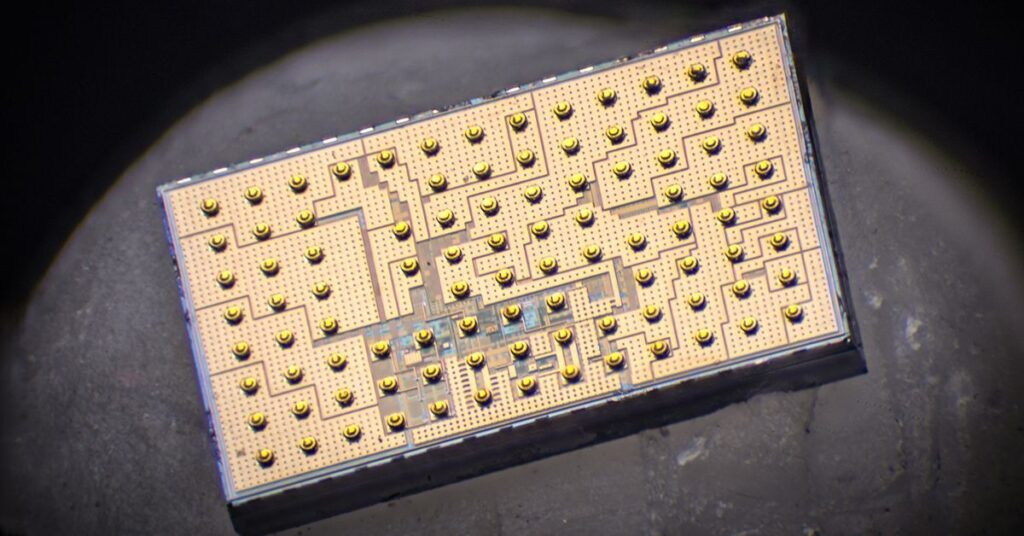
University of California San Diego engineers have developed a new chip design that improves DC to DC step down conversion efficiency for power management in data centers, targeting the growing energy demands of high performance computing systems.
The research introduces a redesigned converter architecture that addresses a key limitation in modern electronics: efficiently converting high input voltages to lower levels required by processors. In data centers, power is typically distributed at 48 volts, while GPUs operate at much lower voltages between 1 and 5 volts, making efficient conversion critical for performance and energy savings.
The proposed design replaces conventional magnetic components with a piezoelectric resonator combined with strategically arranged capacitors. This hybrid approach enables energy transfer through mechanical vibrations while creating multiple pathways for power flow, reducing energy losses and improving overall system efficiency. Unlike traditional inductive converters, which are approaching their physical scaling limits, the new design offers greater flexibility and potential for further performance improvements.
A key advantage of the chip lies in its ability to handle large voltage differences without compromising efficiency or power delivery. In laboratory tests, the prototype converted 48 volts to 4.8 volts with a peak efficiency of 96.2 percent, while delivering nearly four times higher output current compared to earlier piezoelectric based designs. This makes it particularly relevant for space constrained, high density computing environments such as data centers.
Beyond efficiency gains, the design also enables more compact and potentially scalable power management systems. By reducing reliance on bulky inductors and improving energy density, the technology could contribute to smaller, more efficient computing hardware.
While still in early stages, the approach represents a shift in power converter design, with ongoing work focused on improving materials, circuit integration, and packaging to support real world deployment.“Piezoelectric based converters are not yet ready to replace existing technologies, but they offer a clear trajectory for improvement,” says Patrick Mercier, Professor of Electrical and Computer Engineering at UC San Diego. “We need to continue advancing materials, circuits and packaging to make this technology viable for data center applications.”