
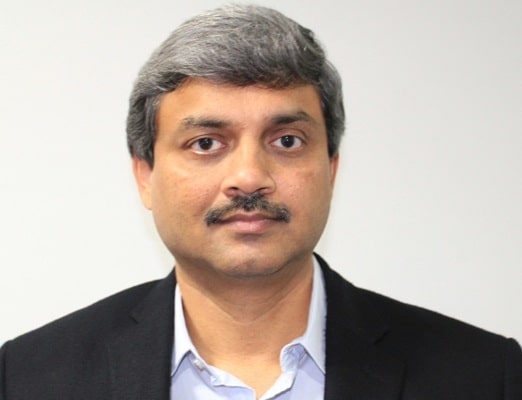
From design in India to scale for the world, Hareesh Ramana of Sasken Technologies and Borqs Technologies reveals how AI is reshaping IoT innovation to Akanksha Sondhi Gaur and Saba Aafreen from EFY.
Q. What has shaped your journey to Sasken?
A. I began my career in 1984 in defence electronics, working on fighter aircraft avionics upgrades for Indian Air Force fighter aircraft and part of the avionics design team for the light combat aircraft programme, now known as Tejas. That experience laid the foundation for my work in redundant computing, high-availability architectures, and mission-critical embedded systems. I later joined Motorola as part of its early India team, spending 18 years there and rising to Senior Director for Asia Pacific Global Delivery Software. My work covered paging infrastructure, including the London Metro deployment, telecom carrier systems, and mobile devices, during which I partnered closely with Rajiv Modi and Sasken Technologies for multimedia intellectual property (IP) and engineering services. In 2017, after leading a fully India-designed Motorola phone initiative, I co-founded Borqs Technologies. We partnered early with Google on Android Open Source and with China Mobile as a system integrator, later expanding into North America with carrier-compliant stacks for AT&T, Verizon, and T-Mobile. We also collaborated with chip leaders such as Marvell, Broadcom, Renesas, Intel, and Qualcomm, establishing Qualcomm and Intel Offshore Development Centres in Bengaluru. Over time, Borqs evolved into a full original design manufacturer (ODM), delivering end-to-end product engineering from silicon bring-up to lifecycle support across enterprise rugged devices, smartphones, tablets, wearables, and Internet of Things (IoT) systems. Following the April’25 merger of Borqs and Sasken, I now serve as Chief Experience Officer (CXO) at Sasken while continuing as President of Borqs.
Q. How are you leveraging your role to drive AI-led innovation in connected devices?
A. As CXO leading the chief technology officer (CTO) organisation, my mandate is to make the company artificial intelligence (AI)-first across the entire device stack. We are embedding AI across hardware and software layers, evaluating large language models (LLMs) optimised for edge execution, strengthening Edge AI capabilities in camera systems, leveraging neural processing units (NPUs) in modern chipsets, and adopting next-generation standards such as Wi-Fi 7. Our Bengaluru lab enables end-to-end device engineering, including RF testing, audio and camera tuning, and certification readiness. Beyond product features, AI is being integrated into PCB design, inventory management, debugging intelligence, and development workflows, amplifying embedded engineering by enhancing productivity, quality, and speed.
Q. How is the Sasken–Borqs merger strengthening AI and embedded innovation?
A. Borqs had exceptional engineering quality but limited capital and bandwidth to scale large hardware programmes. Sasken brings financial strength, scale, and structured talent pipelines, including formal AI training. The integrated strength has already helped us secure a multi-million-dollar embedded engagement with a hyperscaler, and this is expected to scale significantly. More importantly, we are now positioned not just for delivery at scale but for co-innovation on next-generation embedded and AI-driven platforms.
Q. What has been your most significant contribution to India’s IoT ecosystem?
A. India has established strong leadership in software and cloud, but hardware design and printed circuit board assembly (PCBA) engineering are still evolving. A large percentage of devices manufactured in India are designed externally, which often results in prolonged debug cycles and overseas escalations when complex issues arise. We have demonstrated that advanced embedded and automotive challenges can be resolved domestically, reducing dependency and accelerating time to resolution. Strategically, we chose to focus on higher-value IoT segments, including cellular, Wi-Fi, customer premises equipment (CPE), rugged enterprise devices, and advanced connected platforms. Four years ago, we transitioned our entire IoT engineering capability from China to India, a deliberate move that demonstrates India can take on end-to-end design ownership, not just manufacturing and assembly. To truly scale IoT leadership, India must further strengthen indigenous design houses, deepen PCBA engineering expertise, and build a more robust local component ecosystem.
Q. What sets Sasken apart in IoT innovation under aggressive timelines?
A. IoT is fundamentally rooted in embedded systems engineering. In India, very few players combine carrier-grade 5G capability, Wi-Fi 6 and emerging Wi-Fi 7 expertise, deep hardware–software co-design, and true full-stack integration. That integrated capability is critical for building reliable, scalable connected systems. We do not build cookie-cutter products; we engineer customised, differentiated solutions. For example, we have developed sub-meter-accuracy tracking devices that require extremely tight hardware–software integration, suitable for use cases such as forest asset tracking and emergency response operations. Our model empowers engineers with AI-driven tools, advanced lab infrastructure, and end-to-end program ownership. This culture of technical depth and accountability enables us to attract top talent from leading global technology companies, including Samsung, Qualcomm, and LG.
Q. How does the integration reduce original equipment manufacturer (OEM) risk across the device stack?
A. The integration delivers a true end-to-end capability, spanning multiple layers of technology and expertise. At the silicon and IP layer, Sasken contributes services in silicon design, processor roadmap alignment, Wi-Fi optimisation, and indigenous chipset initiatives. Moving to the hardware and board support package (BSP) layer, Borqs provides board bring-up, kernel development, driver integration, and support across Qualcomm and MediaTek platforms. The middleware and cloud layer adds Android framework expertise, telemetry, cloud integration, user interface and user experience design, alongside data analytics capabilities. Finally, the horizontal AI layer strengthens the stack with debug intelligence, issue tracking, and historical resolution mining. Together, these elements ensure that OEMs benefit from a single accountable partner covering the entire journey from silicon to cloud, reducing fragmentation and accelerating delivery.
Q. Can you share a concrete example of accelerating time to market in IoT programs?
A. In one embedded programme, we implemented structured AI adoption across the engineering team, with nearly all developers using AI tools for coding and testing. This delivered close to a threefold increase in productivity and significantly shortened development cycles. The proactive initiative not only accelerated time-to-market but also improved customer confidence, resulting in additional programmes being awarded. It demonstrated that disciplined AI integration in embedded engineering can simultaneously drive velocity, maintain quality, and support business growth.
Q. How can India’s manufacturing growth drive global IoT OEM and ODM participation?
A. India’s manufacturing expansion creates clear opportunities across industrial, energy, automotive, healthcare, and connected devices, but true global participation requires stronger domestic design capability alongside production. Much of the ecosystem still depends on externally driven designs, so scaling indigenous design houses is critical. We have already shifted our IoT engineering team fully to India and are partnering with local manufacturers to enable end-to-end, design-led products for global markets. With geopolitical realignment accelerating supply chain diversification, this positions India to move beyond assembly to become a competitive OEM and ODM hub serving global demand.
Q. How does India’s IoT ecosystem compare globally?
A. The United States continues to lead in advanced technology ecosystems, driven by deep research and development (R&D) investments, platform innovation, and strong venture networks. China, meanwhile, excels in cost optimisation, dense component ecosystems, vertically integrated supply chains, and a rapid innovation culture backed by strong government support. In some instances, fully assembled systems from China are priced lower than the cumulative component costs elsewhere, creating a structural disadvantage for Indian startups. India’s key bottlenecks include gaps in indigenous chipset development, dependence on imported components, fragmented integration across hardware, software, and manufacturing, and comparatively limited certification rigour. However, shifting geopolitical dynamics are creating new opportunities. We are actively partnering with Indian manufacturers to build design-led, globally competitive products, positioning India not just as a manufacturing base, but as a centre for end-to-end product innovation and ownership.
Q. Which trends will define the next wave of IoT innovation in India?
A. Three major vectors are expected to shape the next phase of IoT growth, each reflecting the increasing integration of connected technologies into everyday systems. Smart energy management will become critical as power demand rises sharply with the expansion of data centres and manufacturing. AI-driven analytics, intelligent grid-connected devices, and real-time optimisation systems will be central to ensuring efficiency, resilience, and sustainability. At the same time, warehouse and supply chain IoT will gain prominence, particularly in India’s agricultural exports, pharmaceutical manufacturing, and quick-commerce ecosystems, where IoT-enabled warehousing and precision tracking from storage environments to last-mile delivery are essential. End-to-end visibility, predictive monitoring, and connected logistics will serve as key differentiators in these sectors. Finally, the concept of a connected ecosystem everywhere underscores the reality that vehicles, homes, industrial systems, and wearables no longer operate individually but as part of an interconnected digital fabric. I must put it in this way: nothing works in isolation anymore; everything is connected. Enabling this requires readiness for 5G and evolution toward 6G, adoption of advanced Wi-Fi standards, significant investment in network infrastructure, edge computing architectures, and AI-optimised bandwidth management. Together, these developments will be necessary to handle massive device density and deliver real-time intelligence at scale, marking the next stage of IoT’s transformative impact.
Q. How critical are interoperability and standards?
A. Interoperability is foundational to connected ecosystems. Without strong standards, devices fail to communicate, networks drop during cell handovers, smart meters do not synchronise with utility clouds, and smart home systems break during integration. India largely operates as an open market with limited domestic enforcement of certification, leading to inconsistent performance. While stricter standards raise device costs, they significantly improve reliability, making them non-negotiable for critical applications such as utilities and energy grids, where failure is not an option.
Q. How can Indian companies drive innovation and close the commercialisation gap?
A. Indian companies must engage deeply with global standards bodies and industry consortia to stay aligned with emerging platforms and co-develop proof-of-concept solutions with ecosystem partners. Dedicated R&D teams focused on long-term technology roadmaps are essential for more than revenue delivery. Equally important is integrating industry and academia by establishing real-world labs and exposing students to market-relevant tools and platforms early, enabling stronger design capabilities and a faster transition from innovation to commercialisation.
Q. How is India positioning itself in next-generation IoT technologies?
A. India’s key strength lies in its deep software and AI talent pool, giving it a strong foundation in next generation IoT areas such as ambient computing, digital twins and automotive systems; however, to compete with global leaders it must move beyond services to build indigenous IP including its own language models, actively participate in global standards ecosystems, accelerate adoption of emerging connectivity platforms such as Starlink, and mature its startup and R&D ecosystem to translate technical capability into scalable, real world solutions.
Q. How do government policies shape IoT innovation in India, and where are the key gaps?
A: Government policy plays a critical role in driving IoT adoption, but India currently lacks strong domestic standardisation and certification frameworks compared to mature markets; the urgent gap lies in building robust certification bodies and aligning with global standards to ensure seamless device to device and device to cloud interoperability, since without unified standards and compliance mechanisms, large scale, secure and interoperable IoT ecosystems cannot mature effectively.
Q. How important is funding in accelerating IoT product development in India?
A. Funding is critical, especially for hardware led IoT products where capital intensity is high; while software driven IoT ventures require relatively less investment, Indian hardware startups and OEMs face stiff competition from heavily subsidized ecosystems such as China, where full systems are often priced lower than the cumulative component cost in India, creating structural disadvantages despite initiatives like design-linked incentive (DLI), and without stronger policy support, incentives and protective air cover, Indian players risk struggling with cost competitiveness, scale and sustainability in global markets.
Q. Can collaboration between academia, startups and industry accelerate IoT product development in India?
A. Yes, there are encouraging examples of university innovation labs, in partnership with large technology firms such as Intel, enabling students to build market-ready IoT prototypes that subsequently attract early-stage venture funding, giving startups the runway needed to refine and commercialise their products. In contrast, such collaborations remain limited; stronger alignment among universities seeking industry relevance, startups seeking seed capital, and established companies offering platforms and mentorship can significantly accelerate frugal, open-innovation-driven IoT development in India.
Q. How important is cybersecurity?
A. Cybersecurity is no longer optional; it is a hygiene factor. We are developing highly secure devices for African financial ecosystems, where hacking attempts are frequent. Our security architecture includes encrypted boot, hardware-level tamper protection, secure firmware layers, and continuous OTA patching. Updating software is not optional for users; it is critical to maintaining device integrity and ecosystem trust. Europe has taken a clear lead in cybersecurity regulation with comprehensive frameworks and enforcement standards. India must move toward similarly robust, structured regulatory models to ensure long-term resilience across its connected device ecosystem.
Q. Are sustainable IoT devices becoming mandatory?
A. Sustainability requirements are becoming increasingly stringent in Europe, where new regulations mandate eco-friendly materials, strict battery compliance, recyclable plastics, and extended device lifecycles of up to nine years. These measures significantly reduce e-waste and promote circular economy principles. India must strengthen its sustainability norms along similar lines and simultaneously develop a domestic component ecosystem capable of meeting global compliance standards. Building environmentally responsible, regulation-ready supply chains will be essential for competing in international markets.
Q. What are the toughest IoT skill gaps in India, and how are companies addressing them?
A. Beyond AI, the biggest gaps lie in deep system-level expertise, especially among engineers who understand hardware-software co-design, power and performance optimisation, RF tuning, audio tuning, and camera tuning. At the same time, AI tools can assist, true differentiation comes from strong embedded C and C++ foundations, algorithm development capability and edge optimisation skills, particularly in areas like vision systems where accuracy must improve significantly, so companies must invest in multidisciplinary talent, mentorship and continuous upskilling to bridge these complex engineering gaps.
Q. Is Sasken taking initiatives to bring more product design into India?
A. Yes, Sasken’s major step was acquiring Borqs and moving its design capabilities from China to India, enabling the company to now firmly position itself as having end to end design expertise within India; the focus ahead is scaling this capability for both mass and premium segments, from enabling low cost, purpose built smartphones for sectors like microfinance through partnerships with financial institutions to developing high end, feature rich devices aligned with India’s growing affluent demand driven by brands like Apple, while also investing in next generation technologies including 5G, 6G, accelerators and new device form factors such as wearables and smart glasses in an increasingly connected ecosystem.
Q. How should India balance domestic needs with global competitiveness?
A. India is globally strong in software and cloud. But IoT requires hardware, software, and cloud services to work together. Hardware innovation, chip design, and component ecosystems must strengthen. We must move from service-led growth to product-led global competitiveness.
Q. What defines India’s IoT future toward 2030?
A. By 2030, the most disruptive forces will be AI at the edge, advanced sensing technologies, connected surveillance systems, intelligent warehouse automation, and secure, interoperable platforms that integrate devices seamlessly across environments. India’s global role will depend on its ability to strengthen standardisation, build robust cybersecurity frameworks, mature its hardware ecosystem, assert design ownership, ensure policy clarity, and sustain long-term infrastructure investment. These foundations will determine whether India remains a participant in global value chains or emerges as a true innovation leader.
| The road ahead… India’s IoT future depends on five pillars: • Indigenous hardware design capability • Strong semiconductor roadmap • AI-first embedded engineering • Standardisation and interoperability • Academia-industry collaboration With the combined strength of Sasken Technologies and Borqs, the ambition is to design and engineer in India while scaling globally. As the connected future unfolds, the challenge is whether India leads or follows. |