The journey of Ganesh Jivani, who transformed improbable ambitions into reality, is inspiring. Through self-directed learning and perseverance, he discovered his strengths and built his future with determination. His life reflects an indomitable spirit shaped by hard work and unwavering dedication. Along the way, he not only transformed his own destiny but also inspired and supported his family in their pursuit of success. Today, as CEO and MD of Matrix Comsec, he exemplifies vision, resilience, and determination. This is his story, as told to Electronics For You’s Nitisha Dubey.
From village roots to engineering
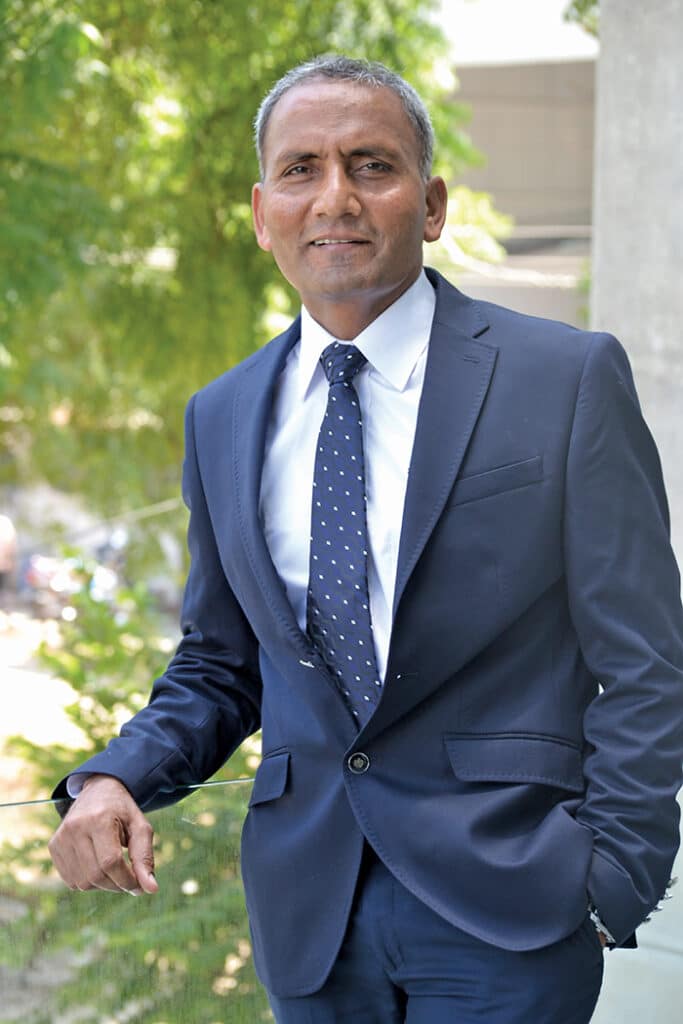
Ganesh Jivani grew up in a small farming family in the Saurashtra region of Gujarat. His native village, Rasnal, around 30km from Morbi and 60km from Rajkot, was a settlement of nearly a thousand people, where agriculture was the primary livelihood. Raised in a joint family of nearly ten members, he grew up in simplicity, shaped by strong family values.
His early education began in the village government school, where resources were extremely limited. The school had only three teachers, two classrooms, and catered to students from Standards 1 to 7. Teaching was conducted in Gujarati, as English-medium education was not available in the village at the time.
“Classes were managed in shifts; one teacher handled Standards 1 to 3 in the morning, while the remaining classes were conducted in the afternoon. Life in the village was modest. During those years, even electricity had not yet reached the area,” shares Ganesh.
For further schooling, he had to leave his village because there was no high school. His parents decided he should stay with his maternal uncle in another village about ten kilometres away, from where he attended school in a neighbouring village for Standards 8 and 9. Later, recognising his academic potential, his father, who had studied only up to the third standard but strongly believed in education, sent him to Rajkot for higher-secondary studies. There, Ganesh studied at Shri Saurashtra High School, living in a rented room with two other students from nearby villages.
Ganesh performed strongly academically, securing first rank at the Rajkot centre in his Class 12 board examinations.
“At that time, Gujarat had only a handful of engineering colleges and admissions were based solely on board examination results, as entrance tests did not exist,” shares Ganesh.
Initially, he secured admission to a medical college in Ahmedabad. However, during his visit there, he learned about a newly introduced computer science engineering course at The Maharaja Sayajirao University of Baroda. Encouraged by a senior who believed the field had a promising future, Ganesh made a bold decision to switch paths. Without prior exposure to computers, he dropped the medical admission and enrolled in the BE computer science programme at the university’s Faculty of Technology and Engineering in Vadodara.
“In those days, higher education in government colleges was highly affordable, as private engineering and medical colleges were virtually non-existent,” says Ganesh.
Although his family’s financial situation was modest, Ganesh’s academic performance earned him a national scholarship, which provided monthly financial assistance from the government. This support, combined with his father’s determination to educate him, enabled him to pursue higher studies and build the future he envisioned.
Early learning and self-reliance
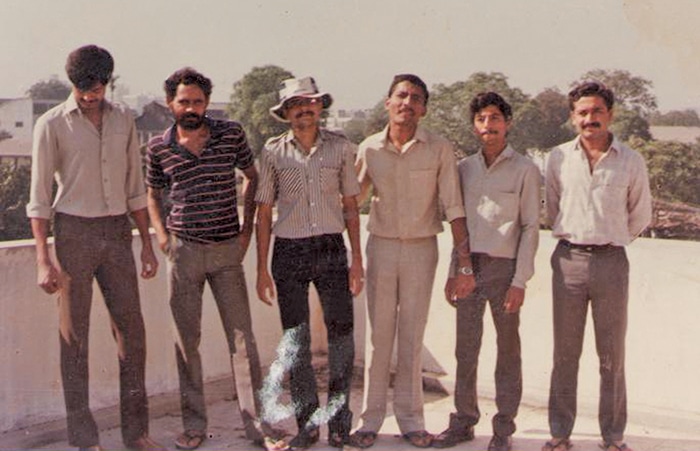
Ganesh eventually enrolled in engineering. Although higher education was relatively affordable at the time, it still involved certain expenses, which he chose to manage on his own. During his engineering years, he took up a few tuitions to support himself. In total, he taught four students, most of whom were preparing for the SSC examinations, while one required special assistance in mathematics.
Recalling those days, Ganesh explains that he taught a young woman in Vadodara who was preparing for competitive examinations such as the UPSC and GPSC, where analytical and aptitude tests were important components. As engineering students were generally strong in analytical thinking, Ganesh helped her prepare for those sections. In addition, he guided a school student interested in basic computer programming. Although the number of tuitions was small, the experience was memorable and meaningful for him.
Although Ganesh excelled academically, he had little interest in sports. He recalls that during those days, there was a common belief that students who were serious about their studies should focus only on academics. It was widely assumed that one could be either academically strong or actively participate in sports, but not both. As a result, Ganesh stayed away from sports and instead developed a strong interest in reading. Over time, reading became one of his favourite pastimes, a habit he continues to cherish whenever he finds the time.
His reading preferences leaned more towards fiction and autobiographies. Ganesh believes learning does not necessarily come only from management or academic books. Valuable lessons, he says, can be drawn from a wide range of reading material, whether fiction, autobiographies, or even newspapers. For him, every book offers insights and perspectives that contribute to personal growth.
Learning beyond engineering
Having studied in Gujarati-medium schools until Class 12, he had to adapt quickly when engineering instruction shifted to English. The transition was challenging. All his scientific and mathematical concepts had been learned in Gujarati, and suddenly he had to understand and communicate them in English.
The language barrier became especially evident during his first year at the Faculty of Technology and Engineering in Vadodara. The newly introduced computer science programme had only twenty students. Ten were from the Gujarat board, and ten had joined through an all-India entrance route, most of whom came from English-medium backgrounds. Among the Gujarat board students, only a few had studied in English-medium schools, leaving about five or six, including Ganesh, from Gujarati-medium schools.
Ganesh credits much of his growth to the company he kept during those formative years. He was fortunate to have a group of sincere and academically focused friends in his hostel. While hostels often offer many distractions and diverse peer groups, his circle consisted of career-oriented, committed students. Their influence encouraged him to read more and strengthen his language skills.
In his first semester, however, he failed two subjects, mainly due to language difficulties. When professors delivered lectures in English, Gujarati-medium students often struggled to understand the terminology. In the evenings, Ganesh and his friends would return to the hostel and study using English-to-Gujarati dictionaries, translating unfamiliar words to understand their textbooks.
He recalls a small yet telling incident from those days. “While preparing engineering drawing sheets, we were required to write our name, class, and roll number in the corner. I did not know the correct spelling and ended up writing ‘rall number’ instead of ‘roll number’. One of my friends noticed the mistake and corrected me. That moment clearly reflected how new and unfamiliar the language environment was for me.”
Despite these difficulties, Ganesh persisted. By his second year, he had begun to understand lectures more comfortably, though expressing himself was still challenging. During a class on the Fortran programming language, his professor, Dr R.C. Desai, noticed his hesitation while answering a question. Recognising the language barrier, the professor offered practical advice. He suggested that Ganesh start reading English newspapers regularly, especially The Times of India, to build familiarity with the language.
Ganesh took the advice seriously. In the hostel, he and his friends began reading newspapers and books regularly. Over time, this habit significantly improved his comprehension and communication skills in English.
The challenges of language, academic pressure, and adaptation often led to moments of frustration. Ganesh admits there were times when the pressure brought him to tears. However, the thought of giving up never crossed his mind. Ganesh sees resilience as central to his approach to challenges. Looking back at his early academic struggles, including failing two subjects in his first semester due to language barriers, he reflects that difficulties and setbacks are a natural part of life. For him, challenges were never reasons to stop but opportunities to keep moving forward.
From engineering to entrepreneurship
Ganesh completed a Bachelor of Engineering in computer science from the Faculty of Technology and Engineering at The Maharaja Sayajirao University of Vadodara. For years after graduation, his focus was on starting a business. However, with time, he realised that running an organisation required knowledge beyond engineering, in areas such as finance, human resources, marketing, and management.
“To deepen my understanding of these areas, I later enrolled in a four-month residential Management Development Programme (MDP) at the Indian Institute of Management Ahmedabad. Aimed at mid-level professionals and entrepreneurs, the programme provided an overview of subjects covered in a full-time MBA. While it was not a degree course, the experience offered valuable exposure to core management concepts as well as the teaching approach at IIM,” explains Ganesh.
He considers the programme highly beneficial for understanding the broader dimensions of running and managing a business.
While exploring ways to start a business, Ganesh accompanied his friends to a few government job interviews, primarily for exposure and learning. Interestingly, he was selected twice but chose to decline the offers. He also received opportunities from reputed organisations such as the National Informatics Centre and Instrumentation Limited, but consciously decided not to pursue them, as the comfort and stability they offered did not align with his ambitions.
Unwilling to take the easier route, he chose instead to work with smaller companies, where salaries were modest but learning opportunities were substantial. Working under a strict boss, Ganesh embraced challenges early on and faced a steep learning curve. He firmly believed that facing hardships and stretching his limits would help him grow far more than settling into a comfortable, predictable career path.
While his first boss had been extremely strict and difficult, his second workplace offered a stark contrast. “It was a very small company, with just two founders and one employee, and I was the fourth member, but the people were exceptionally supportive and inspiring,” shares Ganesh.
Despite the positive environment, he stayed there for only about 18 months. He felt a constant urge to do something on his own and test his capabilities. Around this time, he had recently got married and had taken a small loan of ₹11,000 from his employer to buy a scooter.
“When I decided to resign, a portion of the loan was still unpaid. To honour my commitment, I proposed taking up design projects for the company instead of drawing a salary, and used the earnings to repay the remaining amount,” shares Ganesh.

A turning point came when his former employer invited him to return with a better offer. Instead of accepting employment, Ganesh expressed his desire to start his own venture. Encouraging this ambition, his mentor suggested he begin as a consultant and even supported him financially by acting as a guarantor for a ₹55,000 loan from the State Bank of India. With this modest funding, Ganesh purchased a computer and founded his first company, Node Micro Systems, where he provided design services, including embedded software and hardware development.
The early days were marked by severe resource constraints. He worked without basic equipment, such as multimeters or oscilloscopes, and even lacked a proper workspace. Improvising with what was available, he would sit on the floor, using a household grain container as a makeshift workbench to assemble and test circuit boards.
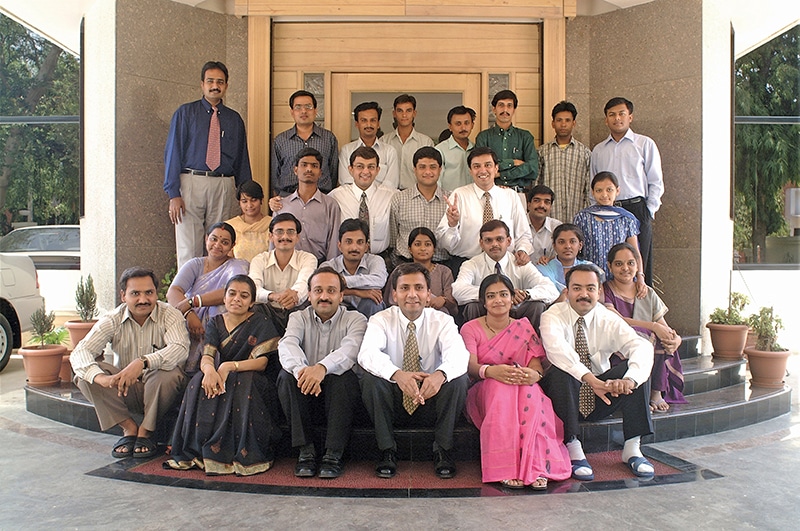
For nearly two years, he worked independently, building expertise and confidence. During this time, he took on a project to design a PBX (private branch exchange) system. Around the same period, his close friend and classmate, Dhirendra Savla, joined him in Vadodara and began contributing to the work. Both shared a common vision: to move beyond services and build their own products.
Recognising their ambition, Ganesh’s former boss proposed forming a partnership company. This led to the creation of Matrix Systems, with Ganesh, his friend’s wife, and his boss’s wife as partners. The company’s first product was the PBX system that Ganesh had been developing. “Initially, I managed both ventures, Node Micro Systems for consultancy and Matrix Systems for product development. Over time, my focus shifted entirely to building and manufacturing products, with PBX systems becoming the cornerstone of my business,” shares Ganesh.
Eventually, Node Micro Systems evolved into Matrix Telecom Private Limited, which became the main operating entity. Over the years, Ganesh consolidated ownership and now holds the majority stake, while his co-founder, Dhirendra Savla, continues to play a key leadership role as Chief Operating Officer.
While discussing the challenges of operating in a highly competitive market, Ganesh highlights his unique philosophy. He never viewed business as a battle to outdo others, but focused on quality, continuous improvement, and customer value. Despite limited resources, he embraced constraints, prioritising learning and making the most of available opportunities.
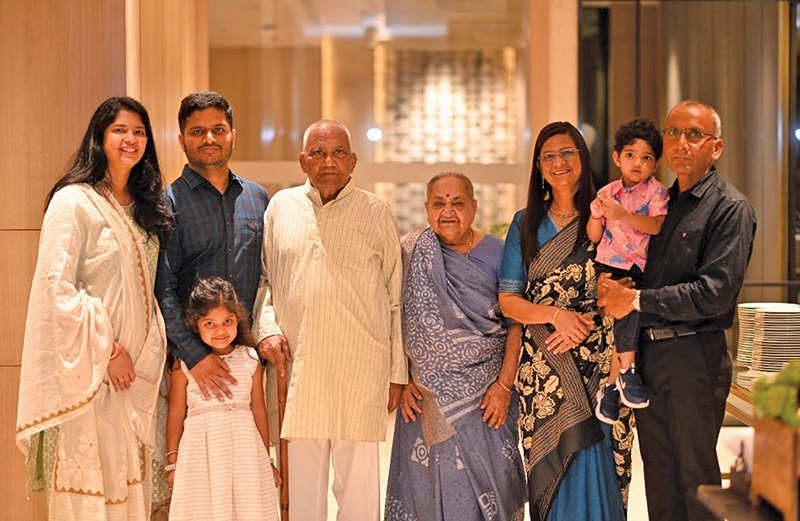
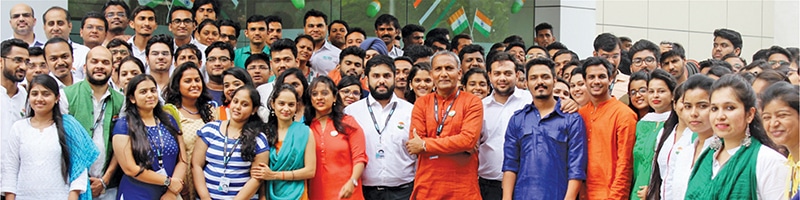
Today, Ganesh serves as CEO and Managing Director of Matrix Comsec, leading the company with a clear vision to build world-class products for global markets. As part of the company’s future roadmap, his son, who holds a PhD in computer vision and robotics, recently joined the business, marking the beginning of a structured succession plan.
| Some lesser known facts about Ganesh Jivani |
| Date of Birth – July 18, 1964 Place of Birth – Rasnal, Gujarat Favourite Food – South Indian Favourite Drink – Chacch (Butter Milk) Favourite Music – Devotional Music |
Rooted in values, strengthened by family
When asked about role models who influenced him during his student years, Ganesh says he was less focused on emulating a particular individual and more inspired by the values people embodied. For him, what truly defines greatness is not merely achievement but the mindset, character, and principles that guide a person’s life. He believes achievements often depend on circumstances and opportunities, but values are universal and can be learned from anyone.
Among the people who influenced him most were members of his own family. He often recalls his grandmother as an example of resilience and strength. Born into a generation when education was rare in rural India, she had been married at the age of two-and-a-half in a traditional child marriage common at the time.
“Although she could neither read nor write, her outlook towards life, simplicity, and emotional strength left a lasting impression,” says Ganesh.
Experiences like these shaped Ganesh’s belief that inspiration can come from ordinary people who live with extraordinary values.
Family has remained central to Ganesh’s life. During his college years, he met Anjali, who was studying for a Master of Computer Applications (MCA) in the same department. Their friendship evolved into a relationship, and despite coming from very different cultural backgrounds, Ganesh from a farming Patel family and Anjali from an educated Maharashtrian family, they decided to get married in 1989.
Over the years, Anjali became one of the strongest pillars of support in Ganesh’s life. She later pursued a PhD in computer science and built an academic career as a professor at the same college where they had studied together, even serving as head of the computer science department for several years. Although both have technical backgrounds, they consciously chose not to work together professionally, allowing each to focus on their respective paths.
Ganesh often credits his wife as the “glue” that holds the family together. Today, their household in Vadodara includes four generations living under one roof: his parents, the couple themselves, their son and daughter-in-law, and their grandchildren. His daughter holds a PhD and works in the semiconductor industry in the United States, while his daughter-in-law is a technology professional with an MBA. Being surrounded by highly accomplished family members, Ganesh modestly describes himself as the least educated among them.
Over the years, their home has also served as a place of opportunity for many relatives from their village. Several children from the extended family stayed with them in Vadodara to pursue their education, and Anjali played a significant role in caring for them and supporting their studies.
“Reflecting on these experiences, I feel that whatever my wife and I have done for others is only a small part of what my own family once did for me. Despite having limited resources, my parents and relatives made immense sacrifices to ensure that I received a good education and had the opportunity to build a better future.”
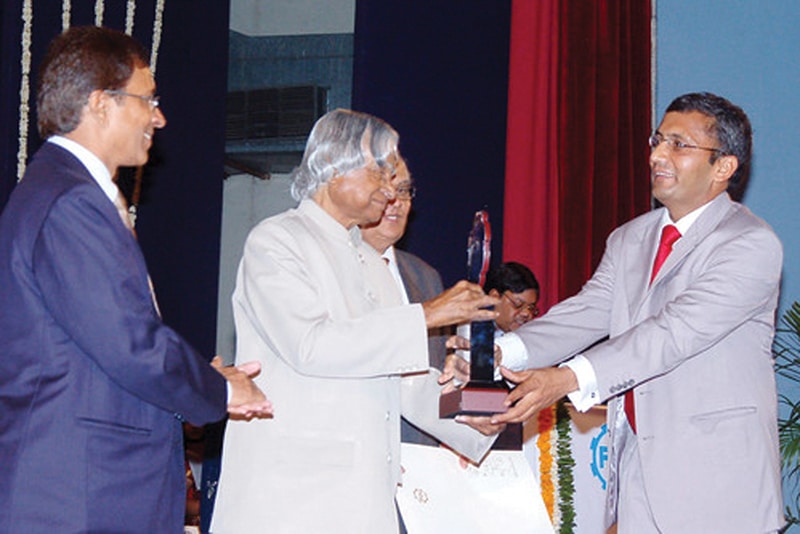
When asked about mistakes and lessons from his career, Ganesh says he has very few regrets. He considers himself fortunate and often describes his life as blessed. While there have been moments in business where he feels certain decisions could have been made differently or sooner, he does not dwell on them. Instead, he focuses on gratitude for the opportunities he has received.
In his own words, if life were to offer him another chance to live it again, he would happily choose to repeat the same journey.
| With strong dedication and a disciplined approach, Matrix has earned recognition from prestigious international design award programmes, including the Red Dot Award, Good Design Award, and Product Design Award. |
Excellence first, impact follows
Ganesh believes that the primary responsibility of any business is to build a strong and successful organisation.
“Starting a business solely to create social impact, in my view, is a misplaced priority. As a technology company, our focus should be on building world-class products, capabilities, and scale. Meaningful social impact naturally follows when we excel in what we are fundamentally meant to do,” adds Ganesh.
He also highlights the importance of this mindset in the Indian context, where there is still significant dependence on technologies developed abroad. For him, the larger mission has always been to prove that Indian companies can design and manufacture globally competitive products. Only when a business achieves such scale and excellence can it create a lasting and meaningful impact.
At the same time, Ganesh and his organisation actively contribute to society through focused initiatives. Rather than spreading efforts thinly, they have chosen to concentrate on a single institution, the Faculty of Technology and Engineering at The Maharaja Sayajirao University of Baroda, where he studied. Over the past several years, they have invested significantly in upgrading the computer science department, modernising classrooms, laboratories, and infrastructure to create a world-class learning environment. Their contributions also extend to upgrading the institution’s auditorium, reflecting a consistent commitment to improving educational facilities.
On a personal level, Ganesh has also contributed to his village community by supporting the construction of a community hall, which has been named in honour of his grandmother, someone who deeply influenced his values and outlook on life. He maintains a clear distinction between personal contributions and corporate responsibilities, ensuring transparency in both areas.
Beyond work, Ganesh leads a balanced and active life. He is passionate about fitness, playing tennis regularly and participating in long-distance running events, including half-marathons. Professionally, his focus remains unwavering, scaling his company into a global technology leader and demonstrating that Indian engineers can build products that compete worldwide.
“Motivation does not come only from external sources—it comes from within. While inspiration can be temporary, I believe that one’s belief system and inner drive provide lasting direction. My approach to life and work is grounded in authenticity, being true to myself, doing meaningful work, and finding joy in the process,” highlights Ganesh.
Despite his achievements, Ganesh remains humble about his legacy. He does not seek to be remembered, but rather to live a fulfilling life driven by purpose. His message to future generations is straightforward: stay true to yourself, do good work, enjoy life, and strive to leave the world a little better than you found it.