

A new servo-driven micro-resistance welding head eliminates the use of compressed air, improving precision, speed, and repeatability in high-volume electronics manufacturing while enabling real-time process monitoring and reducing operating costs.
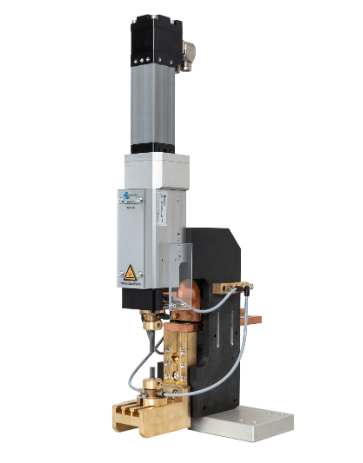
A new servo-driven welding head technology from KombiTec GmbH aims to shift micro-resistance welding by combining higher precision, faster cycle times, and improved process control, without relying on compressed air systems. The system is designed for high-repeatability applications in electronics and precision manufacturing, where consistency and speed directly impact output quality and throughput.
At the core of the system is a fully servo-controlled architecture that replaces conventional pneumatic actuation. This allows direct inverter-based control of force and electrode positioning, enabling tighter control over welding parameters. The result is improved accuracy in micro-welding tasks where even minor deviations can affect joint integrity.
The design also significantly reduces cycle times. By enabling faster electrode movement and eliminating delays associated with pneumatic systems, the platform supports higher production throughput. This makes it suitable for high-volume assembly lines in electronics, automotive electronics, and precision component manufacturing.
The key features are:
- Direct servo inverter control for precise force and electrode positioning
- High-speed electrode actuation enabling shorter welding cycle times
- High repeatability ensures uniform weld quality across batches
- Compressed-air-free operation reduces energy and maintenance costs
- Real-time process data integration for advanced production monitoring
A key aspect of the system is its integration with advanced inverter technology developed in collaboration with Bosch Rexroth. This integration allows real-time monitoring of process data, giving manufacturers better visibility into welding performance and enabling adaptive process control in modern smart factories.
Operating without compressed air further reduces infrastructure complexity and energy consumption. This shift not only lowers operational costs but also simplifies installation and maintenance requirements, making it attractive for manufacturers aiming to optimise production efficiency.
The system is well-suited for applications requiring tight process tolerances, including microelectronics assembly, sensor manufacturing, and fine metal joining, where repeatability and stability are critical.
By combining servo precision with digital process intelligence, the technology represents a shift toward more compact, efficient, and data-driven welding systems for next-generation manufacturing environments.