


A novel design reduces material loss inside the system, producing results that challenge existing limits and suggest new directions for renewable energy storage.
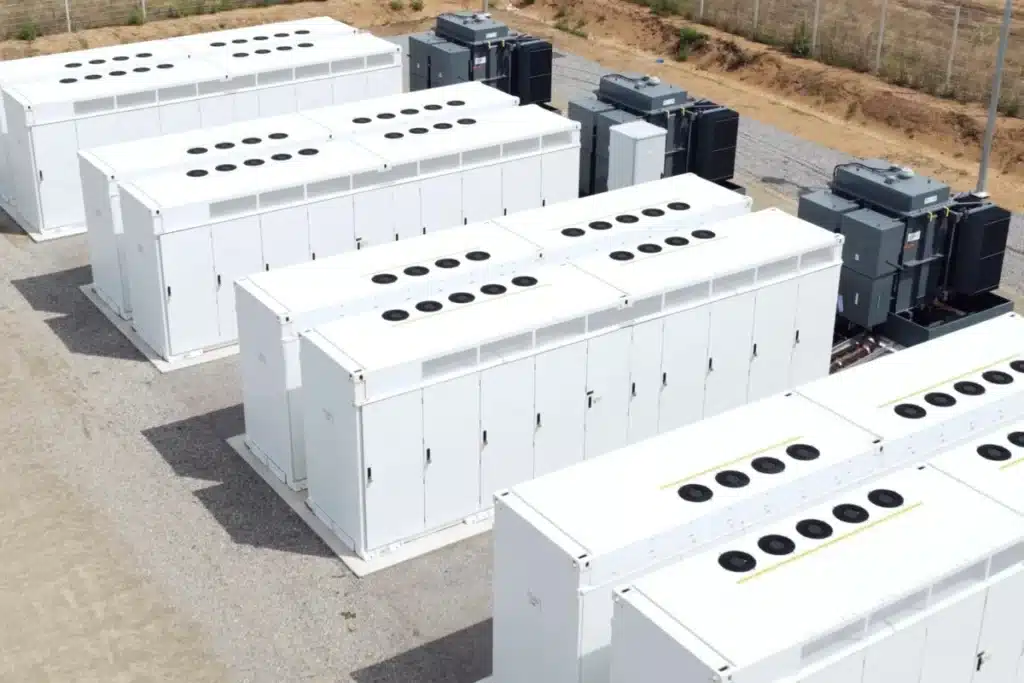
A research team from the Chinese Academy of Sciences has developed an “all-iron flow battery” designed to lower energy storage costs while extending operational lifespan. The study, published in Advanced Energy Materials, introduces a redesigned electrolyte capable of sustaining thousands of charge-discharge cycles with minimal degradation.

Iron-based flow batteries have long been considered a promising alternative to lithium-ion systems due to the abundance and low cost of iron. However, their commercial deployment has been constrained by instability in iron electrolytes, particularly at the negative electrode, where active materials degrade or cross the membrane, leading to reduced efficiency and shorter lifetimes.
To address this, the researchers developed a molecular-level design strategy centered on a newly engineered iron complex. The structure combines steric hindrance with electrostatic repulsion, creating a dual protection mechanism that limits both chemical degradation and material crossover. This approach stabilizes the electrolyte while maintaining system performance under demanding conditions.
Experimental results showed the battery operated for more than 6,000 cycles without measurable capacity loss, simulating over a decade of daily use. The system achieved a coulombic efficiency of 99.4 percent and retained 78.5 percent energy efficiency under high power output. The design also reduced active material crossover by two orders of magnitude compared to conventional iron flow batteries.
The development aligns with broader global efforts to advance iron-based storage technologies for grid-scale applications. Companies such as ESS Tech Inc. and research groups at Georgia Institute of Technology are exploring similar approaches, though challenges related to stability and side reactions remain.
“We combined high steric hindrance with a negatively charged interface for the first time,” lead researcher Tang Ao wrote in the academic article. “This dual protection mechanism addresses both degradation and crossover at the molecular origin, which have long limited the lifespan of iron-based flow batteries.”