




New automotive-grade optocouplers deliver higher isolation voltage, longer creepage distances, and improved thermal performance for EV power electronics and solar inverter systems.
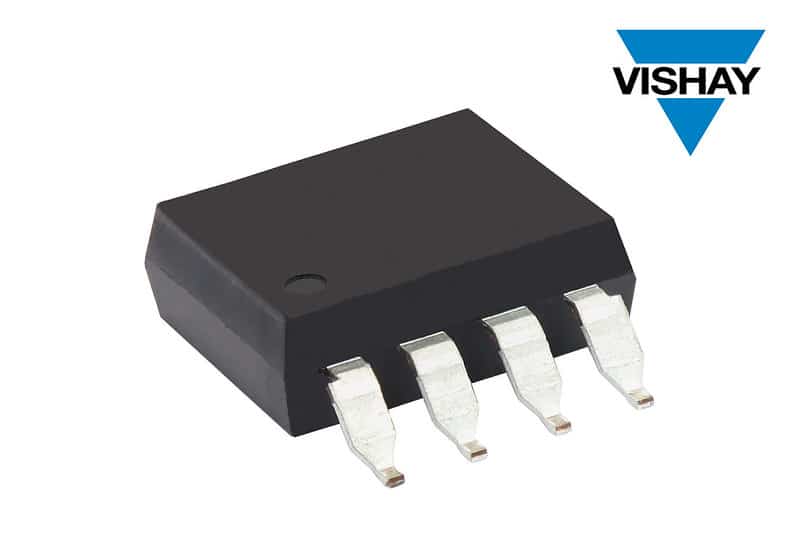
Automotive and renewable energy systems are pushing power electronics toward higher voltages, creating stronger requirements for electrical isolation and safety. To address these needs, a new series of automotive-grade optocouplers has been introduced, featuring wider creepage distances and higher insulation performance, designed for electric vehicles and solar inverter applications.
The newly launched devices by Vishay Intertechnology target high-voltage signal transmission environments where maintaining electrical separation between control and power circuitry is critical. Applications include grid-connected on-board chargers (OBCs), DC/DC converters, and battery management system (BMS) isolation stages commonly used in EV architectures and energy systems.
The devices combine an infrared emitter with a silicon planar phototransistor detector in a widebody SMD-8 package. Their design emphasises reinforced insulation capabilities for systems operating under demanding electrical conditions. With creepage and clearance distances of at least 11 mm, the components provide a safety margin that is more than 38% higher than that of conventional 8 mm alternatives frequently used in similar applications.
The key features are:
- ≥11 mm creepage and clearance distance
- 1500 Vpeak repetitive isolation voltage
- 1060 VRMS working isolation capability
- CTI 600 with Material Group 1 insulation rating
- Operating range from -40°C to +125°C with +145°C junction capability
Insulation capability is further enhanced through a repetitive peak isolation voltage rating of 1500 Vpeak and a working isolation voltage of 1060 VRMS. The devices also provide an isolation voltage of 5300 VRMS and transient isolation performance reaching 8000 Vpeak. These specifications are intended to support higher-voltage EV and grid-connected systems where electrical separation requirements continue to rise.
The devices feature a comparative tracking index (CTI) of 600, significantly above the CTI values found in many standard solutions. This enables a Material Group 1 insulation rating, which can help designers improve insulation reliability while reducing concerns related to surface leakage paths in high-voltage environments.
Thermal capability has also been extended. Unlike many consumer-grade alternatives designed for operation up to +85°C, the new devices support operating temperatures from -40°C to +125°C, with junction temperatures reaching +145°C. Their collector-emitter voltage rating of 80 V also offers additional design flexibility across industrial and automotive applications.
Click here for the original announcement.


