

As power systems switch faster and handle more energy, a new DC-link capacitor series targets the needs of SiC-based converters.
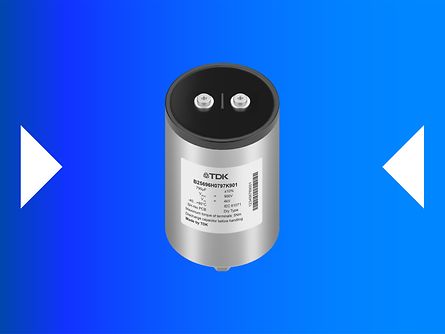
TDK Corporation has introduced the B25696H series of MKP DC high-frequency film capacitors for silicon carbide (SiC)-based power electronics. The series is intended for power conversion systems used in renewable energy converters, energy storage systems, solid-state transformers, traction inverters, and industrial motor drives.
The capacitors are available with capacitance values from 47 µF to 1280 µF and rated DC voltages from 900 V to 2000 V. They are designed for applications that operate at high switching frequencies.
The B25696H series uses an internal busbar structure that distributes current across the capacitor windings. This design reduces self-inductance to as low as 30 nH and achieves ESR values down to 0.8 mΩ at 10 kHz. The capacitors maintain ESR performance up to 100 kHz. Lower inductance and resistance help reduce voltage overshoot during switching and decrease electrical stress on SiC devices.
The series supports ripple currents of up to 91 A at 10 kHz and an ambient temperature of +60°C. The capacitors use a metallized polypropylene dielectric housed in an aluminum case with a resin top. They are available in 85 mm and 100 mm diameters and feature M6 screw terminals with an M12 mounting bolt.
The operating temperature range is -40°C to +85°C hotspot temperature. At rated voltage and a hotspot temperature of +75°C, the capacitors provide a lifetime of 100,000 hours. With voltage and temperature derating, operating life can reach up to 200,000 hours.
TDK also offers the CapThermal online tool, which allows engineers to model thermal behavior and estimate capacitor lifetime under specific operating conditions. The tool can be used during component selection and system design.
Applications include DC-link stages in solar and wind energy converters, traction inverters for trains, subways, and trams, industrial motor drives, solid-state transformers, and energy storage systems.
Click here for the original announcement.