




What if farming no longer depended on soil intuition, but responded in real time to sensor-driven data that governs how crops are grown, irrigated, and optimised?

Just outside Ahmedabad, inside a climate-controlled facility the size of a small industrial estate, a quiet transition in how food is produced is taking shape. Sensors track the temperature of plant leaves. Automated systems determine when to irrigate and how many nutrients to deliver. Robotic sprayers move through rows of capsicum and cucumber with minimal human intervention. This is part of the early phase of what Ahmedabad-based agritech company Brio Agri describes as one of India’s largest hydroponic parks, a 100-acre (approximately 40.47 hectares) controlled environment agriculture system built around predictability through data.
The model reflects a growing attempt to reduce agricultural uncertainty. For every season of bounty, there is a drought, pest outbreak, or market fluctuation. The company is led by founder and chairman Pravin Patel, who grew up closely observing these variables in traditional farming systems and argues that the solution lies not in better luck, but in better control.
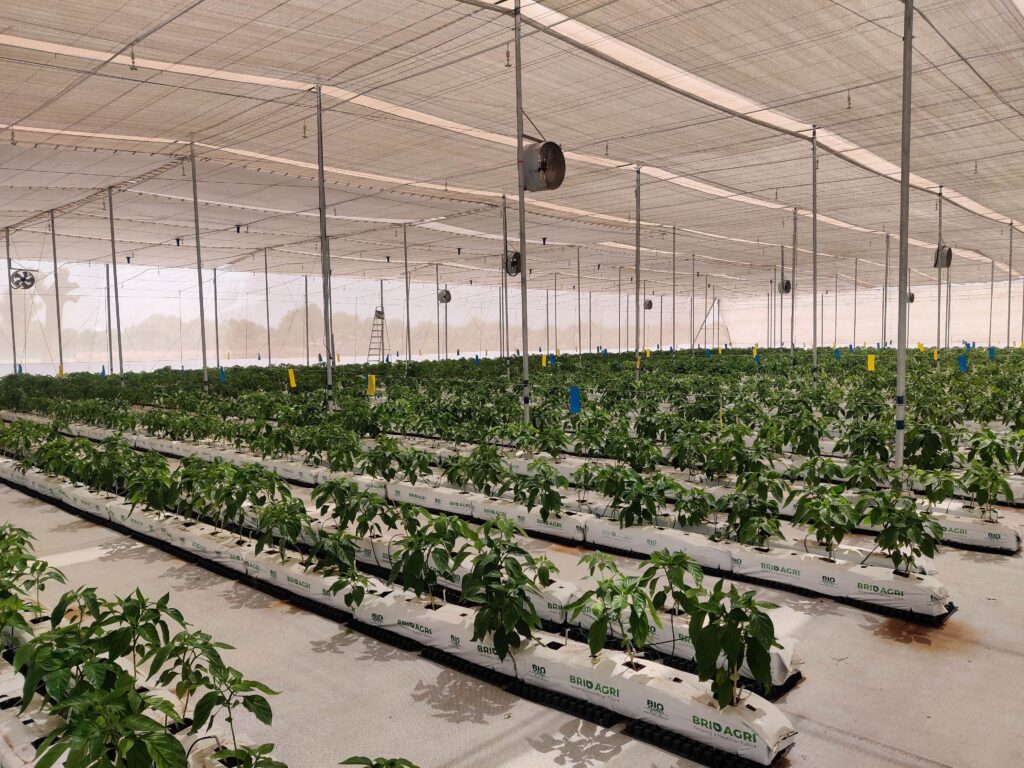
“One of the biggest limitations of traditional farming has always been the difficulty of accurately forecasting production outcomes,” he says. After more than a decade of operating smaller farms and training programmes, the company is now scaling its controlled-environment model ‘Unnati Project’ in Talod, Gujarat, where the first phase of its 180-acre (approximately 72.84 hectares) development is already operational.
What makes this shift notable is not hydroponics itself, but the integration of multiple technologies into a single controlled system. The model combines IoT sensors, automated fertigation, PLC-based control systems, and AI-driven crop imaging to reduce reliance on manual labour and improve consistency in production outcomes. Environmental parameters such as temperature, humidity, pH, electrical conductivity, CO₂ levels, and light intensity are continuously monitored and adjusted through automated feedback loops.
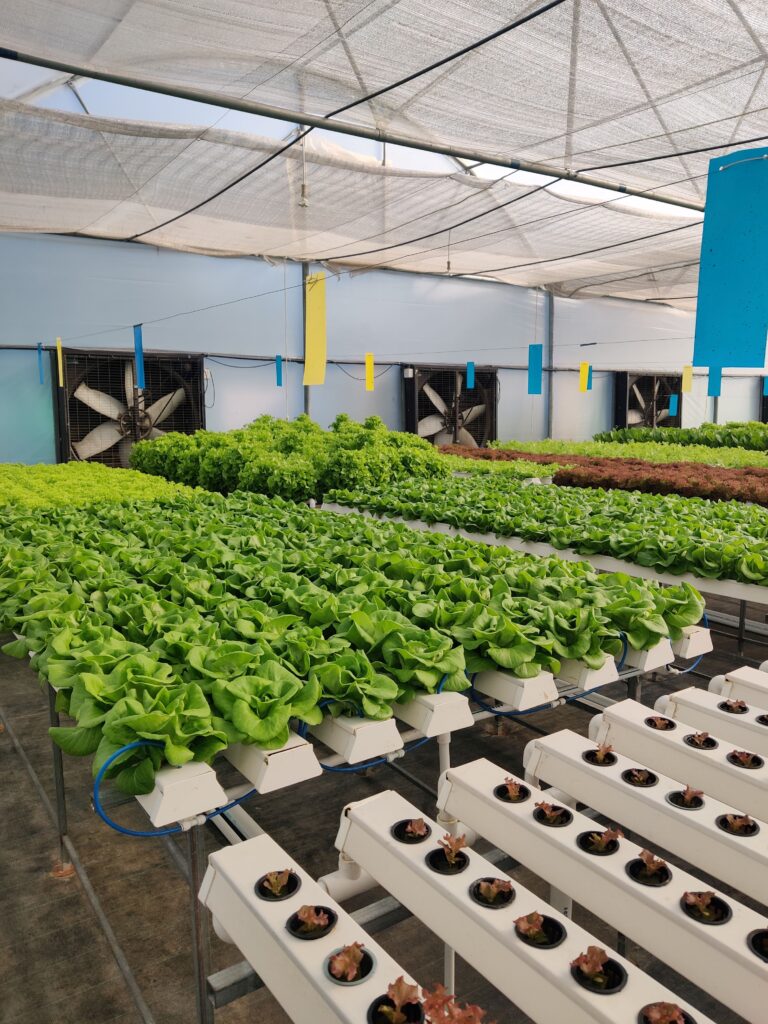
A key element of this approach is using crop cycle data as a learning layer. Each cycle generates structured datasets that are analysed to refine future production cycles, including yield prediction and input optimisation. “Data is becoming the new fertiliser,” the founder notes, referring to how operational insights from each cycle are increasingly used to optimise how resources are applied in subsequent cycles.
The system also incorporates automation for repetitive agricultural tasks such as irrigation scheduling, fertigation, and spraying, along with digital traceability layers that record environmental conditions and inputs across the full crop lifecycle.
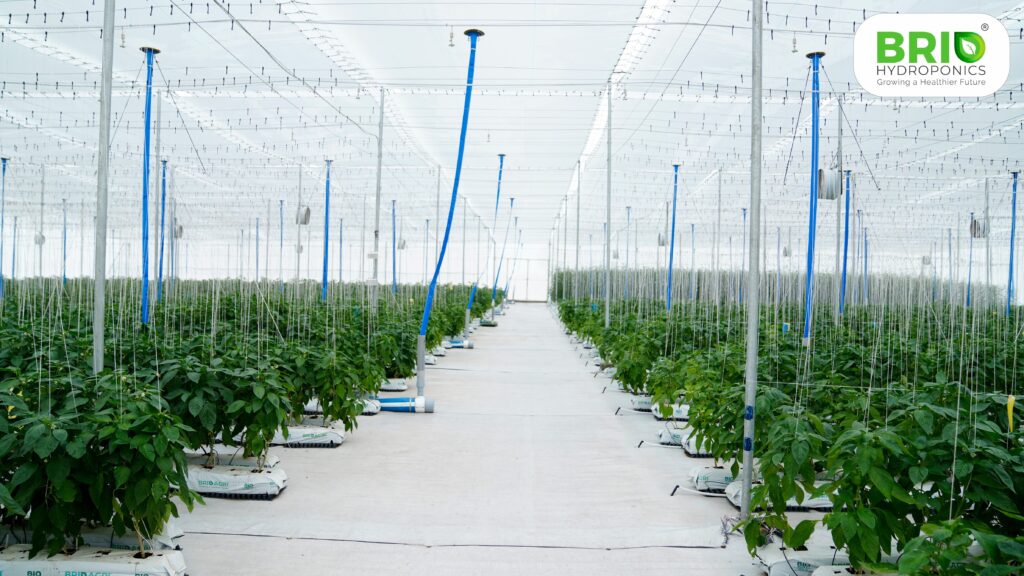
The founder acknowledges that adoption of such systems remains gradual, shaped by financial constraints and operational familiarity within traditional farming ecosystems. “Every industry has its own culture. Introducing new technologies into existing practices becomes a challenge,” he says.
Still, the Talod facility represents a working deployment rather than a conceptual model. The broader question now is how such controlled-environment systems scale in Indian agriculture. For now, the shift suggests a clear direction: farming is gradually moving toward environments where outcomes are increasingly shaped not by weather alone, but by continuous streams of data and automated control systems.

