A physical AI system maps human pressure in real time, enabling beds and chairs that adapt posture, movement, and comfort continuously. How?
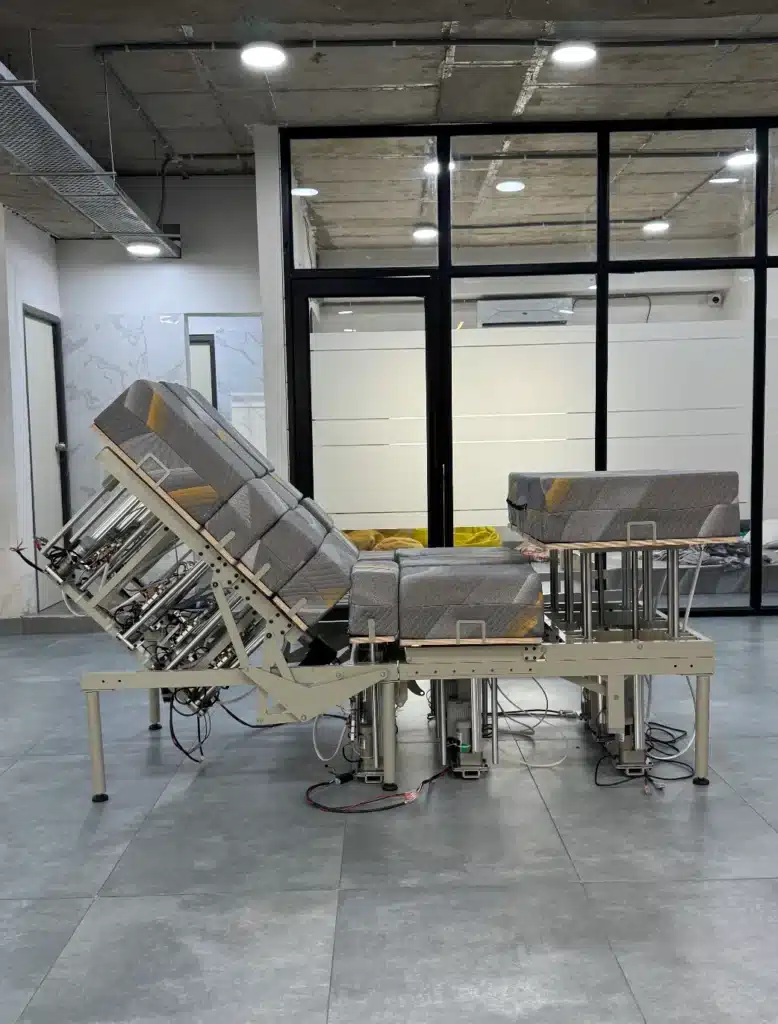
Water Robotics, a deeptech startup focused on physical AI systems, is developing a computing platform that interprets human body pressure in real time and adapts the surfaces people interact with every day. Built around beds and chairs that continuously sense and respond to posture, the system turns passive furniture into adaptive mechanical environments.
At the core of the platform is a multi layer AI stack that combines on device models with a large scale cloud reasoning system. The on device layer runs six specialised models locally, including pressure based identity mapping, posture detection, anatomical keypoint estimation, and reinforcement learning for actuator control. A larger cloud model coordinates learning across deployed systems while ensuring raw biometric data remains local.
The hardware platform is built around high density pressure sensor grids and distributed actuation. The bed variant uses over ten thousand sensing points and more than forty independently controlled actuators to reshape support in real time. A chair version applies a similar but smaller scale architecture designed for seated posture tracking and spinal load measurement.
A key feature of the system is its closed loop actuation logic. Movement adjustments are triggered only during low physiological sensitivity phases such as exhalation, allowing the system to modify support without causing discomfort. Sleep and posture states are inferred through recurrent neural networks that process heart rate and respiratory patterns derived passively from pressure signals.
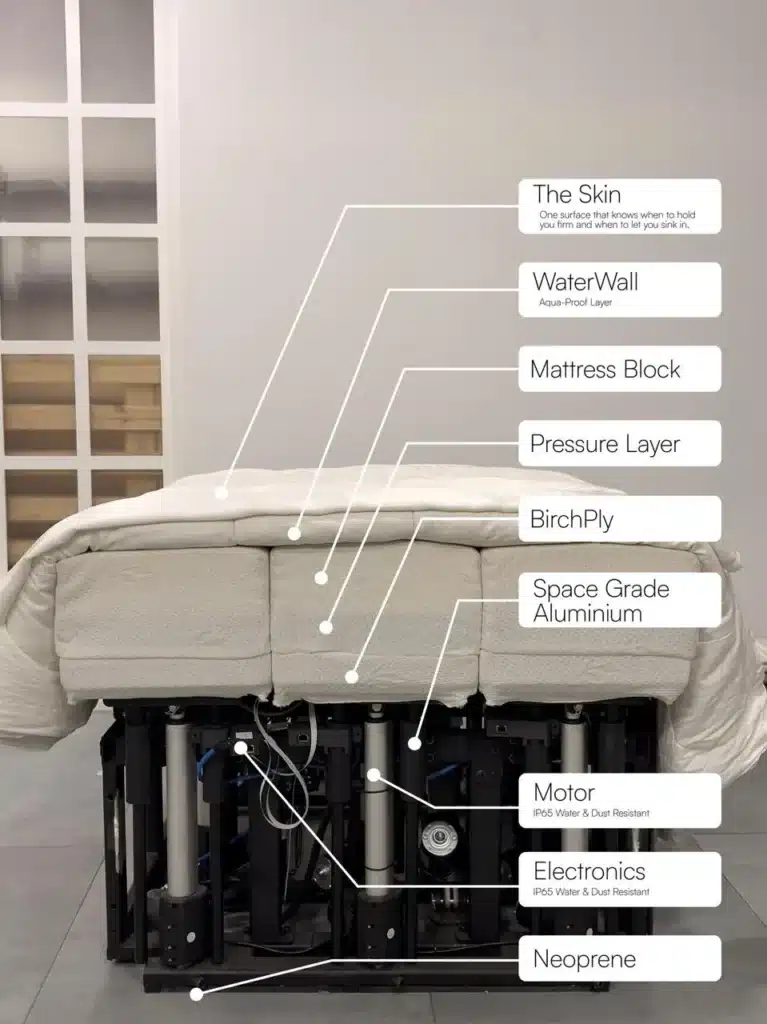
The design also focuses on signal fidelity at the mechanical layer. The mattress architecture is engineered as an invertible pressure system, ensuring that force distribution remains measurable without distortion from material memory or damping effects. This enables stable long term tracking of posture dynamics rather than isolated readings.
Safety constraints are fully hardware enforced, with voltage limits, motion boundaries, and fail safe systems operating independently of AI control loops.
According to founder Teja Vinukollu, the system evolved from extensive work across consumer and enterprise hardware platforms and was optimised to reduce per unit electronics cost while improving sensing resolution and real time control.
The platform reflects a broader shift toward physical AI systems where computation is embedded directly into environments that respond to human behaviour in continuous feedback loops.