Electronic devices can now use six thermistors to protect low-voltage circuits, save board space, and improve power use.
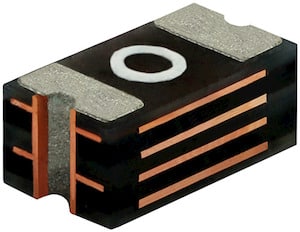
Vishay Intertechnology has expanded its overcurrent protection portfolio with six new surface-mount polymer positive temperature coefficient (PTC) thermistor series. The new devices are designed for electronics designers, OEMs, and manufacturers developing computer, industrial, telecom, and consumer products that require compact, resettable circuit protection.
The new PPTC0603E3, PPTC0805E3, PPTC1206E3, PPTC1210E3, PPTC1812E3, and PPTC2920E3 series enable engineers to protect low-voltage circuits from overcurrent conditions without replacing a fuse after a fault occurs. Once the fault is cleared, the thermistors automatically reset, helping reduce maintenance, improve product reliability, and lower service costs. They can be integrated into products such as USB-C ports, Power over Ethernet (PoE) systems for computer peripherals and telecom equipment, battery-powered industrial tools, consumer electronics, home appliances, industrial automation systems, and home automation heating controls.
The thermistors support holding currents of up to 5.0A and provide trip times as low as 50ms, allowing them to respond quickly to excessive current and help prevent damage to sensitive electronic components. Their resistance is as low as 5mΩ, reducing voltage drop and improving power efficiency during normal operation.
To support a wide range of product designs, the thermistors are available in six surface-mount package sizes, from 0603 to 2920, with heights ranging from 0.3mm to 2mm. This gives designers flexibility to use the devices in both space-constrained portable electronics and larger industrial equipment while optimizing PCB layout.
The new thermistor series is RoHS compliant and halogen-free and is compatible with lead-free soldering processes at temperatures up to 260°C. Vishay also provides SPICE and 3D models, allowing engineers to simulate circuit behavior, verify protection performance, and optimize designs before moving to production, helping reduce development time and improve first-pass design success.
Click here for the original announcement.