






Could nature inspired microscopic structures unlock cooler AI chips while reducing the growing energy and water demands of future data centers?
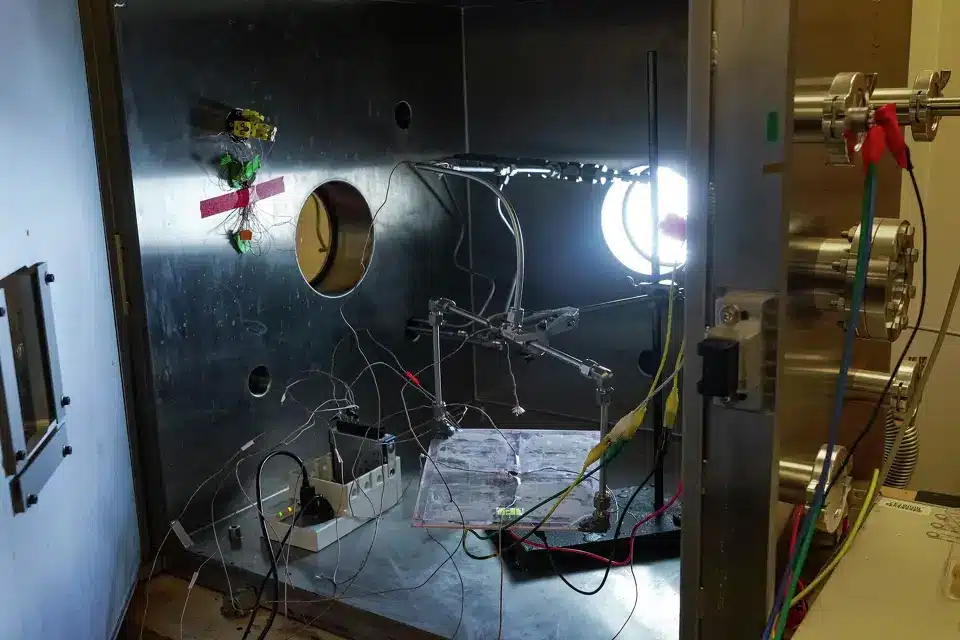
Researchers at the University of Houston have developed an AI assisted approach to designing semiconductor cooling structures that could improve heat removal by up to three times compared to conventional designs. Published in the International Journal of Heat and Mass Transfer, the research aims to reduce the energy and water required for cooling AI data centers, where increasing processor performance is driving higher thermal loads.
The work addresses one of the key challenges facing modern computing infrastructure. As semiconductor devices become smaller and more powerful, they generate greater amounts of heat, requiring increasingly intensive cooling systems. Improving thermal management could help lower operational costs, reduce water consumption, and support more sustainable expansion of AI data centers without proportionally increasing electricity demand.
Instead of relying on trial and error to design cooling structures, the research team used artificial intelligence to evaluate numerous microscopic geometries. The analysis identified branched, tree like pillar structures as the most effective for transferring heat through evaporation. Similar patterns are commonly found in natural systems such as river networks and human lungs, where branching maximizes the movement of fluids and energy.
The cooling structures, each measuring about one centimetre across, are mounted on semiconductor wafers through which water continuously flows to dissipate heat. According to the researchers, a single semiconductor wafer can generate extremely high thermal loads, making efficient cooling essential to prevent device failure. The AI optimized structures improved heat removal efficiency by as much as three times over conventional pillar designs while offering the potential to reduce cooling related energy and water consumption.
“We can have the growth of AI, but with a sustainable approach and less energy intensive approach. Data centers will be everywhere in the future. If we could make them more sustainable, it’s definitely in the benefit of everyone in the society,” says Hadi Ghasemi, Professor of Mechanical and Aerospace Engineering at the University of Houston.


