A computing platform that combines AI, quantum computing, and energy efficient design to support next generation scientific workloads.
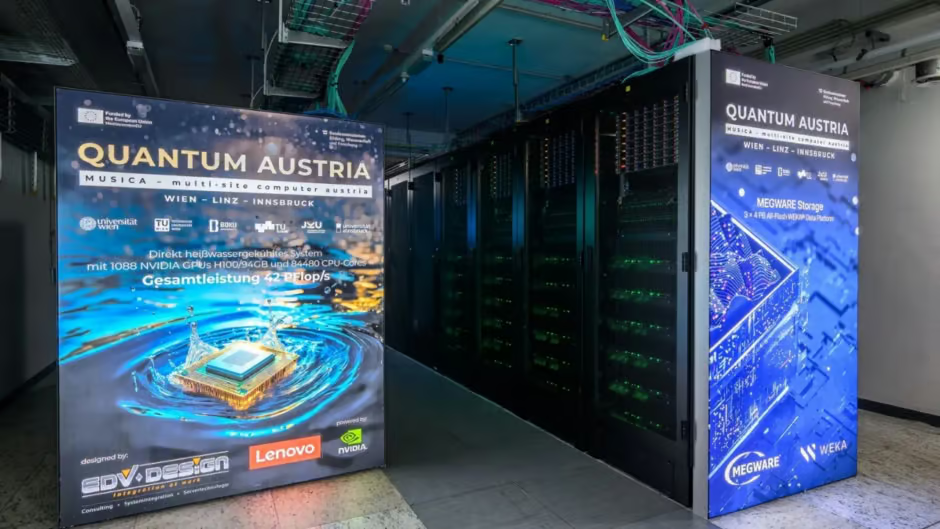
Austria has launched MUSICA, a high performance computing platform designed to support artificial intelligence, scientific simulations, and data intensive research. Ranked among the world’s 100 fastest supercomputers, the system delivers 45.11 petaflops of computing performance using 1,088 NVIDIA H100 GPUs, providing more than eight times the processing capability of the country’s previous generation systems.
The platform is intended to address growing computational demands across AI model development, engineering analysis, environmental research, and advanced scientific computing. By increasing available processing power, it enables researchers to train large neural networks, process larger datasets, and run complex simulations more efficiently. Universities will have access for research, while businesses can use the infrastructure through a commercial pay per use model.
The system integrates 1,088 NVIDIA H100 accelerators with cloud server infrastructure and operates as a unified computing resource despite being distributed across three locations in Austria. This architecture is designed to maintain operations even if one site becomes unavailable, improving resilience for long running workloads. It is also connected to Austria’s production quantum computer, OTTER, enabling researchers to combine high performance computing, artificial intelligence, and quantum computing resources within a shared national infrastructure.
To improve operational efficiency, the installation uses direct hot water cooling for most of its computing hardware. This approach enables year round free cooling and reduces energy consumption compared with conventional air cooled systems.
“MUSICA is not only by far the largest supercomputer in Austria. It is a clear commitment by policymakers to Austria as a center of research, a flagship of inter university collaboration, and an unprecedented driver of data intensive research and AI development,” says Christoph Pfeifer, Vice Rector for Research and Innovation at BOKU University.
Click here for the official announcement.