


Huawei has unveiled the Kirin 2026 processor, claiming significantly higher computing performance and lower power consumption through an innovative logic layout redesign approach.
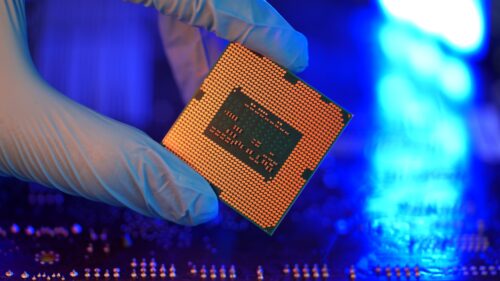
Huawei Technologies has unveiled engineering details of its Kirin 2026 smartphone processor, claiming the new chip delivers 55% higher transistor density and improved power efficiency through its LogicFolding architecture rather than relying on a more advanced manufacturing process. The company said the processor also cuts power consumption while maintaining performance gains, marking a different approach to semiconductor scaling.
According to Huawei, the Kirin 2026 achieves a 55% increase in transistor density compared with the previous Kirin 9030 Pro while using the same fabrication node. The company also reported a 41% reduction in power consumption for equivalent performance and a 5.6% decrease in power density under operating conditions of 77°F and 0.9V.
Instead of shrinking transistor dimensions, Huawei said its LogicFolding architecture reorganises the physical layout of logic circuits to shorten signal paths and improve communication across the chip. The company stated that the double-layer design reduces wire lengths by 30%, lowers clock buffer counts by more than 50% and cuts clock skew by 28%, resulting in improved processing efficiency.
Huawei described the technology as part of its Tau Scaling Law, an alternative to conventional Moore’s Law scaling. Rather than focusing solely on transistor miniaturisation, the approach aims to improve performance by reducing the time required for data to move across the processor.
Looking ahead, Huawei expects LogicFolding to evolve from a two-layer implementation to three-layer, four-layer and multi-tier chip designs over the next decade. The company also outlined a roadmap targeting CPU frequencies of 3.1GHz this year and 4GHz by 2029.
Huawei acknowledged that commercial deployment will require overcoming manufacturing challenges, including heat dissipation, production yield and industry-wide collaboration on design tools, manufacturing technologies, standards and benchmarks. The company added that the research has been published on ChinaXiv and has not yet undergone peer review.