




An animal-inspired robotic sensory system that integrates touch, hearing, and vision, enabling robots to detect hazards, adapt to changing environments, and interact more naturally with humans.
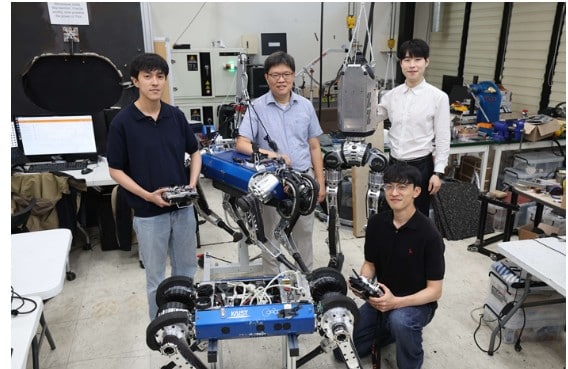
Researchers at the Korea Advanced Institute of Science and Technology (KAIST) have developed a bio-inspired robotic sensory system that combines tactile, visual, and auditory perception, allowing robots to respond to their surroundings in a way that closely resembles animals. The technology is designed to improve robotic autonomy in dynamic environments where conventional vision-only systems often struggle.

The research focuses on creating an integrated sensory architecture rather than relying on individual sensors. Inspired by how animals continuously combine multiple sensory inputs to interpret their surroundings, the system enables robots to fuse information from electronic skin, cameras, and microphones. This multimodal perception allows robots to identify physical contact, recognize environmental changes, and make faster movement decisions with improved reliability, even in situations involving poor visibility, unexpected obstacles, or noisy conditions.
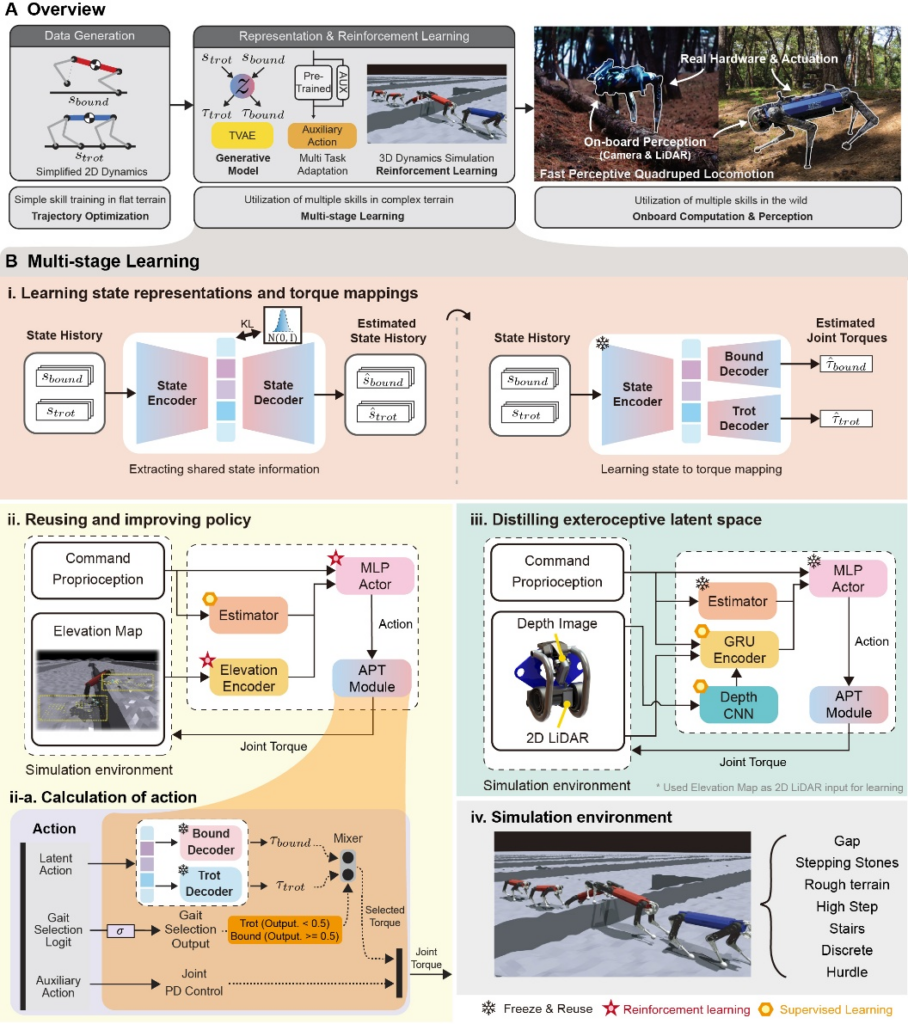
A key innovation is the incorporation of advanced electronic skin that functions as an artificial tactile layer across the robot’s body. Unlike traditional force sensors positioned at limited locations, the flexible skin continuously detects touch, pressure, and external interactions over a larger surface area. The sensory data is processed alongside visual and acoustic information, enabling the robot to distinguish between intentional human contact, environmental disturbances, and potential hazards. This integrated perception improves situational awareness while reducing dependence on a single sensing modality.
The technology is expected to benefit applications where robots operate alongside people or in unpredictable environments. Industrial automation systems could perform safer human-robot collaboration, while service robots may navigate crowded public spaces with greater confidence. Search-and-rescue platforms, healthcare assistants, agricultural robots, and autonomous inspection systems could also benefit from enhanced environmental perception and adaptive decision-making capabilities. The approach improves operational safety while enabling robots to react more naturally to complex real-world situations.

Beyond robotics, the research demonstrates how flexible electronics, intelligent sensing, and embedded artificial intelligence are converging to create machines capable of more human-like interaction. By integrating electronic skin with multimodal sensor fusion, KAIST’s work represents a significant step toward next-generation intelligent robots that can perceive, interpret, and respond to their surroundings with greater adaptability than conventional robotic platforms.



