


A portable optical device detects multiple contaminants in water, provides digital results, and wirelessly sends data for water quality monitoring.
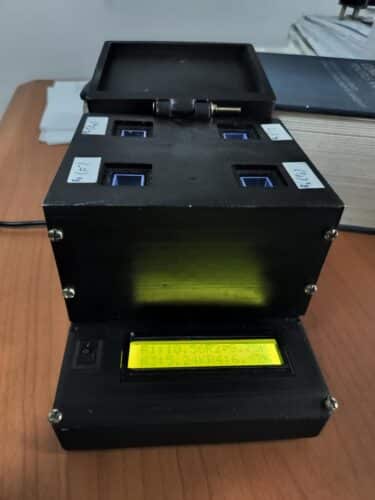
Researchers at the Indian Institute of Technology (IIT) Guwahati have developed a portable optical sensing device that can quickly detect multiple toxic substances in water and other biological samples at the point of testing. Called E-Eye, the device is designed to provide on-site results and wirelessly send the collected data to water treatment facilities for monitoring.
Unlike conventional laboratory equipment, E-Eye is designed for field use. It analyses samples through a chemical reaction that produces a coloured compound. The intensity of the colour indicates the concentration of contaminants, which the device measures using optical sensing and converts into digital readings.
According to the researchers, E-Eye can detect contaminants including arsenic, lead, iron, chromium, fluoride and Escherichia coli (E. coli) bacteria. During laboratory evaluations, its results matched those obtained from standard UV-Visible and Atomic Absorption Spectrophotometers (AAS), while also offering digital data recording and wireless communication.
The prototype costs about ₹3,500 to build, while each test costs around ₹2. The researchers said the manufacturing cost could fall further with large-scale production.
Beyond drinking water, E-Eye can analyse contaminants in environmental and biological samples, vegetables, food products, tea, herbal products, soil and milk. The team has tested more than 2700 samples using the device and reported accurate results.
The researchers said the device could be used by government agencies for water quality monitoring, food manufacturers for product testing, and industries to monitor wastewater containing heavy metals, bacteria and other pollutants. They are also working on a solar-powered version with cloud connectivity to enable remote monitoring and data management.