




Can aircraft sensors flag a failure before it affects detection? Two proximity sensor series add built-in health monitoring for aircraft systems.
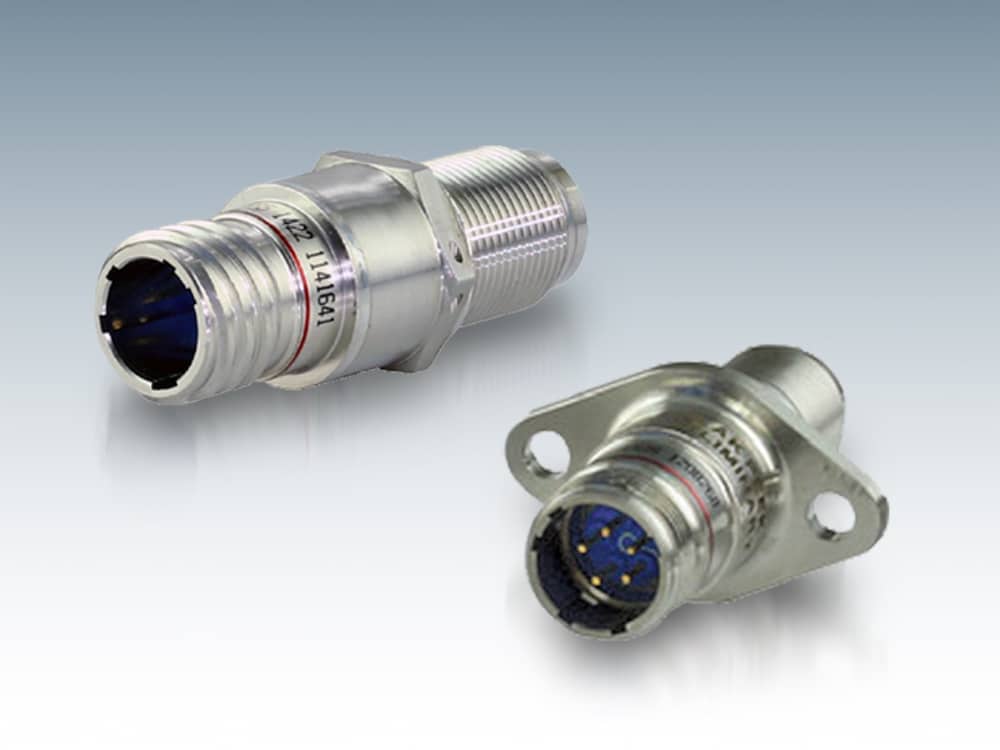
Honeywell has announced that its GAPS and HAPS aerospace proximity sensors are now available through Powell Electronics for aerospace, defence, and industrial applications. The configurable, non-contact and hermetically sealed sensors detect the presence or absence of a target, with the HAPS series designed for harsher aircraft environments than GAPS.
Both sensor families use the Eddy Current Killed Oscillator (ECKO) sensing principle and incorporate patented Fixed Amplitude Variable Current Oscillator (FAVCO) technology. The latter enables integrated health monitoring, allowing the sensors to provide additional information about their operating condition to the host system.
The sensors provide on/off outputs and can be configured with an optional health monitoring output. Their internal circuitry can identify certain failures and provide a fault indication instead of producing a false positive or false negative. This can help aircraft systems identify sensor faults before they result in incorrect position information and may reduce maintenance requirements and associated downtime.
The GAPS series is intended for less harsh areas of aircraft applications, while HAPS is specified for harsh-duty environments. Both use hermetically sealed construction and can be configured for different sensing requirements.

The sensors operate across a temperature range of -55°C to +115°C and accept supply voltages from 12V DC to 32V DC. GAPS devices withstand vibration levels of up to 20G, while HAPS devices are rated for up to 90G. Both series provide a target response time of less than 5 milliseconds.
The health-monitoring capability is particularly relevant to aircraft systems where a failed proximity sensor can affect position detection or generate misleading status information. By providing a fault output alongside the sensing function, the devices are intended to give host systems an additional indication of sensor condition.
Click here for the official announcement.


