

A new electric-field sensor inspired by electric eels could help robots detect objects, materials and proximity without physical contact in difficult conditions.
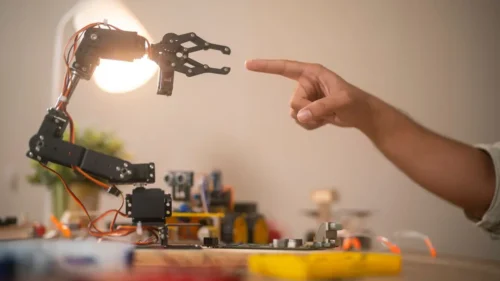
Researchers at Xiamen University have developed an electric-field robot sensor that could give machines the ability to detect and identify objects without physical contact. Inspired by how electric eels navigate and hunt, the sensor uses changes in an electric field to determine properties of nearby objects.
The technology is designed to generate an electric field around the sensor using a charged fluoropolymer surface. When no object is nearby, the field has a predictable shape. As an object approaches, it distorts the field, creating measurable changes that the sensor can analyse.
According to the researchers, these changes can reveal information about an object’s electrical conductivity, dielectric properties, geometric shape and proximity. Different materials interact with the electric field in different ways. Metals, for example, are highly conductive and can strongly alter the field, while materials such as plastic, glass and wood interact with it differently.
The approach could give robots a sensing capability similar to a combination of proximity detection and basic artificial touch. It may be particularly useful where conventional cameras are less effective or impractical.

Potential applications include delicate robotic manipulation, prosthetics, manufacturing robots and machines operating in darkness, smoke, dust or other visually challenging environments. The sensor could also help robots detect transparent objects such as glass, which can be difficult for vision-based systems to recognise reliably.
The researchers said the technology can estimate how close an object is by monitoring changes in the electric field. Its ability to respond to material properties as well as shape could provide additional information for robotic perception.
However, the current technology still requires further evaluation. The article notes that its accuracy, maximum sensing range and sensitivity to factors such as humidity and temperature have not yet been clearly established. Further testing will therefore be needed before its capabilities can be assessed for practical deployment.