Can satellites process intelligence without sending raw data home? An orbital platform will combine hyperspectral imaging with high-performance AI computing.
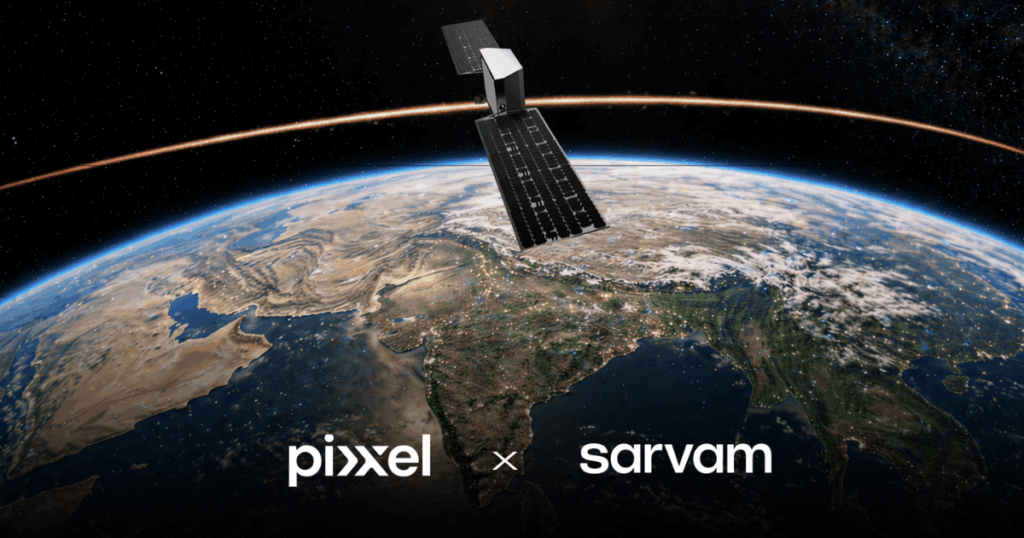
Pixxel has partnered with Sarvam to develop Pathfinder, a 200 kg-class satellite designed to combine hyperspectral imaging with data centre-class computing and AI processing in orbit. Scheduled for launch as early as Q4 2026, the platform will demonstrate whether high-performance compute and foundation-model inference can operate directly alongside Earth-observation payloads in space.
Processing data on the satellite could reduce the amount of raw imagery that needs to be transmitted to Earth and shorten the time between data collection and actionable results. This could benefit applications such as environmental monitoring, resource management, and critical infrastructure tracking, where identifying changes quickly can be more useful than transmitting complete datasets for later processing.
Pathfinder will carry Pixxel’s hyperspectral imaging camera, which captures information across multiple spectral bands. Instead of sending the collected imagery to a ground-based system for analysis, the satellite is designed to process the data in orbit and use AI models to identify patterns and generate insights.
A key part of the architecture is its computing layer. Unlike conventional satellite processors designed primarily around low power consumption and radiation-tolerant operation, the platform is planned to host data centre-class GPUs capable of supporting AI training and inference workloads. Sarvam’s AI models and inference platform are intended to run directly on this onboard computing layer.
The mission will also test the practical constraints of running high-performance computing in space, including power management, thermal control, processing performance, and real-time data workflows. These factors are particularly important because higher-performance processors can increase both electrical and thermal loads on spacecraft.
The development is intended to demonstrate a model in which satellites capture, process, and interpret data without relying entirely on terrestrial computing infrastructure. It could also provide a foundation for future orbital computing platforms that combine sensing and processing closer to where data is generated.
Awais Ahmed, CEO of Pixxel, says,.“Orbital data centres open up a new frontier, where compute can be powered by abundant solar energy, operate closer to space-based data, and move beyond some of the limits faced on Earth.”