




Can engineers increase signal-testing capacity without expanding rack space? A dual-channel generator combines two independent 20GHz sources in a 2U chassis.
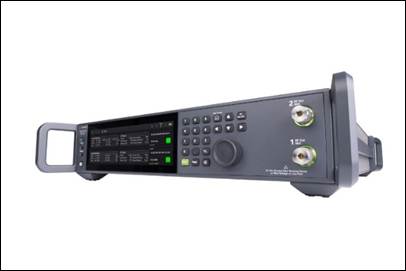
Keysight has introduced a dual-channel analog signal generator that combines two independent 20GHz channels in a single 2U chassis. The PSG XG7-class instrument is designed to help engineers create multiple test conditions while keeping high-frequency signal quality and rack space under control.
Signal testing often requires engineers to apply different controlled signals to a device while monitoring how it responds. As test systems become more complex, adding another signal source can increase equipment count and consume valuable rack space, particularly in aerospace and defence, advanced wireless, and high-speed digital test environments.
The dual-channel approach addresses this by allowing two independent signals to be generated from one instrument. Engineers can therefore run separate test conditions without adding another signal-generator chassis, potentially increasing test capacity within an existing rack configuration.
Signal quality remains important when working at higher frequencies, as source noise can affect measurements and make device behaviour harder to distinguish from unwanted signal variations. The generator therefore combines its dual-channel architecture with low phase noise, low amplitude modulation noise, and a low broadband noise floor.
It provides phase noise of -135 dBc/Hz and amplitude modulation noise of -150 dBc/Hz at 10GHz with a 10kHz offset. Its broadband noise floor reaches -166 dBc/Hz at 10GHz, while calibrated output power reaches +22dBm to help compensate for losses introduced by cables, connectors, and test fixtures.
A hybrid architecture uses software-based mode switching for different measurement requirements. The generator also supports Standard Commands for Programmable Instruments (SCPI), with familiar rear-panel connections and settings aligned with previous-generation instruments to support existing automation and test setups. Together, these features allow the dual-channel architecture to add measurement capability without requiring engineers to redesign established test-rack configurations.
Click here for the official announcement.
