Can industrial edge devices combine Linux-class computing with real-time control in less board space? A compact MPU brings both into one package.
Nuvoton has introduced three compact NuMicro MA35D0 microprocessors that combine application processing, real-time control and built-in memory for industrial edge devices. The LQFP128 devices integrate dual-core Arm Cortex-A35 processors with a Cortex-M4 core and up to 512MB of DDR SDRAM.
The architecture is designed to let one device handle different types of workloads. The Cortex-A35 cores run at up to 650MHz for operating-system and application workloads, while the Cortex-M4 runs at up to 180MHz for time-sensitive control tasks. This combination can support edge computing and Tiny AI applications without requiring separate processors for high-level computing and real-time functions.
Integrating DDR SDRAM directly into the MPU also reduces the number of external components required around the processor. With up to 512MB of memory available in the package, developers can reduce PCB complexity, potentially lower board size and limit electromagnetic interference. This is particularly relevant for compact industrial equipment and edge gateways.
The devices also integrate security hardware for systems that need to protect software, data and device identities. Nuvoton’s Trusted Secure Island technology works with Arm TrustZone, Secure Boot and a hardware security engine supporting AES, SHA, ECC, RSA, SM2/3/4, true random number generation, key storage and one-time programmable memory.
Connectivity covers Gigabit Ethernet, USB 2.0 High-Speed, SD 3.0/eMMC, CAN FD, Quad SPI, UART, I2C, I2S, PWM and ADC interfaces. These options allow the MPU to connect with industrial networks, sensors, storage and control hardware from the same processing platform.
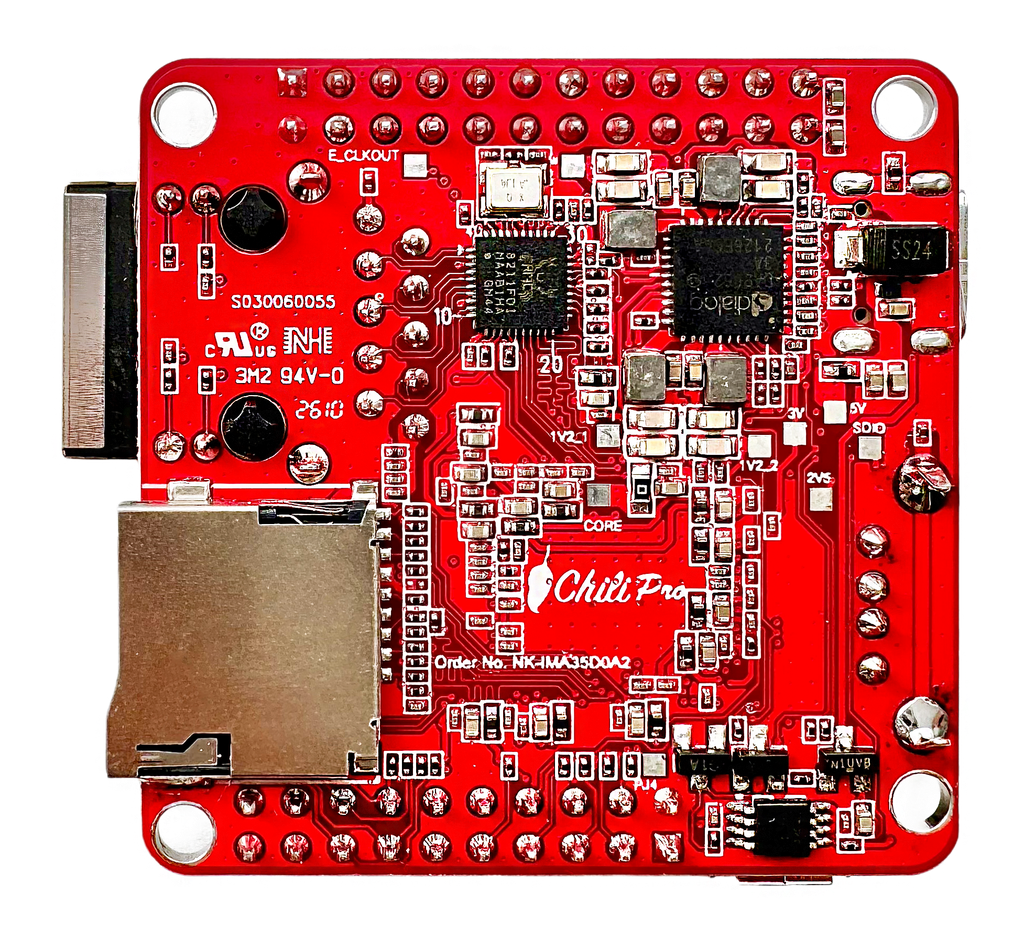
Nuvoton is also providing the NuMaker-IoT-MA35D0-A2, or Chili Pro, Linux development platform based on the MA35D05KI67C. The platform gives developers a way to evaluate Linux-based industrial edge and IIoT applications before integrating the MPU into their own hardware.
Click here for the official announcement.