

What happens when AI moves beyond the screen and into the physical world? At the Arduino Physical AI Challenge India 2026, innovators explored applications ranging from smart homes and robotics to industrial automation and assistive technology.
The growing convergence of artificial intelligence (AI) and embedded electronics is creating new opportunities in robotics, automation, and intelligent devices. Bringing these technologies together requires engineers to integrate computing hardware, sensors, embedded systems, and AI to develop applications that interact with the physical world.
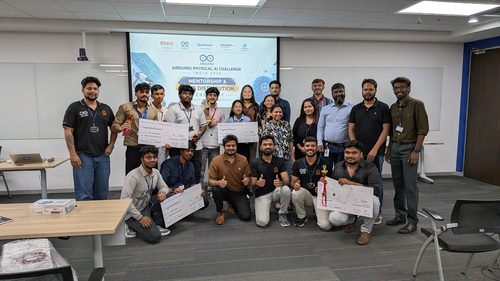
The Arduino Physical AI Challenge India 2026 attracted more than 10,000 registrations and over 500 project submissions, with 11 winners recognised at the concluding event. Organised by Robu.in in association with Arduino, the challenge had Qualcomm as its technology partner, Electronics For You (EFY) as its media partner, and Kerala Startup Mission (KSUM) as its ecosystem partner.
The submitted projects covered three broad domains: smart homes and consumer AI; gaming, robotics and interactive AI; and industrial and sustainability AI. These areas encompassed applications such as intelligent home automation, energy management, autonomous robotics, gesture-based interfaces, industrial quality inspection, environmental monitoring, and AI-assisted navigation. The diversity of applications demonstrated how physical AI can be applied to consumer, industrial, and accessibility challenges.
The concluding event was held at Qualcomm’s office in Bengaluru, bringing the winning participants together for technical sessions, practical development, mentorship, and prize distribution.

A key highlight was an introductory session on Qualcomm’s IQ chips, which familiarised participants with the computing technology behind AI applications. The programme also introduced Arduino’s VENTUNO Q platform, followed by a hands-on workshop in which the winning participants worked on the platform to create projects. This practical component gave them an opportunity to explore hardware and software integration beyond theoretical discussions.
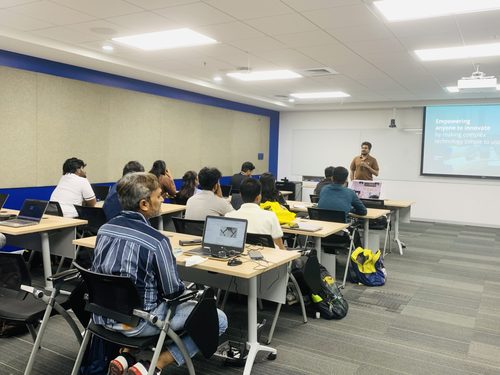
The programme also included project presentations and a mentorship session. Winning teams presented their work and received guidance on further development and commercialisation, helping them consider the engineering and refinement needed to move from prototypes towards practical applications.
The total prize pool exceeded ₹3 million, with cash rewards, development kits, computing devices, and mentorship opportunities.
By combining a nationwide competition with hands-on workshops and industry mentorship, the challenge connected emerging innovators with practical experience in AI-enabled hardware development. As physical AI expands across robotics, consumer devices, and industrial systems, initiatives of this kind can help developers explore new applications and take their prototypes closer to real-world deployment.