How can engineers protect sub-1V data lines from electrostatic discharge without disrupting signals? Two protection devices combine low capacitance with reduced clamping voltage.
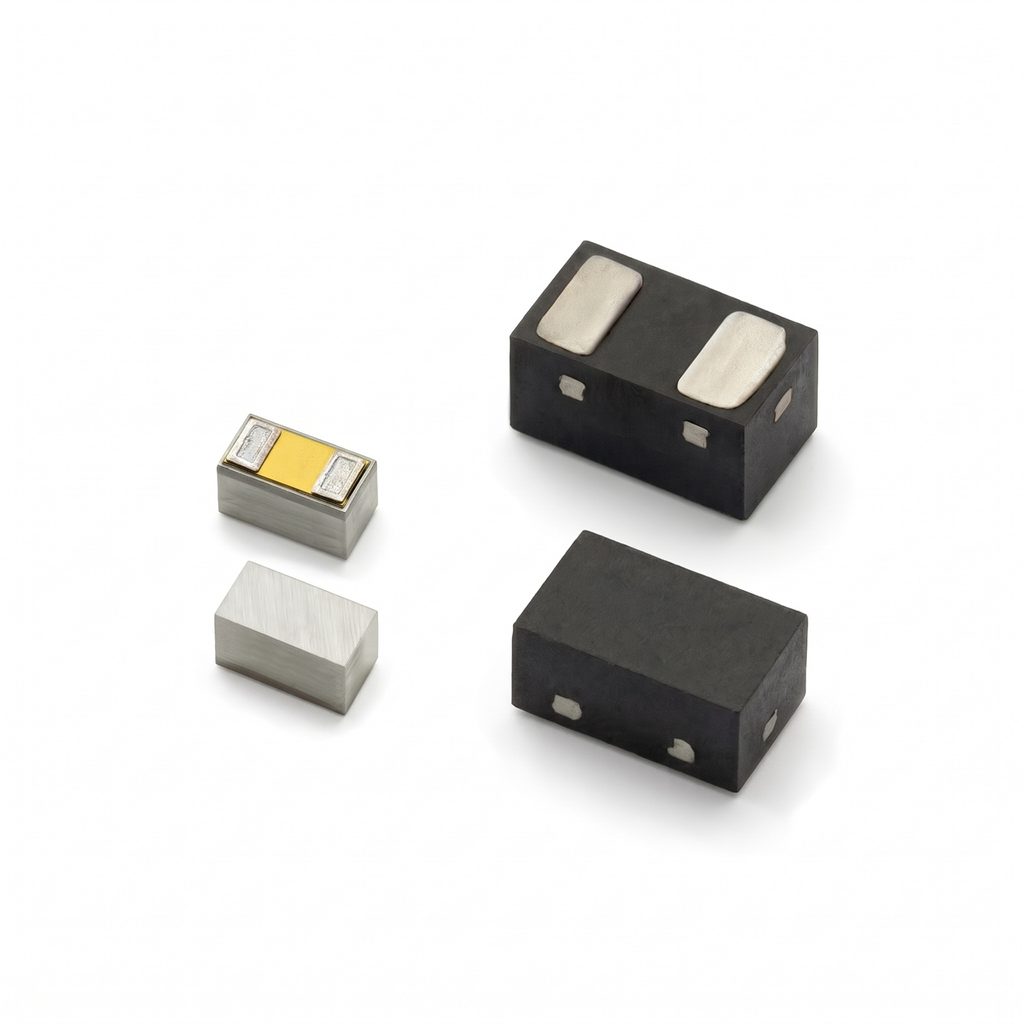
Littelfuse has introduced two transient voltage suppression (TVS) diode arrays designed to protect high-speed automotive and consumer electronics interfaces against electrostatic discharge (ESD). The AQ4315-01ETG and SP4315-01WTG combine low capacitance with a typical clamping voltage of 6.5V under specified surge conditions, helping protect sensitive integrated circuits without significantly affecting signal integrity.
As automotive advanced driver assistance systems (ADAS), USB4 and other high-speed interfaces adopt lower signal voltages, ESD protection becomes more challenging. Conventional TVS diodes can introduce parasitic capacitance that degrades signal quality, while insufficient voltage clamping can leave connected ICs vulnerable to damage.
The new devices are designed to address these competing requirements. The AQ4315-01ETG has a capacitance of 0.25pF, while the SP4315-01WTG offers 0.17pF, helping minimise interference with high-speed data transmission. Both devices provide a typical clamping voltage of 6.5V at a specified 7A peak surge current.
The diode arrays withstand ESD strikes of up to ±15kV through contact discharge and ±20kV through air discharge, as specified by IEC 61000-4-2. The AQ4315-01ETG also meets ISO 10605 requirements for automotive ESD testing. Both devices have a maximum leakage current of 50nA, supporting low-power and always-on designs.
The AQ4315-01ETG is AEC-Q101 qualified and PPAP capable, with an operating temperature range of −40°C to +150°C. It comes in a 1.0 × 0.6mm SOD-882/DFN1006 package. The SP4315-01WTG uses a smaller 0.63 × 0.33mm 0201 wafer-level chip-scale package (WLCSP), targeting space-constrained consumer electronics.
Applications include automotive display and camera links, Gigabit Multimedia Serial Link (GMSL), low-voltage differential signalling (LVDS), automotive Ethernet, Thunderbolt 5 and USB interfaces.
Click here for the official announcement.