Building smart lights is tricky. This platform makes it easy to test, control, and automate multiple lights, so engineers can focus on creating new ideas.
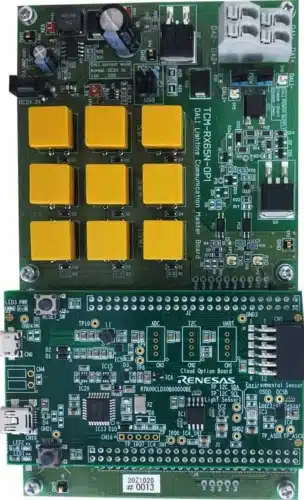
Design engineers developing DALI-enabled lighting devices often face challenges in integrating communication protocols, managing multiple lighting units, and testing dimming or automation features without building a full system from scratch. TESSERA TECHNOLOGY’s DALI Lighting Control Solution addresses these challenges by providing a complete reference platform that combines hardware, software, and cloud connectivity in one package. It simplifies the development process, letting engineers focus on device design rather than low-level protocol implementation or system integration issues.
At its core, the solution enables a single control device to manage up to 64 DALI-compatible lighting devices (control gears). This is critical for engineers who need to validate their lighting products in realistic multi-device scenarios. Without such a reference setup, testing dimming performance, response times, and communication reliability across multiple devices can be complex, time-consuming, and error-prone. By providing a ready-to-use DALI-2 interface, the solution removes much of this setup overhead.
The platform offers multiple operation modes depending on the testing or application needs. The GUI Operation Mode lets users control dimming via a PC using a dedicated application over USB. This mode is useful for detailed debugging and rapid iteration during development. The Web Operation Mode extends control to the cloud, allowing devices to be managed over Wi-Fi through a web application. This is particularly helpful for evaluating remote monitoring, automated lighting schedules, or cloud-based management systems. Finally, the Switch Operation Mode enables direct dimming control through onboard buttons, supporting simple manual testing or demonstration scenarios.
The solution also supports multiple communication paths, allowing engineers to simulate real-world setups where dimming signals must be routed through various devices. This helps validate system robustness, interoperability, and scalability without requiring a full commercial deployment. Engineers can also follow step-by-step guidance to configure cloud accounts and establish secure communication between the master controller and connected devices, removing common cloud integration hurdles.
This flexibility makes the reference design suitable for a wide range of applications. In smart buildings and homes, it allows designers to implement and test intelligent lighting control and automation features quickly. For consumer electronics, the platform supports the development of advanced lighting features in appliances or devices. In industrial lighting systems, engineers can validate precise dimming performance and scalable control setups efficiently.
By combining microcontroller support, DALI-2 compliance, cloud connectivity, and multiple operation modes, TESSERA TECHNOLOGY’s solution reduces development complexity, accelerates prototyping, and enables reliable testing for design engineers. It acts as a bridge between concept and deployment, helping developers focus on creating innovative lighting products rather than struggling with integration or testing challenges.
Renesas has tested this reference design. It comes with a bill of materials (BOM), schematics, assembly drawing, printed circuit board (PCB) layout, and more. The company’s website has additional data about the reference design. To read more about this reference design, click here.