




Car processors need many power rails, but getting them from a 12 V battery is hard. This design shows a way to do it safely and efficiently.
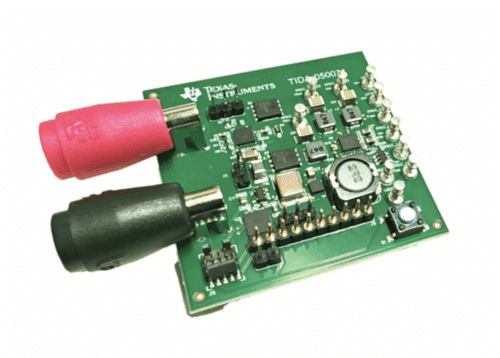
Automotive processors in ADAS, infotainment, sensor fusion, and perception systems require multiple, precise power rails to operate reliably. Delivering all rails directly from a standard 12 V battery while ensuring protection, efficiency, and flexibility is a key challenge for design engineers. The TIDA-050071, reference design from Texas Instruments (TI) addresses that challenge, providing a fully protected, configurable power system for processors such as TDA4x-Q1 and AM6x-Q1. It supports sensor fusion systems, camera modules, domain controllers, DDR memory, and auxiliary loads.
The design solves critical problems for engineers by combining input protection, rail management, and sequencing. A highly configurable ideal diode safeguards against reverse battery connection with a low forward voltage of 10.5 mV, while undervoltage, overvoltage, overcurrent protection, current monitoring, and fault reporting protect downstream circuitry. An onboard MSPM0 microcontroller manages rail voltages and power sequencing, ensuring reliable startup and operation for ADAS domain controllers, autonomous driving modules, surround view ECUs, and head-up displays.
Complex processors require multiple rails with different voltages and sequences. To address this, the design uses a high-performance, fully configurable PMIC with three buck converters and four LDOs. Output voltages and sequencing are programmable via I2C, with non-volatile memory enabling standalone operation with minimal external components. The PMIC and output rails are supplied by a buck converter offering high efficiency, fast transient response, low ripple, minimal overshoot, and low EMI.
Additional rails are provided through two load switches, a DDR termination regulator, and a tracking LDO, giving engineers flexibility for varied processor and application requirements. The design emphasizes a compact layout, low component count, low EMI, and cost efficiency without compromising functionality.
This reference design is intended for automotive design engineers, system architects, and developers working on ADAS domain controllers, autonomous driving modules, vision processing systems, sensor fusion units, infotainment processors, surround view ECUs, and head-up displays. It helps them quickly implement a reliable off-battery power solution while reducing design complexity and risk.
Features:
- Compact design size (54 mm × 54 mm)
- Supports cold-cranking down to 3 V
- Low bill of materials (BOM) count
- Additional power rails for driving auxiliary loads
- Onboard programmability
By integrating protection, configurability, and efficient power distribution, this reference design solves the key challenges engineers face when powering complex automotive processors directly from a battery. It ensures safe operation, flexible rail management, and high performance, making it suitable for advanced ADAS systems, infotainment processors, and other demanding automotive applications.
TI has tested this reference design. It comes with a bill of materials (BOM), schematics, assembly drawing, printed circuit board (PCB) layout, and more. The company’s website has additional data about the reference design. To read more about this reference design, click here.

