Can single-walled carbon nanotubes (SWCNTs) significantly improve EV batteries? This startup says it has turned what was once considered ‘not possible’ into ‘now possible.’
An Indian deep-tech startup based in Bengaluru, NoPo Nanotechnologies, was founded in 2011 by Gadhadar Reddy and Dr Kelley Bradley. The founding team expanded over time, with Anto Godwin and Arunima Patel joining later. The startup has focused on developing and manufacturing advanced nanomaterials: HiPCO single-walled carbon nanotubes (SWCNTs) and products derived from them.
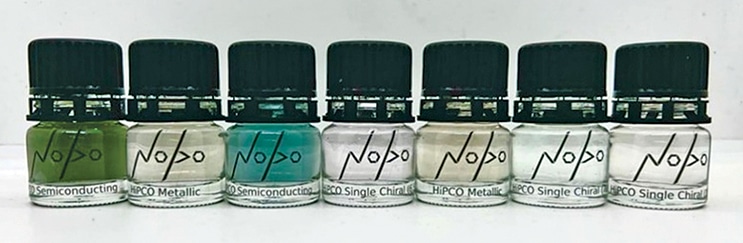
The company was established to make India a global player in one of the world’s most advanced materials technologies. Explaining what sets NoPo apart, Gadhadar says the company’s focus is on a material considered one of the strongest and most versatile known to science. “Single-Walled Carbon Nanotubes are extremely tiny cylindrical structures made entirely of carbon atoms and are around 200,000 times thinner than a human hair. Despite their microscopic size, they possess exceptional electrical and thermal conductivity, mechanical strength, and low weight, making them suitable for a wide range of applications,” he says.

The startup has filed seven patents, five of which have already been granted, while two remain under review. The patents cover various aspects of the manufacturing process, including reactor design, catalyst production, high-temperature gas-mixing systems, purification techniques, and nanotube-based applications such as sensors and high-strength fibres.
The company’s focus on innovation has enabled it to develop technologies capable of competing with those of some of the world’s most advanced nanotube manufacturers.
The startup’s primary target market is the battery industry, particularly electric vehicle (EV) batteries. “As battery manufacturers increasingly adopt silicon-based anodes to improve battery capacity, they face challenges related to silicon expansion and contraction during charging cycles. Our carbon nanotubes help stabilise silicon anodes, allowing batteries to achieve higher energy density, faster charging, improved safety, and longer cycle life,” highlights Gadhadar.
NoPo Nanotechnologies has been working with several battery manufacturers globally and has around fourteen companies actively testing its materials. In addition to lithium-ion batteries, NoPo is involved in developing sodium-ion battery technologies, where its nanotubes have shown promising performance improvements. The latter is also part of a feasibility study with Salion Energy funded by the Technology Development Board.
Another major application area is conductive polymers and anti-static materials. Many industries require plastics and polymers that dissipate static electricity, especially in electronics manufacturing. Traditional conductive additives often require very high loadings, which can adversely affect material properties.
The startup says its nanotubes can achieve the same conductive performance with as little as 0.1 wt per cent loading, making them a highly efficient solution.
The company is also developing nanotube-based membranes for water purification and desalination. These membranes use the unique structure of carbon nanotubes to allow water molecules to pass through efficiently while blocking contaminants.
According to Gadhadar, these membranes can deliver significantly higher performance than conventional filtration technologies. This work has received support from several government programmes, including the Atal Innovation Mission, ANIC, iDEX, and the Technology Development Board. “NoPo has also gained international recognition through its participation in the XPRIZE Water Scarcity competition, where it is among the few companies advancing innovative water treatment solutions,” says Gadhadar.
NoPo Nanotechnologies has a 16,000-square-foot (approx. 1490 square metres) research and development facility in Bengaluru equipped with eleven proprietary nanotube production reactors and advanced testing equipment.
The process used by the company is called HiPCO and was invented by co-founder Dr Kelley Bradley while working under Nobel laureate Dr Richard Smalley. The process uses high temperature and pressure to produce single-walled carbon nanotubes through the reverse Boudouard reaction.
More than 90% of the components used to build these reactors, including pressure vessels, heating and temperature-control systems, mixers, filters, and other equipment, are designed, manufactured, and sourced within India.
While explaining the company’s name, Gadhadar says that “NoPo” originally stood for “Not Possible.”
“When we began working on carbon nanotube manufacturing, many experts told us the technology could not be developed in India. We adopted the name as a challenge to prove otherwise. Today, we often describe it as ‘Now Possible’.”
“Through advanced research, proprietary technology, and a strong focus on indigenous innovation, NoPo Nanotechnologies aims to position India as a significant player in the global advanced materials industry while supporting breakthroughs in energy storage, electronics, and water purification,” concludes Gadhadar.