Can manufacturers access cost-effective, customisable robotic soldering systems for PCB assembly automation? This Pune-based startup aims to address that challenge.
SlightGen Solutions LLP is a Maharashtra-based startup founded in 2024 by Govardhan Gondchawar and Shrikrushna Kakade. The Indian technology company develops indigenous automation solutions for electronics manufacturing, with robotic PCB soldering systems serving as its flagship product.
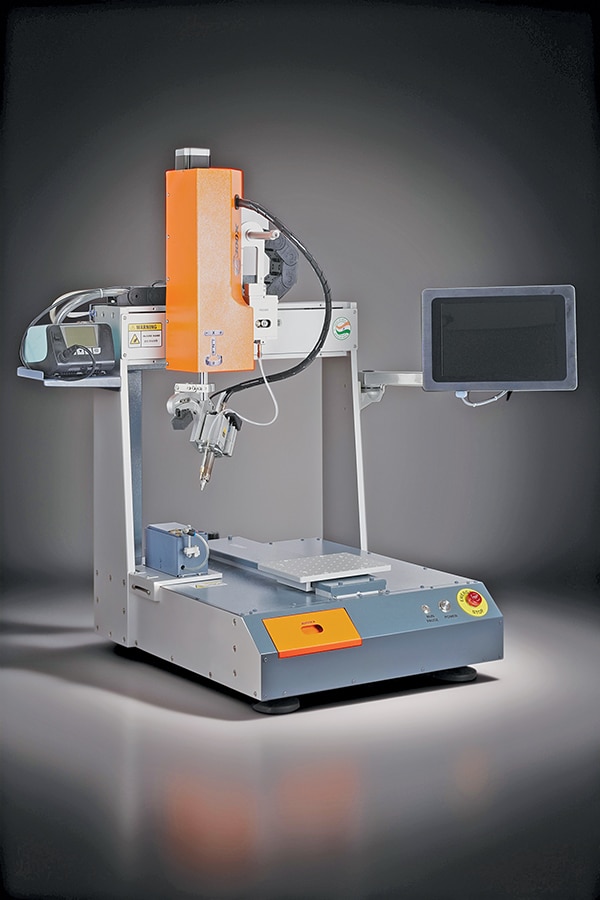
The company initially focused on embedded systems, IoT devices, data loggers, and biomedical products before shifting towards automation to address a clear gap in the market.
Nikesh Gondchawar, Strategic & Technical Advisor – Robotics Manufacturing at SlightGen Solutions, explains that existing soldering solutions are either expensive imported machines from countries such as Japan, China, and Korea or low-cost alternatives that lack reliability. SlightGen positions itself as a high-value, locally engineered automation solution tailored for MSMEs.
The startup designs and develops its systems in-house, including software, electronics, and control systems, while an experienced manufacturing partner handles mechanical fabrication and manufacturing. System integration, controls, programming, firmware development, calibration, and final validation are performed internally by SlightGen, which has around 50 employees across departments including mechanical engineering, electronics assembly, and quality control.
Nikesh explains that third-party involvement is limited to mechanical manufacturing and basic assembly. “Once the machines are assembled, they are brought back to the company’s premises, where programming, sensor integration, and firmware installation are completed internally,” he adds.
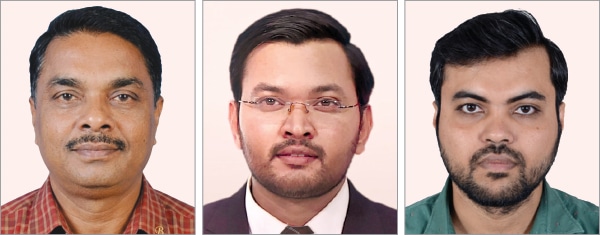
While explaining component sourcing, Shrikrushna Kakade shares that critical elements, such as firmware and programming, are developed internally to maintain intellectual property ownership and tighter control over system performance. “Our robotic soldering machines are built to be production-ready, designed for repeatability, process stability, and seamless integration into production environments,” he adds.
The startup claims that the machine incorporates several advanced features designed to improve efficiency, traceability, and process control in electronics manufacturing. These include Gerber file import, which enables faster program generation directly from PCB design data, and barcode-based job selection and logging, enhancing traceability throughout the production process.
The platform also offers video recording and playback capabilities for process review, troubleshooting, operator training, and quality validation. In addition, temperature profile logging supports continuous process monitoring and quality control, while a production statistics dashboard provides real-time visibility into machine utilisation, production volumes, process trends, and overall operational performance.
Nikhil Kakade, Senior Technical Advisor – Robotics & Control Systems at SlightGen Solutions, elaborates on the machine’s specifications and notes that it features user-friendly interfaces, such as touchscreen HMIs and joystick controls, reducing operator training time compared with conventional industrial interfaces. Additionally, the system includes data-logging capabilities that track parameters such as soldering temperature for each PCB, helping manufacturers analyse defects and improve quality through data-driven insights.
The startup claims that the return on investment can typically be achieved within a year, depending on production scale and utilisation, driven by lower labour costs and increased production efficiency.
The startup launched the product last year and has already deployed multiple units. Pricing ranges from approximately ₹850,000 to ₹1.45 million, depending on the level of customisation.
While discussing challenges, Nikesh shares that the startup manages supply-chain by maintaining an inventory of critical components and working with multiple vendors. Most sourcing is carried out locally in India, resulting in minimal disruptions.
Customisation typically takes around 45 days, depending on feasibility and design requirements.
While explaining the meaning behind the company’s name, Nikesh shares that ‘SlightGen’ reflects the company’s vision of building next-generation automation solutions that stay ahead of evolving industry needs.
In the last fiscal year, the startup reported revenue of around ₹10 million. The company aims to increase this figure and achieve ₹100 million in revenue in the coming year.
In the coming years, SlightGen aims to expand product adoption, strengthen its presence in the automation sector, and scale operations through wider deployments.