
EVs are booming, but battery reliability remains a bottleneck. One startup is rethinking how batteries are built to improve strength, consistency, and performance.
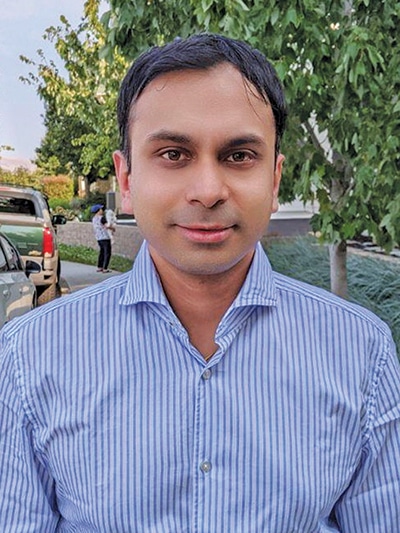
As electric vehicles gathered momentum and the transition to clean energy accelerated, Priyadarshi Panda identified a critical inflection point. He recognised that battery manufacturing mirrors semiconductor production in its core challenges: process precision, consistency, and long-term reliability.
In 2022, Priyadarshi started International Battery Company (IBC), based in the heart of Silicon Valley in the US, which is the global innovation engine, with operations in South Korea and India. “In India, we operate through a majority ownership joint venture with Mahanagar Gas Limited, called IBC India Private Limited,” says Priyadarshi.
The company specialises in three main areas of lithium-ion battery technology. First, they focus on material innovation, developing new battery materials to improve performance and reliability. Second is battery design and device integration, which covers chemistry, electrochemistry, and the internal configurations, like jelly rolls, to meet the needs of applications ranging from telecom and solar grids to high-performance defence, AI data centres, and vehicles of all sizes. Third is product assembly, combining these devices or device-ready components into finished batteries, mostly in prismatic form, which accounts for 70-75% of lithium-ion deployments today and is expected to grow to >80% by 2028.
On talking about the innovation, Priyadarshi explains, “We are molecule innovators and largely chemistry-agnostic product-minded technologists who bring significant scaled manufacturing experience to be able to incorporate design for high-speed manufacturing into all aspects of the development. In mobility applications, we work with high-power, high-energy cathodes like nickel-cobalt-manganese (NMC) and nickel-cobalt-aluminium (NCA) oxides, which are water-sensitive and require controlled dry-room environments. On the anode side, we have developed electrodes that use non-Chinese graphite and also variants that blend graphite with higher-specific-capacity silicon-based materials to optimise performance. For stationary storage, energy density is less important than cycle life, since grid projects often last 20+ years. Here, we use lithium iron phosphate (LFP) with larger particle sizes on the cathode and cost-effective graphite on the anode.”
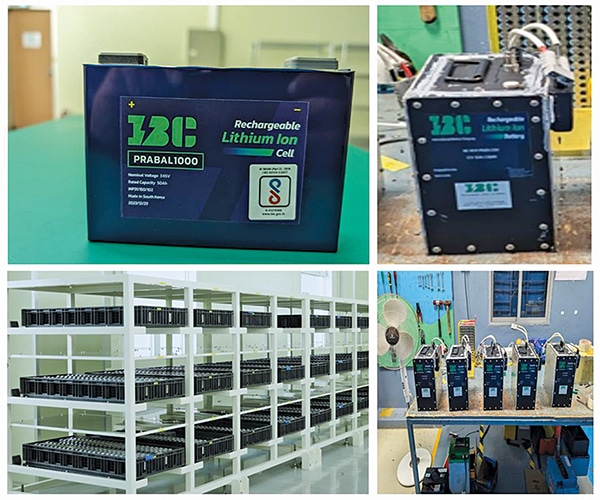
IBC’s core product line is built around high-performance prismatic lithium-ion cells. These cells come in various chemistries, including NMC, NCA, LFP, and graphite, as well as silicon-graphite blended anodes. The prismatic form factor, with its rigid metal casing, is preferred for electric mobility applications because it provides mechanical stability and allows for fewer units per battery pack, simplifying diagnostics and assembly at the pack level and opening the doors to advanced edge compute-based AI applications such as IBC’s proprietary battery passport program.
While discussing the design challenges, Priyadarshi adds, “When building our solution, it was critical to understand its purpose, and that’s where design challenges emerged. Our target yields were to achieve industry-leading (above 90%) yields, but due to proprietary designs and excellence in manufacturing, we are now achieving 94-95% end of line yields in South Korea. Designing with scalability in mind required careful trade-offs. To navigate this, we prioritised customer pain points using voice-of-customer analysis and scorecards, accepting compromises only on less critical criteria. Through this rigorous approach, we addressed design trade-offs and challenges, ultimately creating a quality product that can be manufactured reliably at scale, and the technology can be transferred seamlessly to mega factories using our copy-exact scaling methodology.”
Currently, the company’s high-volume manufacturing takes place at its South Korea facility, where the battery cells are produced. These cells are then shipped to India, where the company assembles two-wheeler battery packs for local deployment through a proof of concept pack design shareable with pack and cell partners. Through its partnership with Mahanagar Gas Limited, the company is implementing an “end-to-end copy exact” approach, transferring the technology, processes, and specifications from Korea to India at scale.
Regarding the revenue, Priyadarshi reveals, “In the 2025 calendar year, we deployed over 1000 two-wheeler battery packs in the field. The assets currently in use are valued at nearly ₹ 60 million, while our order book has crossed approximately ₹ 200 million.”
The startup highlighted certain areas where the support ecosystem can help accelerate the product technology build and growth trajectory, such as more government funding designed for capital-heavy hardware startups focused on bringing cutting-edge product technology to the market in areas of national importance, and accelerated and preferential customer adoption in India. It would truly benefit Indian companies building Li-ion cells in India if Indian customers are strongly encouraged to choose Indian suppliers as opposed to preferring low-cost, low-quality suppliers from China. The startup claims to work closely with universities, especially in the US, where a board member is leading a project on battery-grade graphite, an important battery material. In India, such partnerships have not yet been established, but the company values working with academia for its knowledge and expertise. Strengthening ties with universities remains a key priority as the company grows.
Looking ahead, the company is working on many areas, focusing on building technology and knowledge through its innovation engine in Silicon Valley, USA. In India, it tests products designed for Indian conditions in tough, real-world conditions, like heat and rough roads, to ensure they work well. The company cares about customer success and is building partnerships with vehicle makers, customers, and local material suppliers to make products locally and at scale. It is also investing in talent, testing, partnerships, and sales, and is now expanding these efforts globally.
What is next for batteries? Through prismatic, chemistry-agnostic cells, Priyadarshi Panda tells Nidhi Agarwal how faster charging, higher energy, and safer performance can scale EVs and storage. Read the interview with Dr Priyadarshi Panda.