




This startup has built IoT devices and AI solutions that enable small factories to monitor every machine and process, turning complex operations into clear, real-time insights.
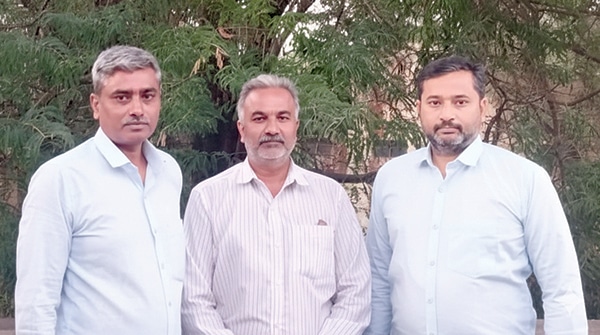
The Covid era changed many lives. Three brothers, Ananth Kulkarni, Vaman Kulkarni, and Kiran Kulkarni, from diverse fields, came together to address the challenges faced by medium-sized enterprises (MSMEs). They named the startup Hexitronics, inspired by the six-sided geometry of a honeycomb.
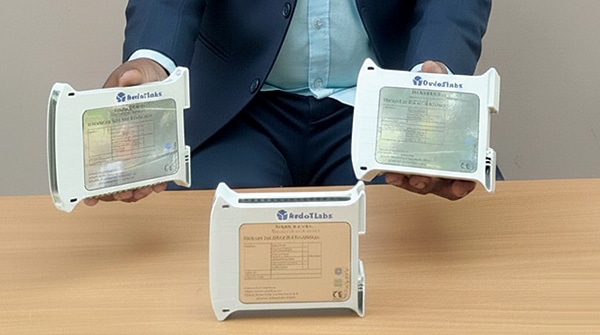
The startup designs and manufactures IoT devices that now serve as key data sources for AI engines. Its solutions cover multiple use cases, primarily for small- and medium-sized enterprises such as rice mills and stone crusher units. These businesses often need remote monitoring of operations, and the devices enable them to track and manage processes from a distance. Initially, the team created custom devices for each client.
The founders learned everything from the ground up, from understanding how hardware behaves and how data flows to the cloud, to how backend software, HTML, and CSS integrate. This foundation led to the development of NodeX, an IoT gateway, and AutoStack, a cloud platform designed to support stackable, universally configurable devices for multiple use cases, even before a client approaches. This shift helped standardise production.
The gateways connect various sensors across a factory to collect data. They work with moisture sensors, counters, conveyor motor temperature sensors, energy metres, programmable logic controllers, variable frequency drives, and more. NodeX devices collect data at predefined intervals and send it to AutoStack, the company’s patent-pending cloud platform. When a device is switched on, it automatically creates its own dashboard, simplifying monitoring and data management.
When asked about their innovation and main differentiator, Ananth says, “There are hardware makers who focus on design and manufacturing. Some individuals provide cloud services, those who code on these clouds to host data sets, those who perform analysis, and those who integrate AI. We brought all these areas of expertise together under one roof, which is our unique selling point. Right now, we are providing our gateways and IoT services completely free of cost, with no subscriptions required for any customers.”
Designing hardware for clients is challenging. The team assesses each client’s requirements, budget, and the criticality of the data, taking into account safety, decision-making, and the impact of errors. In noise-prone environments, circuits are enhanced with electromagnetic compatibility and electromagnetic interference techniques to minimise disturbances. Gateways validate and filter data by comparing it with average values, removing outliers caused by noise. “We use ESP32 and STM32 for most tasks and Raspberry Pi for heavy processing, ensuring reliable and accurate IoT devices,” adds Ananth.
As the startup began describing its devices as AI-enabled, the question arose about where the AI models actually run. Ananth explained, “It runs on the cloud. AI can be built using different architectures depending on the business model or purpose. In our setup, AI works as an agent. The local device, such as a mobile, laptop, or Raspberry Pi, sends requests to an API on our server. The server processes the request using a large language model, which could be GPT, Gemini, DeepSeek, or another model trained on Hexitronics Cloud called Jupiter. The response is then converted into voice on the local device, allowing it to speak like a person or any persona, such as Akiva, Jupiter, or Jarvis.”
On design challenges, Ananth adds, “The main issue came from the API provider. When we first built the Farmer Assistant, it often provided irrelevant or nonsensical answers. The challenge was to train or fine-tune it so responses had the right tone and content, making sense for the user.”
The company designs and manufactures its gateways and IoT devices in-house, maintaining full control over hardware and software integration, while outsourcing PCB production to specialised partners. Reflecting on revenue, Ananth says, “When we started in 2020, we were in a negative financial position. In 2018-2019, we invested heavily in research, buying modules, testing ideas, and experimenting with PCBs, chips, and servers. Our balance sheet showed a deficit of 1.2 million. From 2022-23, we turned a corner, reaching a positive balance of 600,000, though revenue remained irregular.”
The company plans to meet distributors personally across India, working closely with them while scaling up its own infrastructure to provide support. Initially, the founders and the technical team will work directly with distributors. As the network grows beyond what the company can manage, it will partner with service providers to expand its reach. This approach enables steady and sustainable growth while ensuring proper support at every stage.
Ananth S. Kulkarni, Founder of Hexitronics, tells their story of empowering small businesses through these devices; Check here.

