A next-generation board-test system combines structural, parametric, high-speed interconnect, and functional testing to address the growing complexity of AI and data-centre hardware manufacturing.
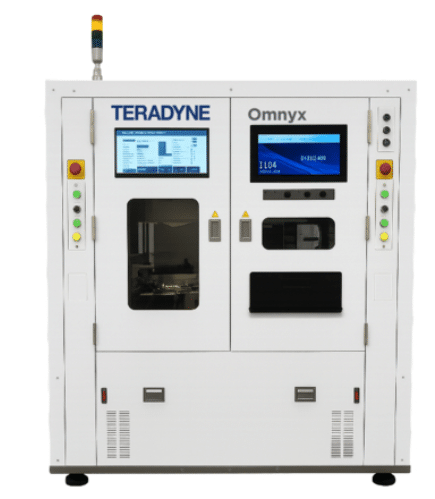
A new manufacturing test platform from Teradyne, Inc. has been introduced to help electronics manufacturers address the growing complexity of printed circuit board assemblies (PCBAs) used in artificial intelligence and data centre infrastructure. Designed for modern high-performance systems, the platform integrates multiple testing methodologies into a single architecture, enabling earlier detection of manufacturing defects and improving final product reliability.
As AI accelerators, high-speed networking hardware, and data-centre servers become more complex, conventional in-circuit test (ICT) systems are increasingly challenged. Traditional ICT focuses primarily on structural and parametric faults introduced during assembly, but modern boards also require validation of high-speed signal integrity and operational performance. These requirements are particularly critical in AI infrastructure, where board failures can lead to costly downtime or system instability.
The key features are:
- Unified platform combining structural, parametric, interconnect, and functional testing
- High-speed interconnect testing for modern AI and data-centre PCBs
- Mission-mode and software-directed tests for operational defect detection
- Earlier fault detection to improve manufacturing yield and reduce defect escapes
- Designed for complex PCBA and sub-assembly testing in AI infrastructure
The newly introduced test system addresses these challenges by consolidating structural, parametric, high-speed interconnect, and functional test capabilities into a unified platform. This integrated approach enables manufacturers to detect defects related to signal integrity, interconnect reliability, and real-world operating conditions much earlier in the production process.
By introducing mission-mode and software-directed testing alongside traditional manufacturing tests, the platform allows engineers to evaluate boards under conditions that closely resemble real system operation. These tests can reveal issues that would normally only appear during final functional testing stages, helping manufacturers identify and resolve problems before boards reach final assembly.
Early detection of defects is particularly important for AI and data-centre hardware, where boards often carry expensive processors, high-bandwidth memory, and advanced networking components. Catching issues earlier in the manufacturing flow can significantly reduce scrap costs and improve overall production yield.
The platform is also designed to support economically scalable testing for next-generation server and accelerator architectures. By combining multiple test stages within a single environment, manufacturers can streamline testing workflows while maintaining high coverage across both assembly defects and operational failures.
As AI infrastructure continues to scale rapidly, testing solutions that can validate increasingly complex boards will play a critical role in maintaining reliability and production efficiency. Integrated test platforms such as this aim to bridge the gap between traditional manufacturing tests and the functional validation required for modern high-performance computing systems.
Click here for the original announcement.