




A new analog memory technology could boost data storage density and reduce energy use, supporting smarter edge devices and more efficient computing systems at scale.
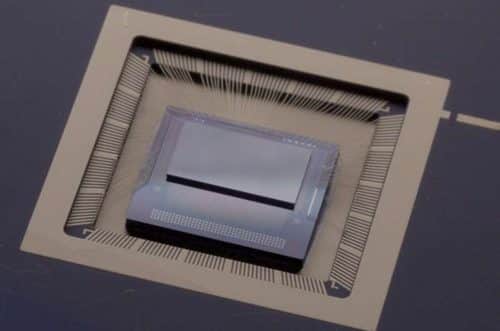
Sandia National Laboratories has developed electro-thermo-chemical random-access memory (ETCRAM), an analog memory technology that could improve the efficiency of computing systems by storing information in many distinct material states. The approach could support smarter edge devices that need to process data locally while operating within tight power budgets.
Unlike conventional digital memory, which represents information using discrete zeros and ones, ETCRAM stores a range of analogue values. The technology uses localised heating and electrical pulses to modify the properties of materials inside the memory device, allowing more information to be represented within a given physical area.
Researchers led by Sandia scientists Elliot Fuller and Jyot Talin demonstrated the approach using tantalum- and vanadium-oxide-based materials. By designing the memory around the properties of these materials, the team aims to overcome limitations associated with conventional analogue memory technologies.
Experimental results showed that the system could handle both binary and continuous-valued data while using up to 95% fewer devices. It also retained roughly twice the storage capacity of previous state-of-the-art designs. For structured real-world data, the capacity increased faster than the size of the network, demonstrating what researchers describe as superlinear scaling.
The architecture also takes advantage of the parallel operation of a memristor crossbar. Updating the network simultaneously helped reduce recall time by up to 99.7%, while improving energy efficiency by up to 8.8 times compared with conventional approaches. These results were demonstrated on an integrated chip built around 64×64 memristor arrays.
The technology could be particularly useful for memory-centric artificial intelligence at the edge, including sensors and wearables that must process information without relying heavily on distant data centres.
By combining high information density with low-power operation, ETCRAM could provide a route towards more capable neuromorphic hardware. Further development could help translate the technology into practical computing and intelligent sensing systems.

