




Researchers used artificial intelligence and autonomous experimentation to identify six high-performance metal alloys for additive manufacturing, improving strength and heat resistance for demanding applications.
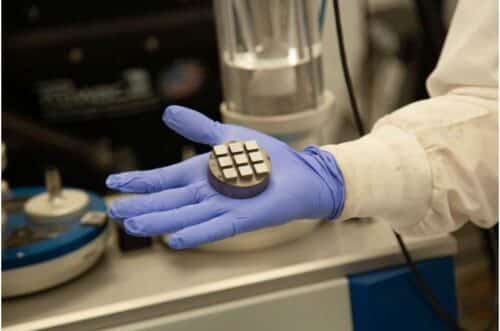
Researchers at the University of Toronto have developed an AI-driven self-driving laboratory that discovered six new nickel-cobalt-chromium alloys suitable for 3D metal printing and capable of withstanding extreme temperatures. The findings, published in npj Advanced Manufacturing, could support the production of stronger, customised components for aerospace, energy generation and other high-temperature industries.
The research combines computer modelling, machine learning and robot-assisted manufacturing in an active learning system that rapidly identifies promising alloy compositions. Instead of relying on extensive existing datasets, the platform manufactures and tests selected samples, feeding the results back into the AI model to guide the next round of experiments. This closed-loop approach significantly reduces the time needed to discover advanced materials.
The newly identified alloys are designed for additive manufacturing, enabling engineers to produce complex, lightweight parts that cannot be made using conventional manufacturing techniques. The researchers focused on nickel-cobalt-chromium systems because they offer significant potential for high-temperature performance while remaining relatively simple compared with commercial alloys containing many additional elements.
Laboratory testing showed one alloy containing 12% nickel, 62% cobalt and 26% chromium retained hardness at temperatures of up to 600°C, outperforming the widely used Inconel 625 by 4.5%. Another composition, containing 36% nickel, 14% cobalt and 50% chromium, demonstrated oxidation resistance at temperatures approaching 1,000°C and exceeded the benchmark alloy’s performance by 85%.
According to the research team, the six newly discovered alloys represent only the beginning of what the AI-driven discovery platform can achieve. Future work will expand the search to more complex alloy systems containing up to 10 or 12 elements, potentially unlocking materials with even greater strength, durability and heat resistance. The researchers believe the approach could transform materials discovery by dramatically accelerating the development of next-generation alloys for demanding industrial environments.

