




Wireless devices often interfere with each other, causing problems. A new automated test tool helps engineers find issues faster and make devices work safely and reliably.
Wireless devices are increasingly crowded into shared radio-frequency (RF) environments, creating interference risks that can affect performance, safety, and regulatory compliance. Engineers in healthcare, consumer, and industrial sectors struggle to validate device reliability under these conditions, as manual testing is slow, complex, and hard to reproduce. In medical devices, unreliable wireless operation can impact patient safety and delay regulatory approval, making early detection of interference a critical need.
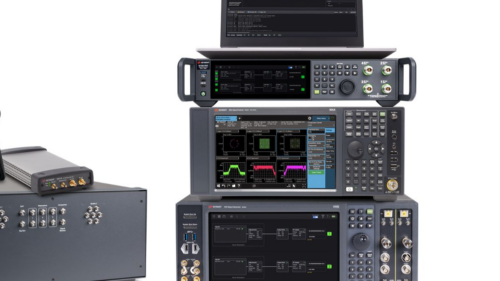
Keysight Technologies’ new Wireless Coexistence Test Solution addresses these challenges by automating wireless coexistence testing. The platform reduces manual setup, improves repeatability, and helps engineers identify potential interference issues earlier in development. By streamlining pre-compliance testing aligned with ANSI C63.27 guidelines, teams can reduce rework, accelerate R&D, and better prepare for regulatory submissions.
The solution includes nearly 100 predefined test scenarios covering simple to complex interference conditions. It integrates a wideband vector signal generator spanning 9 kHz to 8.5 GHz with modulation bandwidths up to 250 MHz and one RF port supporting up to eight virtual signals. Built on OpenTAP, an open-source test sequencer, it allows engineers to configure tests, upload custom waveforms, and simulate test plans offline. Automated test sequencing cuts test cycle times by more than 50%, shifting focus from setup tasks to device behavior analysis.
Han Sing Lim, Vice President and General Manager of Keysight’s General Electronic Measurement Division, said: “Wireless coexistence testing is no longer optional — it’s essential for ensuring product safety, performance, and regulatory readiness. With our new Wireless Coexistence Test Solution, engineers can automate ANSI C63.27-aligned testing, shorten development cycles, and gain earlier insight into how their devices perform in real-world RF environments. It’s a smarter, faster path for R&D, enabling iterative testing across real‑world use cases and scenarios.”


