A sensing system uses ultrasonic tags instead of batteries or electronics, allowing household objects to communicate with home hubs through sound generated by movement.
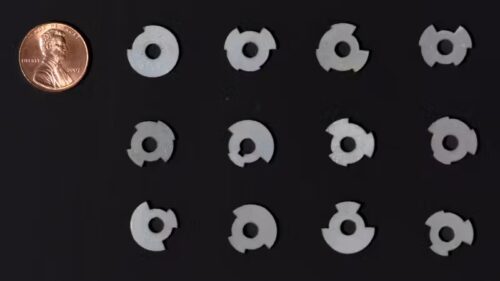
Researchers at Georgia Institute of Technology have developed a smart-home sensing system that works without batteries, electronics, or wireless radios. Called SoundOff, the technology uses ultrasonic tags that generate sound signatures when people interact with household objects such as doors, cabinets, faucets, and toilet lids. A receiver detects those ultrasonic signals and identifies which object was used.
The system addresses one of the main problems in smart homes: maintenance. Smart sensors are used to automate lighting, climate control, and occupancy detection, but they depend on batteries that must be charged or replaced. In homes with many connected devices, keeping sensors powered can become expensive and time-consuming.
SoundOff replaces electronic components with mechanical structures. When a tagged object moves, the structure vibrates and emits sound waves above 20 kilohertz, frequencies outside the range of human hearing. Each tag produces a different acoustic pattern, allowing the system to distinguish among tagged objects in the same environment.
Because the system listens only for ultrasonic signatures rather than voices or video, it may offer an alternative to conventional smart-home devices that rely on microphones and cameras. Existing systems often collect personal data continuously. SoundOff’s sensors are designed to detect only the frequencies generated by the tags.
The researchers say the technology could also reduce the cost of smart-home upgrades. Instead of replacing appliances or fixtures with connected versions, homeowners could attach tags to existing items. Since the tags require no power source or wiring, installation and maintenance would be limited.
The system also differs from sensing platforms that rely on machine-learning models requiring training datasets, cloud connectivity, and processing resources. SoundOff instead uses acoustic signatures that can be recognized through signal-processing methods.
To create those signatures, the team built a physics-based simulation system that predicts how different tag designs will sound before manufacturing. The modeling process allows researchers to test thousands of virtual designs and identify combinations that generate distinguishable ultrasonic patterns without repeated physical prototyping.
SoundOff remains a research project, but it presents an approach to smart-home technology focused on lower maintenance, reduced cost, and limited data collection.