A flight control system makes bamboo drones faster, steadier, and cheaper, bringing sustainable UAVs closer to use while handling unique engineering challenges.
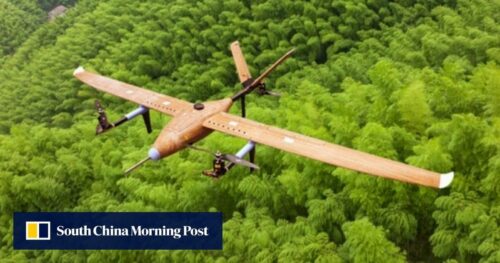
Chinese researchers at Northwestern Polytechnical University have created what they say is the world’s first open-source flight control system specifically for bamboo-frame drones. The system aims to make drones cheaper and more sustainable while solving the technical issues of integrating natural materials into UAV designs.
Bamboo presents unique challenges for drone engineering. Its natural structure produces low-frequency vibrations between 8 and 20 hertz, which standard flight controllers cannot manage effectively. Existing controllers are either closed-source and inflexible or open-source but poorly suited for local needs, limiting the industrial adoption of bamboo UAVs.
To address this, the team developed a custom flight control board with an industrial-grade chip and dual inertial measurement units. They also redesigned control algorithms to match bamboo’s structural properties. By improving the extended Kalman filter and using bamboo’s natural vibration damping, the system reduces control latency from 15–20 milliseconds to 8–10 milliseconds, improving flight stability and responsiveness.
The move comes amid growing scrutiny of Chinese drone technology. Concerns over data privacy and cybersecurity have intensified after Chinese drones revealed strategic vulnerabilities in Israel. Countries including the U.S. are reconsidering procurement rules, with proposals like the American Security Robotics Act aiming to restrict federal purchases from companies linked to China’s military.
Meanwhile, competitors are accelerating development of secure, autonomous UAV systems. In Japan, Mitsubishi Heavy Industries and Shield AI have successfully integrated advanced autonomy software, signaling a shift toward domestic control of drone technology.
China’s progress with bamboo drones highlights both the potential of sustainable innovation and the complex geopolitical factors shaping the global UAV market. How nations balance technology, cost, and security will determine the future of drones built from natural materials.