New flow conversion technology combines picosecond-level precision with extremely low power consumption, helping smart water, heat, and gas meters improve measurement accuracy while extending battery life.
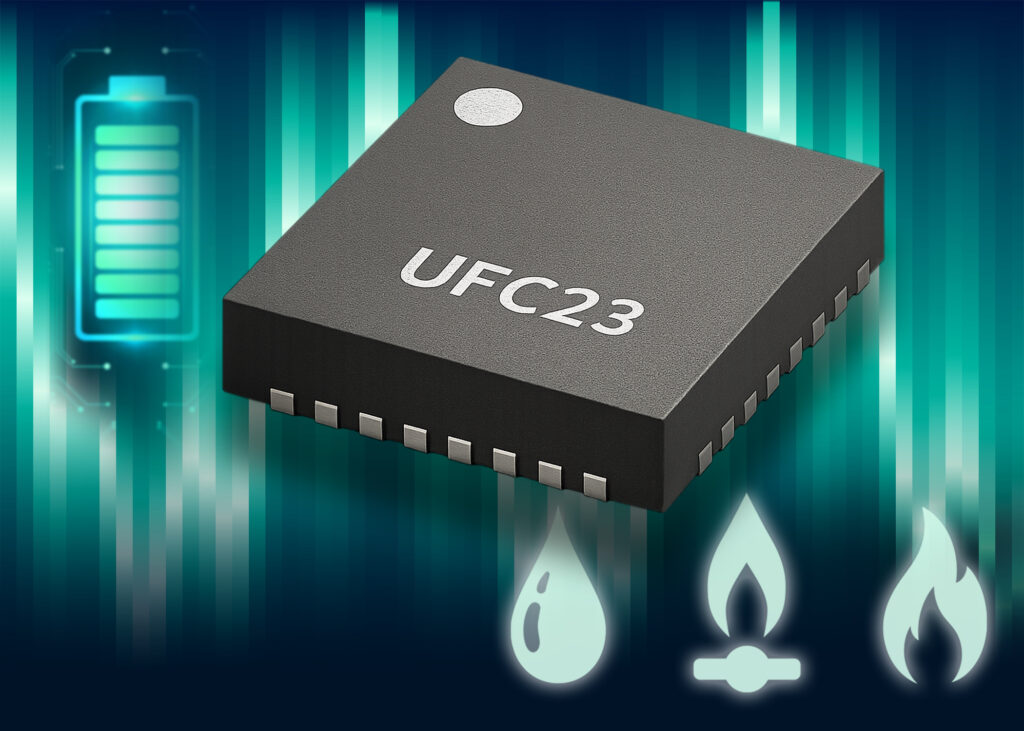
Growing demand for accurate, battery-efficient smart meters is pushing designers to balance precision and power consumption, especially in systems where flow calculations are increasingly handled by a host microcontroller. Addressing this challenge, a newly launched fourth-generation ultrasonic flow converter by ScioSense introduces a front-end architecture designed for high-accuracy metering applications while minimising energy usage.
Unlike earlier integrated approaches, the new converter removes the on-chip CPU and operates as a dedicated analogue front-end. This architecture allows meter manufacturers to retain control of system design and software environments through their preferred host microcontroller while improving flexibility across product families.
The key features are:
• Standby current of typically 0.8µA
• Operating current as low as 6.6µA at 8Hz sampling
• 35ps single-shot measurement precision
• Offset stability of ±7ps with 128-sample averaging
• Supports both water and gas metering architectures
The device is intended for smart water, heat, and gas metering systems where detecting very low flow rates and maintaining long operational life are essential. In a typical DN15 water meter configuration, the converter achieves a single-shot standard deviation of 35ps and offset stability of ±7ps using 128-sample averaging, with drift remaining below 10ps across temperatures from 0°C to 50°C. Such measurement precision supports advanced metering designs including R1000-class performance requirements.
Power efficiency is another key focus. The converter operates with a standby current of around 0.8µA and can run at currents as low as 6.6µA at an 8Hz sampling rate, supporting battery-powered deployments that may require years of field operation.
The device integrates ultrasonic transducer driving, signal acquisition, and time-of-flight extraction capabilities. It supports both single-ended drive configurations for water metering and full-bridge operation for gas applications. Additional signal-conditioning features, including a programmable gain amplifier and customizable burst generator, help improve weak-signal handling and measurement robustness.
Applications extend beyond conventional smart meters to include pump control systems, smart faucets, and water-heating systems. The device operates from a 2.5V–3.6V supply range, supports temperatures from –40°C to 85°C, and is available in a QFN32 package.