




A new electronics-focused recycling breakthrough uses mild chemistry and plasma to efficiently recover battery metals, cutting energy use and enabling the sustainable reuse of lithium, graphite, and other critical materials.
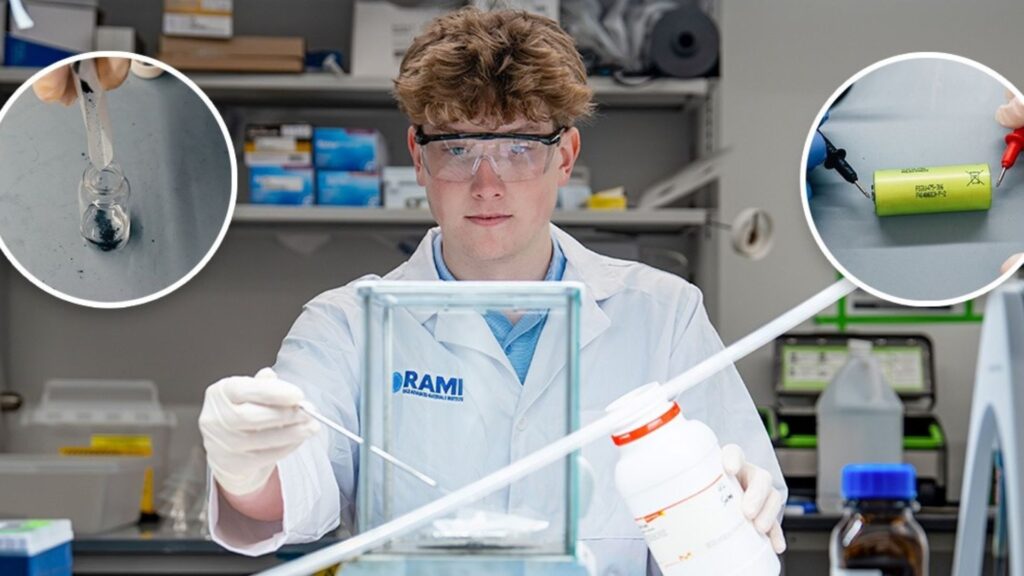
Researchers at Rice University in Houston have unveiled a cleaner, electronics-focused method for recycling lithium-ion batteries, recovering up to 95% of critical metals using water-based, mild chemical processes.
The technique, developed at Rice University, combines a short microwave-induced plasma treatment with low-strength solvents such as citric acid—commonly found in lemon juice—to extract valuable materials from battery waste.
Unlike conventional recycling, which relies on high temperatures and strong acids, the new approach operates at room temperature and significantly reduces environmental impact. The process targets “black mass,” a shredded mix of battery components containing lithium, cobalt, nickel, manganese, and graphite.
With plasma pretreatment, researchers reported recovering nearly all key metals, including lithium, while also preserving and regenerating graphite—an essential anode material that is typically lost or damaged in existing recycling systems.
This dual recovery is critical for electronics manufacturing, as graphite makes up a substantial portion of lithium-ion batteries and remains difficult to replace at scale.
The process also improves efficiency compared to traditional methods, which often yield uneven recovery rates and focus mainly on cathode materials. By enabling high recovery with weaker acids and lower energy input, the method could be integrated into existing recycling infrastructure as a pre-treatment step.
Beyond environmental gains, the innovation addresses growing supply pressures on battery metals driven by demand for electric vehicles and consumer electronics. Recovering materials domestically from waste streams could reduce reliance on mining and stabilise supply chains.
Researchers say the method represents a scalable path toward circular battery manufacturing, where materials are continuously reused with minimal waste.
If commercialised, the technology could reshape how electronics and energy storage systems handle end-of-life batteries—turning waste into a reliable resource stream.


