An advanced gate design could reshape EV and data center power systems.
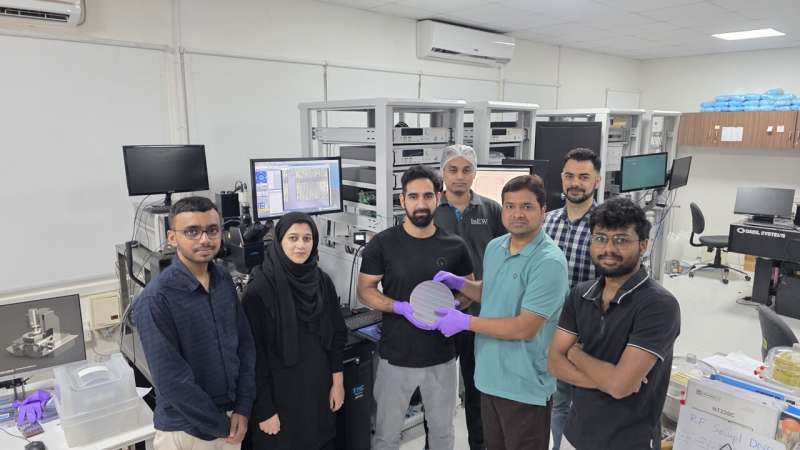
Researchers at the Indian Institute of Science (IISc) have made a notable advance in gallium nitride (GaN) power transistor technology that addresses key hurdles slowing its adoption in electric vehicles (EVs), data centers and other high-power electronic systems. The work, detailed in recent peer‑reviewed studies, sheds light on previously misunderstood gate behaviors and introduces a new transistor architecture that could make GaN devices safer, more reliable and closer in operation to established silicon MOSFETs.
GaN is prized in power electronics for its ability to drastically reduce energy losses and shrink converter sizes by up to three times compared with traditional silicon devices making it an attractive candidate for EV inverters, onboard chargers and renewable energy converters.However, real‑world use has lagged because commercial GaN power transistors based on p‑GaN gates switch on at low threshold voltages (~1.5–2 V) and can begin to leak current above ~5–6 V, undermining efficiency and reliability in demanding environments.
To tackle these limitations, the IISc team conducted a two‑stage investigation into the physics of gate control and leakage mechanisms. Their analysis revealed that the extent of depletion in the p‑GaN layer and tiny, previously overlooked leakage paths strongly influence when and how the device turns on. By modeling and measuring devices with various gate designs, researchers showed how unwanted charge accumulation at critical interfaces can trigger premature conduction.
Armed with these insights, the team engineered a novel aluminum–titanium oxide (AlTiO)‑based p‑GaN gate stack that suppresses charge injection and drives the device into a high‑threshold depletion‑extension mode. The result: GaN transistors with threshold voltages exceeding 4 V roughly in line with silicon MOSFETs dramatically lower gate leakage (up to 10,000× reduction) and robust gate breakdown performance near ~15.5 V.
Such improvements could significantly accelerate GaN’s integration into next‑generation EV power electronics, data center supplies and other high‑reliability systems, bringing performance gains while easing design challenges. The researchers are now pursuing commercialization via industry partnerships and licensing to scale the technology.