




In a world where quantum computing is guarded like nuclear codes, one Indian start-up has ripped up the rulebook. How?
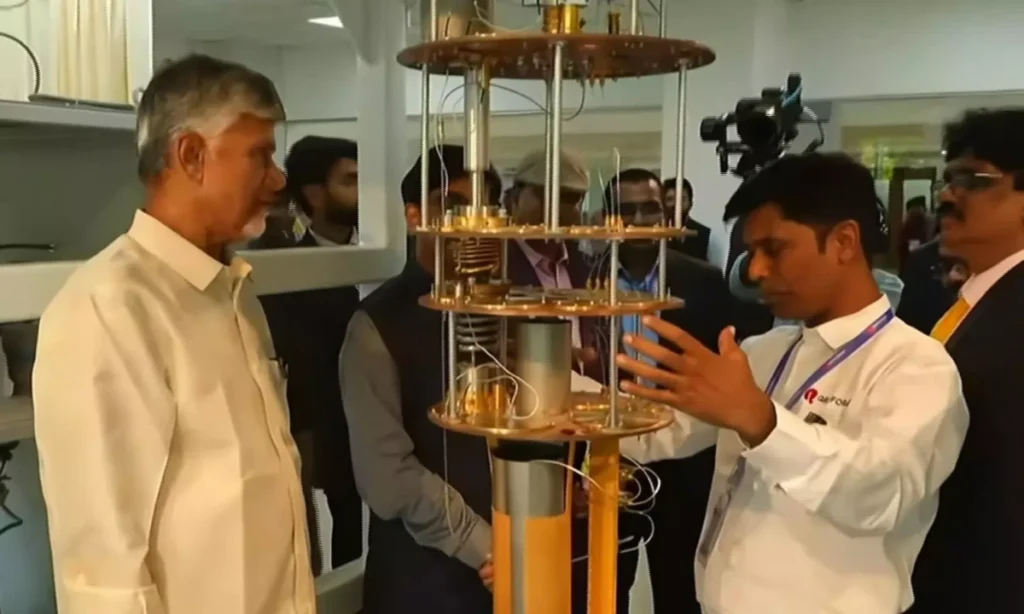
Qbit Force Quantum, founded just four months ago, has unveiled two homegrown superconducting quantum test beds and thrown the doors wide open to anyone copying them.
In an exclusive interview, Venkat L Subramaniam, the former head of IBM Quantum India, explains why he left a 27-year corporate career to build something radically different: open-access quantum hardware. “People think quantum hardware is impossibly complex,” the CEO says. “We are letting people access it.”
India’s quantum ecosystem, he notes, was lopsided. “There are plenty of software courses. But there was nothing in the hardware. Nothing.” That gap, in his view, is not just academic but strategic.
What the company has built so far are two early-stage systems, currently operating with three qubits, set up in Amravati and at SRM University. The timeline itself raised eyebrows. He also points to the role of state-level support in fueling Amaravati’s “Quantum Valley Initiative”, particularly from Andhra Pradesh Chief Minister Nara Chandrababu Naidu. “One of our greatest supporters has been the honourable chief minister,” he says, adding that the responsiveness in Amravati helped translate plans into working systems within months.
The systems are deliberately modular and transparent: dilution fridges, cryogenic wiring, control electronics, much of it fabricated domestically, including a first-of-its-kind Indian-made mixing chamber. Even thermometers, long imported, are now being developed locally by inspired academics. “Professors visited and said, ‘I can make this in three months.’ That’s the change we wanted.”
The CEO compares this shift to the 1970s Amul milk revolution and the early days of smartphones, when few believed such complex technologies would become widespread. “We are a cooperative on technology,” he says, emphasising an open approach where knowledge is shared rather than guarded. “People usually build behind closed doors. We built everything in public view.” At the same time, he acknowledges investor hesitation, noting that the concern is less about openness and more about quantum hardware itself, which remains an early-stage, high-risk space, much like smartphones once were before they scaled globally.
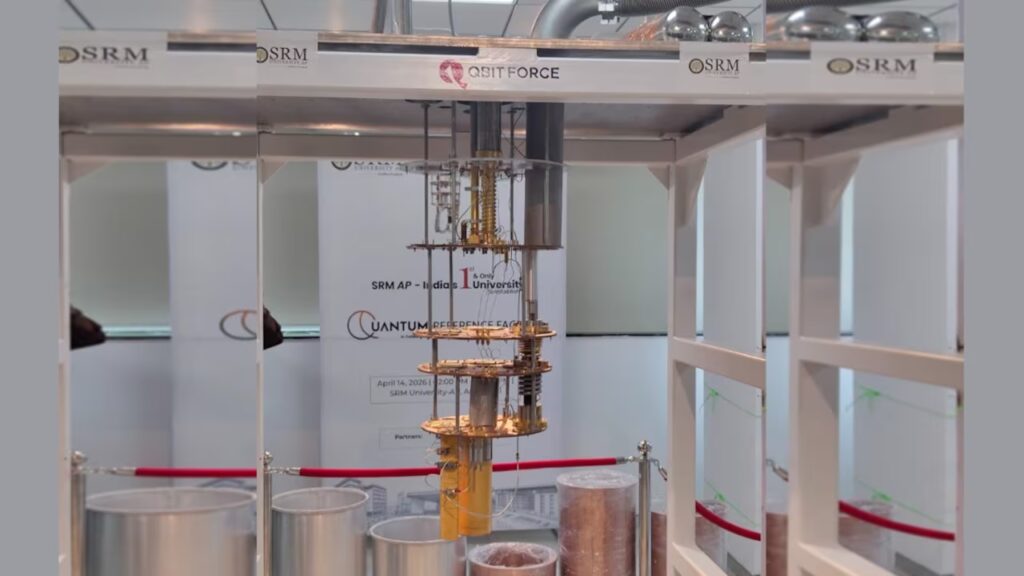
Beyond the product itself, the start-up’s philosophy is rooted in openness and collaboration, actively moving away from the traditional ‘black box’ approach. This transparency enables faster innovation and encourages contributions from academia, start-ups, and industry alike, aligning with India’s ambition to capture a meaningful share of the global quantum market.
Ultimately, Qbit Force signals a shift from isolated innovation to collaborative development, and from software-led growth to a balanced hardware-driven future. As the CEO concludes, “In India, we have all the talent we need. Now we only need to build things.” He draws a parallel with the early internet: “The real transformation will come when young people start building on top of it.”

