A new drone promises faster, smarter emergency response, hinting at technology that could change first responder operations.
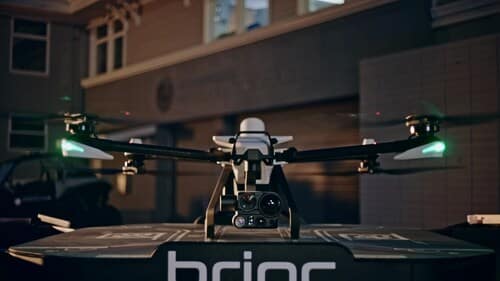
BRINC has unveiled Guardian, a next-generation drone aimed at enhancing emergency response across the United States. The Seattle-based company positions it as one of the most capable 911 response drones, combining advanced autonomy, extended range, and satellite connectivity. For the first time in public safety, a drone integrates Starlink, providing reliable communication even in areas without cellular coverage.
Guardian operates alongside Guardian Station, a robotic base that automates battery swaps and redeployment. Traditional drones can face downtime of 25 minutes or more between missions, but Guardian Station removes this delay, relaunching the drone within minutes. This enables continuous operations and faster response times during emergencies. The system can also carry mission-specific payloads, including defibrillators, Narcan, or flotation devices, allowing aid to reach people before emergency crews arrive.
The drone has double the range of many existing systems, with flights lasting up to 62 minutes. Its IP55-rated weather resistance ensures usability in varied conditions. Guardian is equipped with a 4K camera, dual thermal zoom cameras, a 1,000-lumen spotlight, laser rangefinder, and loudspeaker system to support coordination at incident scenes.
Integration with Motorola Solutions’ CommandCentral Aware adds another layer of functionality. Dispatchers can launch the drone directly from command centers, while Assist AI analyzes 911 calls for keywords to recommend deployments. Officers can also deploy the drone using emergency radio buttons, streamlining the connection between calls and aerial support.
Guardian’s combination of extended range, continuous operation, adaptable payloads, and integrated public safety systems represents a significant step in the evolution of drones in emergency services, giving responders a new tool to reach and assist people more efficiently.