




Infrared sensing improves gas detection reliability in harsh industrial settings, while balancing durability, cost, and integration challenges.
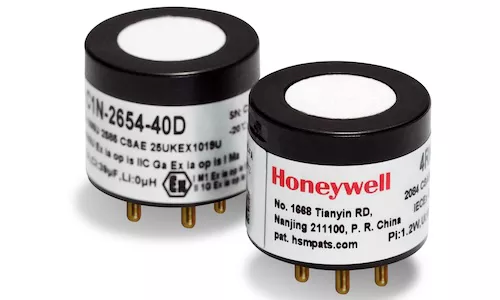
Honeywell has introduced an infrared-based gas sensor designed to detect flammable hydrocarbons such as methane, propane and butane in industrial environments.
The sensor uses non-dispersive infrared (NDIR) technology and is intended for use in sectors including mining, oil and gas, petrochemicals and manufacturing, where gas leaks pose safety risks to workers and infrastructure.
The newly launched 4-Series NDIR Hydrocarbon Gas Sensor is designed for integration into both fixed and portable gas detection systems. These systems are commonly used in confined or hazardous environments, such as underground mines or processing facilities, where early detection of flammable gases is critical.
The sensor incorporates features aimed at maintaining performance in challenging conditions, including dust, temperature fluctuations and high humidity. An integrated condensation management system is designed to reduce moisture buildup, which can otherwise affect sensor accuracy.
NDIR technology is less prone to degradation compared to catalytic (pellistor) sensors, especially in contaminated environments. Reduced sensitivity to chemical poisoning lowers the risk of sensor failure over time. Infrared sensing can extend battery life in portable detectors. Designed to operate across a wide range of industrial conditions.
NDIR sensors are typically more expensive than traditional catalytic sensors. Optical components can increase sensor size, which may limit use in highly compact devices. While effective for hydrocarbons, NDIR sensors may not detect all gas types, requiring complementary sensing technologies in some applications.
Gas detection remains a critical safety requirement in industries handling flammable or hazardous materials. While traditional sensing technologies are widely used, newer approaches like NDIR are gaining traction due to their durability and reduced maintenance needs, particularly in environments where sensor poisoning is a concern.
The sensor reflects ongoing efforts in the industry to improve detection accuracy and reliability, though adoption will depend on cost, system requirements and specific application needs.
Click here for more information.

