Integrating the motor and inverter into a compact assembly can help electric vehicles achieve higher efficiency while simplifying powertrain architecture.
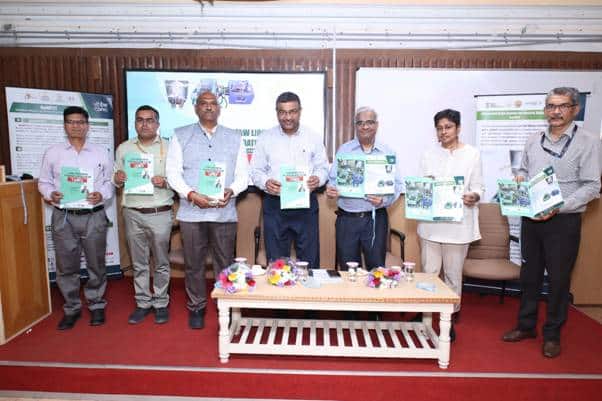
The Ministry of Electronics and Information Technology (MeitY) has introduced a 30 kW integrated drive system designed to support more efficient electric vehicle powertrains while strengthening domestic capabilities in advanced power electronics. The system was developed by the Centre for Development of Advanced Computing in collaboration with Indian Institute of Technology Madras and Lucas TVS as part of the National Mission on Power Electronics Technology.
The system is intended to support the growing electric passenger vehicle segment by improving drive efficiency while enabling greater localization of key EV components. From a system perspective, such integrated drive architectures can contribute to reduced reliance on imported powertrain electronics and support the development of domestic manufacturing capabilities across power electronics, control hardware and thermal systems. Wider deployment of locally developed drive technologies could also help lower system costs and support scalable electric mobility platforms aligned with India’s expanding EV ecosystem.
The design offers several technical advantages for electric vehicle platforms. Integrating the traction motor and inverter into a single unit reduces interconnection losses that typically occur between separate drive components. The use of wide band gap semiconductor devices enables higher switching frequencies, improved thermal handling and greater power density compared with conventional silicon based power electronics. Together, these characteristics can support more compact drive systems and improved overall power conversion efficiency.
The system itself is a 30 kW power class integrated drive platform designed for electric passenger vehicles and fleet mobility platforms, the architecture combines the electric traction motor and inverter within a single compact assembly, replacing conventional configurations where the motor and drive electronics are deployed as separate modules.
S. Krishnan, Secretary at the Ministry of Electronics and Information Technology, says that the development reflects the growing role of collaborative innovation between research institutions and industry in advanced electronics. He noted that integrating the motor and inverter into a compact high power density unit represents an important step toward strengthening domestic capabilities in EV powertrain technology.