




A rugged edge AI vision box built on NVIDIA Jetson technology targets autonomous systems with high AI throughput, multi-camera support, and cloud-based device management.
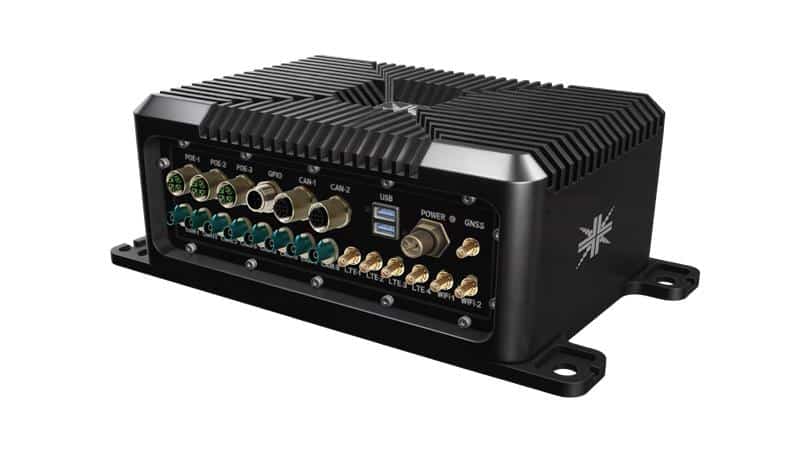
A new edge AI vision box by e-con systems aimed at production-grade autonomous and vision-driven systems has been unveiled, combining high-performance AI compute with deep camera and sensor integration in a single industrial platform. Designed for deployments across robotics, mobility, and intelligent transport, the system delivers up to 100 TOPS of AI performance and is optimized for real-time perception at the edge .
The key features are:
- Up to 100 TOPS AI performance on NVIDIA Jetson architecture
- Support for up to 8 synchronized GMSL cameras
- Multi-sensor fusion with PTP-based time synchronization
- Cloud-based device management with OTA updates and monitoring
- Rugged, industrial-grade enclosure for field deployment
At its core, the platform is built on NVIDIA Jetson Orin-class technology and supports the latest JetPack software releases, positioning it for demanding physical AI workloads. One of its defining capabilities is large-scale multi-camera support. A GMSL-based variant enables connection of up to eight synchronized cameras, allowing developers to build surround-view, stereo, or multi-angle perception systems without complex external hardware.
Beyond vision, the box is designed as a multi-sensor fusion hub. It supports time-synchronized inputs from cameras, LiDAR, radar, IMUs, and other sensors using Precision Time Protocol (PTP), enabling deterministic data alignment for navigation and decision-making. This architecture is particularly relevant for autonomous mobile robots, delivery robots, and intelligent traffic systems, where perception latency and accuracy are critical .

Connectivity and deployment flexibility are also central to the design. Dual Gigabit Ethernet with PoE support, USB 3.2, HDMI, CAN, GPIO, IMU interfaces, and wireless options allow the platform to adapt to diverse vehicle and industrial environments. To simplify lifecycle management, the system integrates cloud-based device management for secure over-the-air updates, remote configuration, and health monitoring—features increasingly required for large, distributed edge AI fleets .
Housed in a rugged enclosure, the compute box is built for wide operating temperature ranges and long-term field reliability, supporting both indoor and outdoor deployments. Additional variants, including PoE-focused configurations and support for next-generation Jetson platforms, are already in development, indicating a roadmap beyond a single hardware release .Overall, the launch reflects a shift toward integrated vision-and-compute platforms that reduce system complexity and speed up the path from prototype to production for next-generation autonomous applications.


