

Researchers at KTH Royal Institute of Technology have developed a simpler method for manufacturing nanoscale pores that could help make advanced biosensors easier and more scalable to produce.
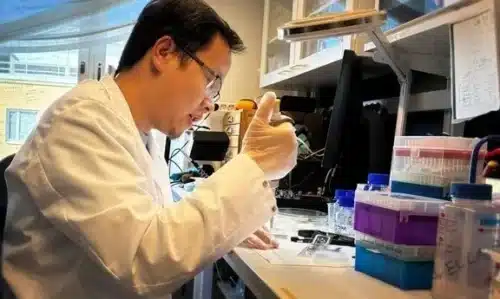
A new manufacturing technique developed by researchers at KTH Royal Institute of Technology could help overcome a major challenge in producing nanoscale sensors.
The method focuses on creating extremely small pores in thin membranes, which are important components in technologies used to detect and analyze individual molecules such as DNA and proteins.
The researchers describe the process as being similar to uprooting a tree stump with a rope. Mechanical stress is deliberately introduced into a layered material, allowing a nanoscale fragment to be pulled away and leaving behind a precisely formed nanopore.
Unlike conventional approaches that can require specialized nanofabrication techniques, the new method can create large arrays of nanopores in parallel. Tests across dielectric, metallic and semiconductor sensor membranes demonstrated the technique’s potential for molecular detection and DNA analysis.
The approach could make nanoscale sensor production more accessible by reducing reliance on highly specialized fabrication facilities. The researchers have also patented the technique and established a startup to advance the technology toward commercial applications.
The development could ultimately support next-generation biosensors for medical research, diagnostics and other applications where rapid and precise molecular analysis is required.