

A low-power reference design combines NFC bridging, flexible sensing, and configurable control to simplify connected embedded applications across multiple sectors.
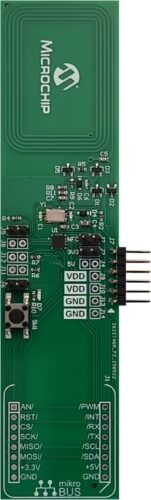
Microchip’s Low-Power (near field communication) NFC Bridging Solution Reference Design uses the PIC16F13145 microcontroller to provide a flexible way of adding NFC connectivity to embedded devices. The design supports both NFC-reader-powered and self-powered operation, while allowing developers to connect sensors and other external hardware for application-specific requirements.
The reference design is intended to reduce power consumption and simplify the integration of NFC functionality. It can operate as an NFC tag by default, allowing a smartphone or NFC reader to communicate with the device for tasks such as locking, unlocking, diagnostics and sensor-data checking. The platform can also be customized for specific applications.
A key feature is its selectable power architecture. The design can draw power from an NFC reader or operate from its own 3.3V or 5V supply through a micro-USB connection. The reference material also specifies low-power operation, with a minimum power requirement of 2.5mA at 3.3V when the microcontroller is operating as an RFID tag.
The hardware provides a mikroBus connector for expansion through Click Boards and compatible Microchip development boards. Its configurable logic block enables hardware-based functions to be tailored to particular designs, potentially reducing the need for additional components.
The solution diagram shows NFC analogue circuitry connected to the PIC16F13145, alongside interfaces including UART, SPI, I²C, GPIO and analogue I/O. These connections allow the platform to interact with digital sensors, analogue measurements and other control functions.
Potential applications span consumer electronics, industrial equipment, automotive systems and appliances. By combining NFC communication, configurable processing and flexible sensing in a low-power architecture, the reference design provides a practical starting point for developers building connected embedded products.